
Will you soon be replaced by an algorithm, or does the digital transformation actually secure your job in the long term?
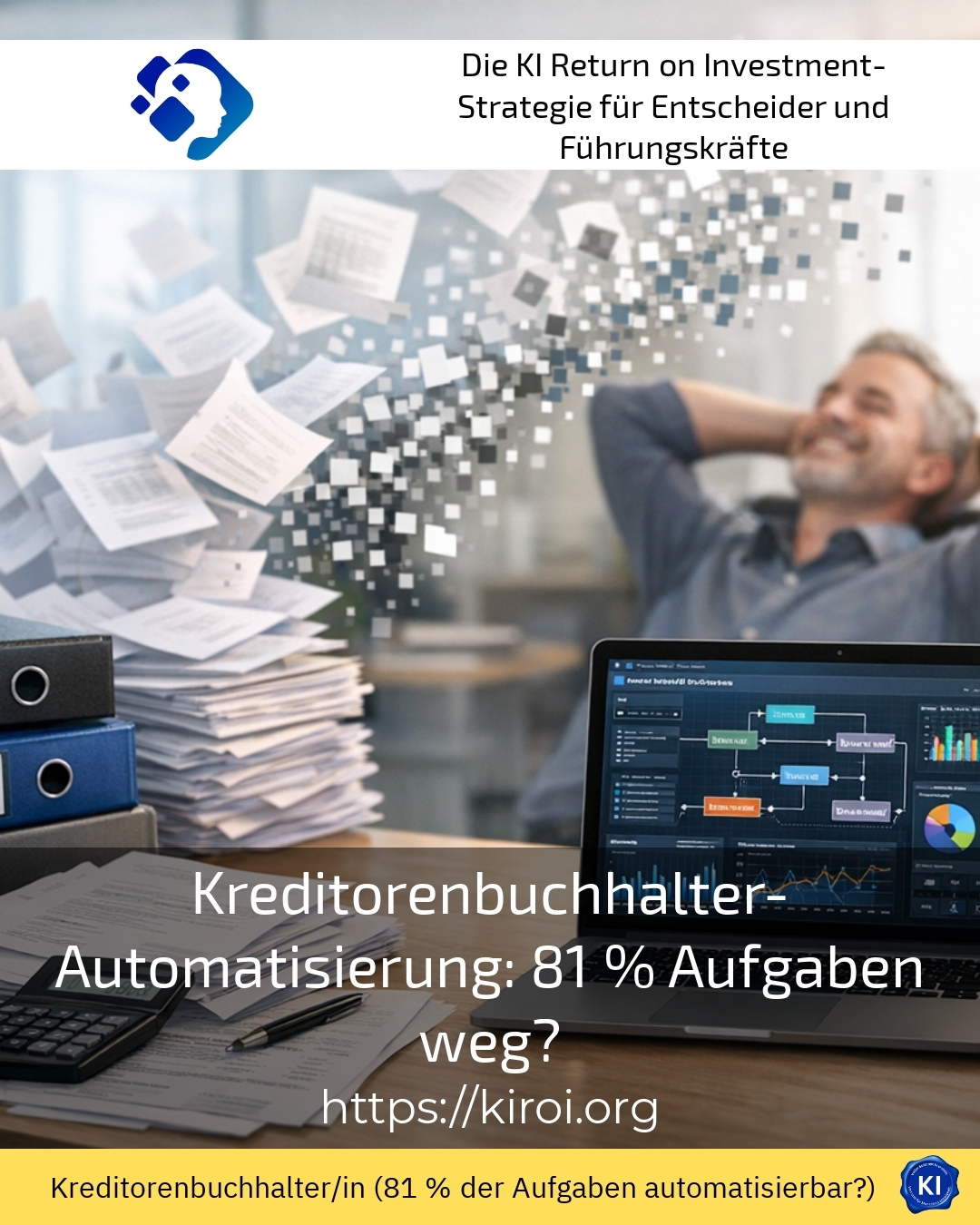
This question currently concerns many professionals in finance and accounting. The Job-Futuromat platform of the Institute for Labour Market and Occupational Research [1] provides worrying figures. According to these, over 80 percent of traditional tasks can already be taken over by intelligent systems today. The Credit card holder automation This is therefore at the center of a debate. It concerns the future of an entire professional field. But what does this mean in practice for people who check incoming invoices daily, prepare dental appointments, and reconcile supplier accounts? This article sheds light on the developments from different perspectives and shows ways in which those affected can actively shape this change.
Understanding the revolution in accounting
Modern software solutions are increasingly taking on tasks in financial accounting. They automatically capture documents and assign them to the correct cost centers. Machine learning enables continuous improvement in recognition rates. For example, an intelligent accounting software analyzes incoming PDF invoices within seconds. It extracts invoice number, amount, and supplier data without human intervention. Additionally, the system compares the information with existing orders. Deviations are automatically flagged and only then forwarded for manual review.
Another example can be found in the expense account management in larger companies. In the past, account managers calculated expense deadlines manually and prioritized payments accordingly. Today, algorithms take these decisions and automatically optimize the flow of payments. They take liquidity planning and available credit lines into account simultaneously. In addition, intelligent systems conduct automatic reminders and escalate them if necessary. The efficiency increase is enormous, but it raises questions. What role remains for humans in this highly automated environment?
Experiencing credit management automation in practice
Practical implementation shows interesting developments in various industries. In retail, companies process thousands of supplier invoices daily. Without automated systems, this volume would simply be impossible to handle. A medium-sized retail company reports a reduction in processing time by 70 percent. The error rate simultaneously dropped to less than two percent of all processed invoices.
In the manufacturing industry, complex supply chains play a special role. Here, systems must correctly allocate partial deliveries, complaints, and credits. Intelligent booking systems learn from historical data and continuously improve their accuracy. An automotive supplier was able to reduce its credit management from twelve to four employees. The remaining staff members now focus on exceptional cases and strategic tasks.
In healthcare, the diversity of invoice formats presents a particular challenge. Hospitals receive invoices from pharmaceutical wholesalers, medical technology companies, and service providers. Modern OCR systems can now recognize handwritten notes on delivery receipts themselves. They automatically link these to the corresponding order processes in the ERP system.
Best practice with a AIROI customer
An internationally operating logistics company faced the challenge of fundamentally modernizing its credit ledger. The previous structure consisted of eight full-time employees at three different locations. Each team processed approximately 4,500 incoming invoices with various formats and content on a monthly basis. The average processing time per invoice was just under 15 minutes, including all verification steps. As part of a transruptive coaching project, we intensively supported the company over nine months. First, we jointly analyzed all existing processes and identified automation potential. It was revealed that approximately 65 percent of the invoices followed a recurring pattern. These documents were particularly well suited for automated processing by intelligent systems. After implementing AI-based invoice processing, the task profile changed fundamentally. Employees are now taking on more controlling and advisory roles within the company. They analyze supplier relationships, optimize payment terms, and actively develop process improvements. The number of full-time positions required was reduced to five, with no mandatory layoffs necessary. Three employees transferred to other departments and assumed more valuable responsibilities in corporate management there.
Balancing the opportunities and risks of credit cardholder automation
The discussion about the loss of jobs often focuses too narrowly and neglects important aspects. In fact, new fields of activity are emerging that require human expertise. System administrators for accounting software are urgently needed and highly paid. Process optimizers analyze data flows and develop improvement proposals for management. Compliance specialists ensure that automated processes meet legal requirements.
In the banking sector, this development is particularly evident. Algorithms are taking over the processing of payment entries and account reconciliations entirely. At the same time, new positions are emerging to monitor these automated systems. Employees examine algorithm decisions on a random basis and train the systems on detecting errors. These tasks require both technical understanding and in-depth accounting expertise.
The insurance industry offers further interesting examples of this transformation. Here, intelligent systems process claims and automatically assign them to the correct insurance cases. This allows claims handlers to focus on complex cases that require human judgment. They conduct conversations with victims and make decisions in borderline cases independently.
Develop strategies for professional reorientation
Anyone working in credit management should pay close attention to developments. Proactive training in data analysis and process management seems advisable. Many professionals report that basic knowledge of SQL and Excel automation opens up new doors. Certifications for common ERP systems such as SAP or Microsoft Dynamics also significantly increase market opportunities.
In the field of public administration, the change is taking place more slowly, but steadily. Municipalities are gradually digitizing their accounting entry processing and are switching to e-invoices. Employees who actively contribute to this change position themselves as valuable resources. They understand both the previous processes and the possibilities of new technologies.
The energy sector is also facing massive changes in its financial processes. Intelligent metering systems provide consumption data directly to the billing systems of the providers. Integrating these data streams into accounting requires new skills and perspectives. Professionals with experience in credit management bring valuable process knowledge to this task.
Best practice with a AIROI customer
A medium-sized machine manufacturer from southern Germany approached us with a clear question. The management had decided to make massive investments in digitalization over the next two years. At the same time, they did not want to lose or discourage the long-standing employees in the accounting department. As part of the transruptive coaching process, we developed a comprehensive transformation plan for the entire department together. First, we analyzed the competency profiles of all six employees and identified individual strengths and development potential. An experienced clerk showed great interest in data analysis and was further trained to become an internal reporting specialist. Another colleague took over the complete administration of the new accounting software after appropriate training. Two more employees specialized in the support of international suppliers and now handle complex foreign currency transactions. The remaining two professionals focus on special cases, annual financial statements and cooperation with external auditors. After completing the project, the team processed three times the amount of documents while maintaining the same level of staff. Employee satisfaction increased measurably because monotonous routine tasks were eliminated and more demanding tasks came to the fore.
The importance of human expertise in automated environments
Despite all technological advances, certain tasks remain reserved for humans. Negotiations with suppliers regarding payment terms require empathy and negotiating skill. Interpreting unclear contractual terms requires legal understanding and experience. Even the detection of fraud attempts benefits from human intuition and pattern recognition.
In the construction industry, this need is particularly evident in advance payments and warranty retention. Here, project managers must evaluate progress and reconcile documented work with accounting entries. Automated systems support document management, but the final decision is made by humans. The same applies to claims processes for damaged or defective deliveries in production.
The pharmaceutical industry places special requirements on the documentation and traceability of all business processes. Regulatory regulations require complete audit trails for all financial transactions within the company. Therefore, professionals with a deep understanding of these compliance requirements are indispensable for operations. They train AI systems accordingly and continuously monitor their compliance with applicable regulations.
Understanding credit management automation as an opportunity
The figures from the Job Future Monitor [1] should not be seen as a threat, but as a wake-up call. They show which activities will change and thus open up room for action. Those who today engage with the possibilities of modern accounting systems are actively shaping their professional future. Continuing education, openness to new tasks, and a willingness to change are key qualifications.
In the telecommunications sector, many companies have already made this change and can share their experiences. There, systems process millions of invoice positions automatically without manual intervention every day. The remaining professionals work on strategic projects and continuously develop the systems. They have become internal consultants who apply their process knowledge for optimizations.
The food industry also offers interesting insights into transformed accounting departments. Here, systems must be able to handle variable quantities, quality fluctuations, and seasonal price changes. Human expertise remains valuable for interpreting these fluctuations and evaluating suppliers.
My AIROI Analysis
The intensive focus on the topic reveals a differentiated picture of the current development. Credit card holder automation It fundamentally changes the professional image, but it does not eliminate it completely. Rather, a shift is taking place from performing to controlling activities. This transformation requires accompaniment, further training, and above all an open dialogue within the companies involved.
From my experience with numerous projects in the financial sector, I can confirm that humans retain a central role. Algorithms are excellent at recognizing patterns and reliably performing routine tasks. However, they fail in unforeseen situations that require creativity and judgment. This is where the future of professionals in accounting and finance lies.
The companies we support through transruptive coaching benefit from a structured transformation process. They avoid confusion among their employees and make optimal use of the existing knowledge of their workforce. The result is leaner, but more efficient financial departments with motivated teams. The key lies in timely and transparent communication about the upcoming changes.
Anyone who proactively explores the possibilities and limitations of automated systems today ensures their relevance in the labor market. The combination of professional expertise and technical understanding becomes a decisive competitive advantage. I recommend that all those involved understand this development as an opportunity and actively participate in shaping it.
Further links from the text above:
[1] Job-Futuromat of the Institute for Employment Research
For more information and if you have any questions, please contact Contact us or read more blog posts on the topic Artificial intelligence here.








 Deutsch
 English (UK)