
Will your teams still be relevant in a few years' time if intelligent systems can take over more and more tasks?
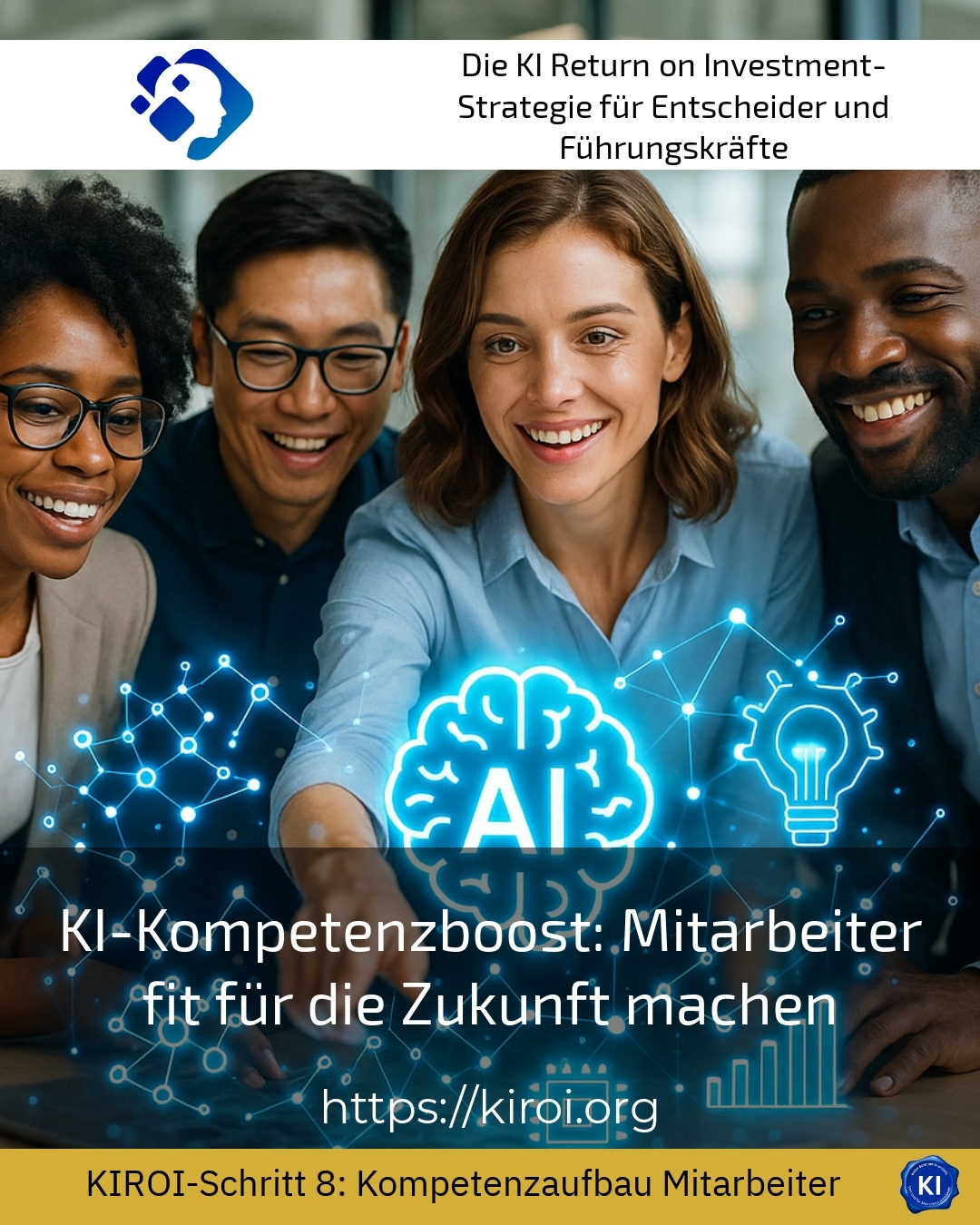
This question is currently occupying executives and HR managers in almost all economic sectors, because technological development is advancing at a speed that poses significant challenges for many companies. The AI Skills Boost becomes the decisive factor in making workforces fit for the future. This is long since no longer just about technical knowledge. Rather, organisations must pursue a holistic approach that develops both digital skills and human strengths. The transformation affects all levels of hierarchy and requires a fundamental rethink in the way we understand and shape work [1].
Understanding the new reality of the world of work
The world of work is undergoing profound change. Intelligent algorithms analyse data faster than humans. Automated processes take over repetitive tasks reliably and round the clock. This development is fundamentally changing the demands placed on employees.
Companies frequently report that traditional job profiles are disappearing. At the same time, completely new fields of activity are emerging that were unthinkable just a few years ago. For example, a logistics company has noticed that its dispatchers now predominantly monitor algorithms. Previously, they planned routes independently using maps and experiential knowledge. Now they interpret system proposals and only intervene in exceptional cases. A financial service provider observed similar changes among its clerical staff. They no longer review applications manually. Instead, they validate the decisions of automated evaluation systems. These shifts are also clearly evident in the manufacturing sector. Machine operators are becoming process facilitators who control complex manufacturing systems [2].
However, this shift by no means signifies the end of human labour. On the contrary, new opportunities are opening up for creative and strategic activities. Humans can concentrate on tasks that require emotional intelligence and complex judgement.
AI skills boost as a strategic necessity
The systematic further development of employee competencies is no longer an optional measure. It is becoming a strategic necessity for every forward-looking company. The AI Skills Boost thereby encompasses various dimensions that interlock.
First, employees need a fundamental understanding of how modern technologies work. A retail company conducted basic training for all branch employees. These now understand how inventory forecasts are generated and can critically question system recommendations. An insurance group trained its customer advisors in handling chatbot logs. The advisors now recognise more quickly where automated conversations failed and can take over in a targeted manner. A medium-sized mechanical engineering company integrated technical basics into its training programmes. Trainees there learn from the very beginning to work with data-based systems.
In addition, critical thinking and analytical skills are gaining in importance. Employees must be able to interpret the results of automated processes. They should recognise when algorithms reach their limits. Such competencies can be systematically developed through targeted training [3].
Best practice with a AIROI customer
An internationally active industrial company faced the challenge of preparing its entire workforce for digital transformation. The management team recognised early on that technological investments alone would not be sufficient to remain competitive. Together with transruptions-Coaching, the company developed a multi-stage qualification programme that involved all levels of employees. Guidance from experienced coaches helped to identify resistance early and resolve it constructively. Managers first received intensive workshops so that they could act as multipliers themselves. They then passed on their knowledge within their teams, thereby creating a culture of continuous learning. The practice-oriented approach of the programme proved to be particularly valuable. Employees worked on real projects from their daily work and experienced first-hand how new competencies could enrich their work. Coaching support provided regular impetus and assisted with reflection on what had been learned. After one year, over eighty percent of participants reported increased self-confidence in dealing with digital tools. Staff turnover fell significantly because employees felt valued and positioned for the future.
Soft skills are gaining importance
While technical skills are important, human qualities are coming more to the fore. Empathy, creativity and strong communication skills are becoming crucial differentiating factors. Machines cannot replicate these competencies.
A healthcare provider recognised that its nursing staff remain indispensable despite increasing documentation automation. Their ability to provide emotional support to patients creates unique added value. An architectural firm found that creative concept development still requires human intuition. The architects use digital tools for implementation, but the vision originates in the human mind. A consultancy firm invested heavily in developing the communication skills of its consultants. These individuals must be able to convey complex issues understandably and build trust with clients [4].
Organisations that invest in these human strengths create sustainable competitive advantages. They combine technological possibilities with unique human qualities. This combination only unlocks its full potential through systematic skills development.
Put AI competence boost into practice
The successful implementation of a comprehensive qualification programme requires a structured approach. Companies should first carry out an inventory of existing competencies. Building upon this, targeted development measures can be planned.
An energy supplier started with a company-wide skills analysis. This identified specific gaps between current knowledge levels and future requirements. A media company used assessment centres to identify individual development potential. The results were incorporated into personalised learning paths that met each employee right where they were. An automotive supplier developed a modular training concept with various levels of specialisation. Employees were able to decide for themselves how deeply they wanted to delve into individual subject areas.
Learning formats that combine theory and practice prove to be particularly effective. Employees learn best when they can apply new knowledge immediately. Project-based learning and mentoring programmes support this transfer. Guidance through professional coaching can help to overcome individual barriers and trigger sustainable behavioural changes [5].
Leaders as drivers of change
The AI Skills Boost only succeeds with dedicated leadership. Managers must act as role models themselves and demonstrate their own willingness to learn. They create the framework in which employees can develop.
A telecommunications provider required all executives to undertake regular professional development. They not only learned about new technologies, but also modern leadership approaches for hybrid teams. A pharmaceutical company established reverse mentoring programmes. Young, digitally savvy employees supported experienced managers in building their competencies. A logistics group integrated learning objectives into executive appraisals. The development of team members became an explicit success criterion for managers.
Leaders who authentically model change create psychological safety within their teams. Employees are more likely to dare to ask questions and admit uncertainties. This culture of continuous learning forms the foundation of successful transformation.
Best practice with a AIROI customer
A medium-sized manufacturing group of companies turned to transruptions-Coaching with a specific request. The management board wanted to understand how it could equip its leadership team for the digital future. As part of a multi-month support programme, the coaches worked closely with the management. First, they jointly analysed the existing leadership structures and identified areas for development. The managers then received individual coaching that addressed their personal strengths and areas for growth. The participants found the spaces for reflection provided by the programme particularly helpful. They were able to speak openly about their uncertainties and received constructive impetus for their further development. At the same time, the company held team workshops in which departments worked together on their collaboration. The coaches assisted with facilitation and helped to make difficult conversations productive. Following the completion of the programme, the managers reported improved communication and a greater readiness for change within their teams. The company was able to successfully implement several digitalisation projects that had previously failed due to internal resistance.
Constructively use resistance
Change processes frequently encounter resistance. These are natural reactions to uncertainty and should not be ignored. Instead, they can provide valuable insights into potential areas for improvement.
A financial institution initially experienced strong scepticism towards new ways of working. Employees feared becoming redundant through automation. The company responded with transparent communication about its actual plans and created a sense of security. A retailer found that resistance often resulted from a lack of understanding. Targeted information events helped to alleviate fears and highlight opportunities. A technology group established feedback channels through which employees could anonymously voice concerns. This feedback was incorporated into the design of training measures.
Professional coaching support can be particularly valuable when dealing with resistance. Experienced coaches help to identify underlying causes and develop constructive solutions. They guide both individuals and teams through challenging phases of change [6].
Sustainability through continuous learning
One-off training sessions are not enough to ensure sustainable skills development. Companies need to create structures that enable and promote continuous learning. The AI Skills Boost becomes a permanent process in this way.
A chemical company established weekly learning times during which employees can pursue self-directed professional development. A software company introduced regular tech talks where teams share their knowledge with one another. A service company integrated learning content into the working day through microlearning formats. Short learning units lasting a few minutes can be completed between tasks.
These approaches embed learning as a natural part of the corporate culture. Employees do not view skills development as an additional burden, but as an integral part of their work. Companies benefit from a workforce that continuously develops and remains adaptable.
My AIROI Analysis
The systematic development of employee competencies in the context of technological change is proving to be a decisive success factor for companies of all industries and sizes. My observations from numerous support projects show that organisations with a holistic approach transform significantly more successfully than those that only invest in technology. People remain the central factor, and their competencies determine whether technological possibilities can actually have an impact.
I find it particularly impressive how companies that establish a true learning culture develop. Innovation arises organically there because employees dare to try new things and learn from mistakes. Management plays a role that should not be underestimated in this process. Leaders who are themselves willing to learn and prioritise their own development inspire their teams to follow suit. Coaching support can effectively underpin this process by creating spaces for reflection and removing individual blocks.
Businesses that invest in their people now create sustainable competitive advantages. They become future-proof not only technologically, but culturally as well. The combination of digital skills and unique human strengths unlocks the greatest potential. Organisations that consistently follow this path frequently report increased employee satisfaction, greater innovative power and an improved market position. Investing in skills development therefore pays off multiple times over and forms the foundation for long-term corporate success in a rapidly changing world.
Further links from the text above:
[1] McKinsey Future of Work Insights
[2] World Economic Forum Future of Jobs Report
[3] Bitkom Labour and Qualification
[4] Harvard Business Review Leadership Development
[5] Gallup Workplace Learning and Development
[6] Deloitte Insights Future of Work
For more information and if you have any questions, please contact Contact us or read more blog posts on the topic Artificial intelligence here.








 Deutsch
  English (UK)