
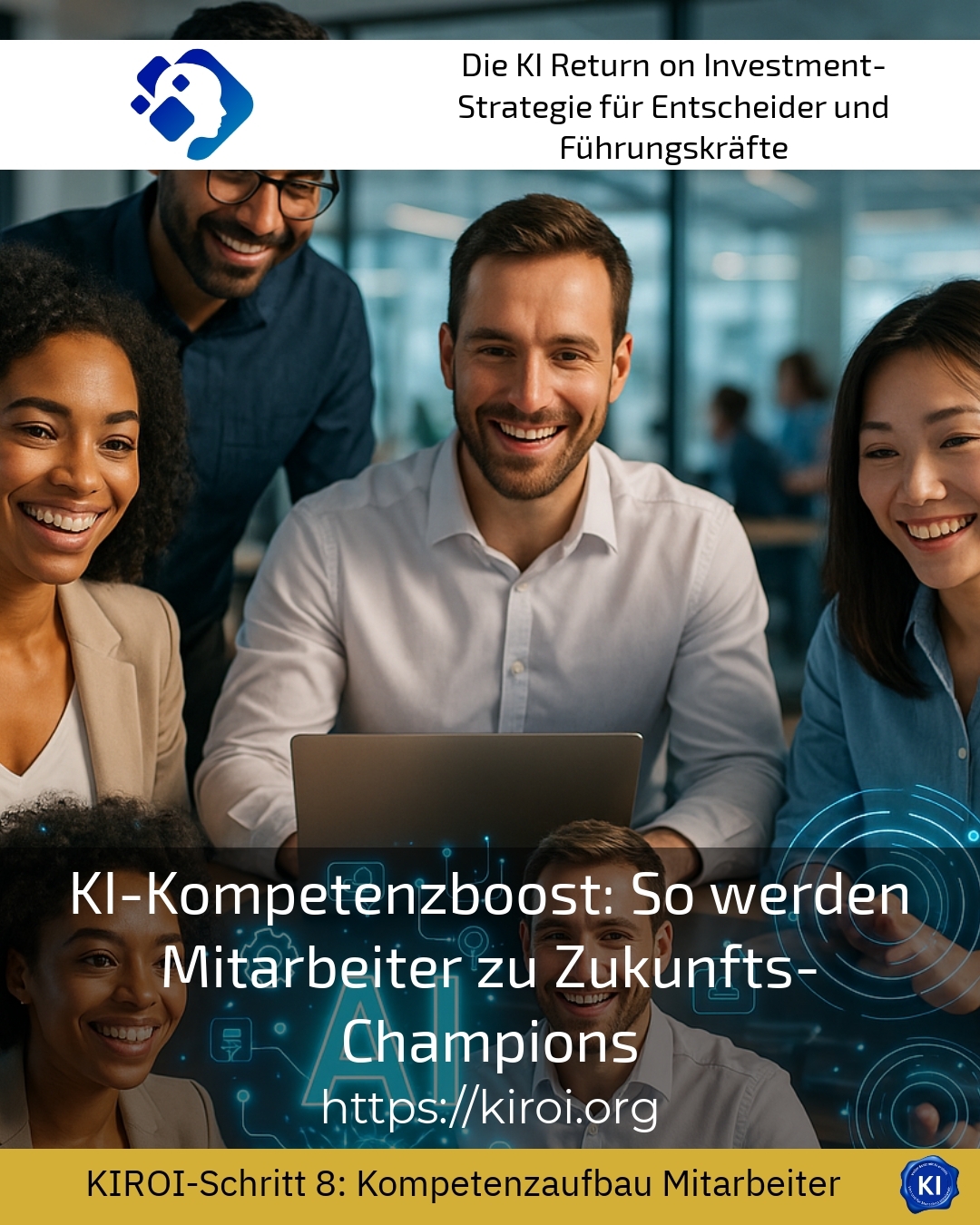
Have you ever wondered why some companies grow at breathtaking speed while others stall despite having the best possible conditions? The answer often lies not in the technology itself, but in the people who use and develop it. A targeted AI Skills Boost This can make the crucial difference, for it transforms disengaged employees into confident future-makers. In a time when work practices are fundamentally changing, many leaders report a growing gap between technological possibilities and their teams’ actual capabilities. However, this discrepancy can be bridged, not through superficial training, but through thoughtful coaching that enables sustainable competency development.
Understanding the new reality of the world of work
The working world is undergoing a profound transformation. Processes that used to take days can now be completed in minutes. Analyses that were previously the responsibility of entire departments now arise almost automatically. These changes are causing mixed feelings among many employees. On the one hand, they recognize the enormous opportunities, but on the other hand they fear losing their relevance. This is where professional support comes in, because it takes these concerns seriously and transforms them into constructive energy. Companies often report that their employees initially react skeptically. However, this skepticism is completely normal and even healthy. It shows that people value their work and want to understand how their role is evolving. Transruptional coaching supports organizations in making this phase of uncertainty productive [1].
For example, a medium-sized machine engineering company faced the challenge of motivating its engineers to adopt new ways of working. The experienced professionals had performed excellent work for decades. Suddenly, they were required to use tools that seemed to call their expertise into question. A automotive supplier experienced a similar situation when quality control was restructured. The inspectors initially felt replaced, but soon recognized new opportunities. A logistics company supported its dispatchers through the changeover. They discovered that they could now work more strategically.
Why traditional training often fails
Many companies rely on traditional forms of training, but the results often fall short of expectations. The reason for this lies in the nature of learning itself. People best internalize new skills when they can apply them immediately. One-time seminars rarely create lasting changes. They provide knowledge but not the ability to act. The participants return to their workplaces and quickly fall back into old patterns. A electronics manufacturer invested substantial sums in training programs. The employees evaluated them positively. However, little changed in their daily work routine. A pharmaceutical company experienced a similar situation when introducing new analytical methods. The researchers understood the theory, but hardly applied it in practice. A financial services provider observed that knowledge without support quickly fades.
Best practice with a AIROI customer
An internationally operating manufacturing company in the field of precision technology faced a complex challenge that went far beyond purely technological issues. The management realized that the success of the digital transformation would depend significantly on the readiness and skills of the workforce. Initially, the company tried to address this task using internal resources, but it quickly became apparent that external support was necessary. As part of AIROI the project, a multi-stage concept was developed that included all hierarchical levels. The executives underwent intensive workshops in which they learned to act as multipliers. At the same time, cross-departmental learning groups were formed, which met regularly to exchange their experiences. The approach of using concrete work situations as learning environments was particularly valuable. The employees developed solutions for real-life challenges independently and were continuously supported in their work. After eighteen months, the corporate culture had changed significantly, and the employees showed significantly more openness to new methods and tools.
AI expertise boosted by experiential learning
The key to sustainable learning lies in practical action. People develop real competence when they experiment, make mistakes, and learn from them. This insight may sound trivial, but it is ignored in many organizations. Instead, the idea that knowledge can simply be transferred dominates. An effective AI Skills Boost In contrast, it focuses on guided practice. Employees work on real projects and receive continuous feedback. They develop solutions for the actual problems of their daily work. This way, competence is created that remains and grows [2].
An insurance company fundamentally redesigned its claims processing. The claims officers did not learn in training rooms, but on the job. They processed real cases under the guidance of experienced coaches. A trading company introduced new forecasting methods for product planning. The category managers developed their skills through guided experimentation. An energy provider guided its network planners through a similar process. The experts discovered new ways to bring their experience to bear.
The role of leaders in the transformation process
Leaders play a crucial role in developing the competencies of their teams. They shape the learning culture and provide important impulses. Their own attitude significantly influences how employees perceive change. Leaders who themselves show curiosity inspire their teams. Those who spread fear block any progress. Transruptive coaching therefore systematically involves leaders. They learn to act as facilitators and create development spaces. One chemical company experienced remarkable change after production managers developed new leadership competencies. A telecommunications provider observed a similar development in its team leaders in customer service. A medical technology manufacturer benefited from the changed attitude of its research managers.
Individual support as a success factor for the AI competence boost
Each person learns differently and brings different backgrounds. Standardized programs cannot accommodate this diversity. Some employees need more time, others want to progress faster. Some learn best by listening, others by experimenting. An effective AI Skills Boost It takes these differences into account. It offers individual learning paths and flexible support. The guidance adapts to the individual person's needs. This results in lasting learning outcomes that are visible in everyday work [3].
Best practice with a AIROI customer
A leading consumer goods company wanted to empower its marketing department for new ways of working without compromising the team’s creative strength. The marketing experts had developed successful campaigns over the years and possessed valuable knowledge that could not be lost. At the same time, the company’s management recognized that new methods offered significant potential that needed to be unlocked. As part of the AIROI project, an individualized onboarding program was developed that placed each employee where they stood. First, detailed discussions took place in which strengths, development areas, and personal learning preferences were identified. Based on this foundation, customized development plans were created that defined specific learning objectives and milestones. The team members worked in tandem, with more experienced colleagues acting as mentors. Regular reflection rounds enabled the exchange of experiences and the adaptation of learning paths. The connection with real campaign projects proved particularly effective, allowing the learned knowledge to be applied immediately. After a year, the employees reported a significantly increased sense of competence and greater enjoyment in their work.
Psychological security as a foundation for development
People learn effectively only when they feel safe. Fear of failure blocks every development process. However, many organizations have a culture of perfection that punishes experimentation. Employees do not dare to try new things because they fear consequences. This dynamic can only be changed through conscious cultural work. Leaders must create spaces where mistakes are seen as learning opportunities. They must themselves show vulnerability and share their own uncertainties [4]. A software company introduced regular failure sessions where failures were discussed. An automotive manufacturer established protected experimental spaces for its development teams. A consulting firm fundamentally transformed its feedback culture.
Sustainable anchoring in everyday work
The biggest challenge lies in anchoring newly acquired skills permanently. Many learning programs fail because implementation in everyday life fails. The transition from learning to application is critical and requires guidance. This is where professional coaching comes in and supports the transfer into practice. Employees are not left alone; they receive continuous guidance. They regularly reflect on their experiences and adapt their approaches. This creates a virtuous cycle of competence development [5].
A food manufacturer established weekly short reflections within its production teams. The employees exchanged ideas about successful applications and challenges. A construction company integrated learning moments into regular project meetings. The supervisors reflected together on how new methods changed their work. A textile company created digital spaces for cross-departmental exchange of experiences. The designers and production experts learned from each other.
AI expertise boost as a strategic investment
The development of employee competencies is not an expense, but a strategic investment. Companies that invest wisely in this area create competitive advantages that are difficult to copy. Technology can be purchased, but competent and motivated people cannot. They develop over time and need the right conditions. Targeted AI Skills Boost creates exactly these conditions. It combines knowledge dissemination with practical guidance and cultural transformation. This results in organizations that not only react but actively shape the future.
My AIROI Analysis
After intensive discussions with numerous transformation projects, a clear pattern emerges that is crucial for successful competence development. Companies that achieve sustainable results do not rely on quick solutions but on long-term support. They understand that competence development takes time and cannot be imposed. These organizations create spaces for experimentation and accept setbacks as part of the learning process. They invest in their leadership and empower them to act as development facilitators. At the same time, they pay attention to individual differences and offer flexible learning paths.
The AIROI-methodology has proven to be particularly effective because it systematically implements these principles. It combines strategic planning with practical guidance and takes into account both organizational and individual factors. Particularly valuable is the focus on sustainable embedding, which goes beyond immediate interventions. Companies that follow this approach report profound changes that go far beyond technical skills. Their employees develop a new attitude towards change and show more initiative. The corporate culture shifts from being defensive to being proactive, and innovation becomes part of everyday life. This transformation is challenging and requires patience, but the results justify the effort.
Further links from the text above:
[1] Transruptions approach for business transformation
[2] AIROI-Master plan for sustainable competence development
[3] Individual coaching support in change processes
[4] Leadership development in digital transformation
[5] Building a learning organization
For more information and if you have any questions, please contact Contact us or read more blog posts on the topic Artificial intelligence here.







 Deutsch
 English (UK)