
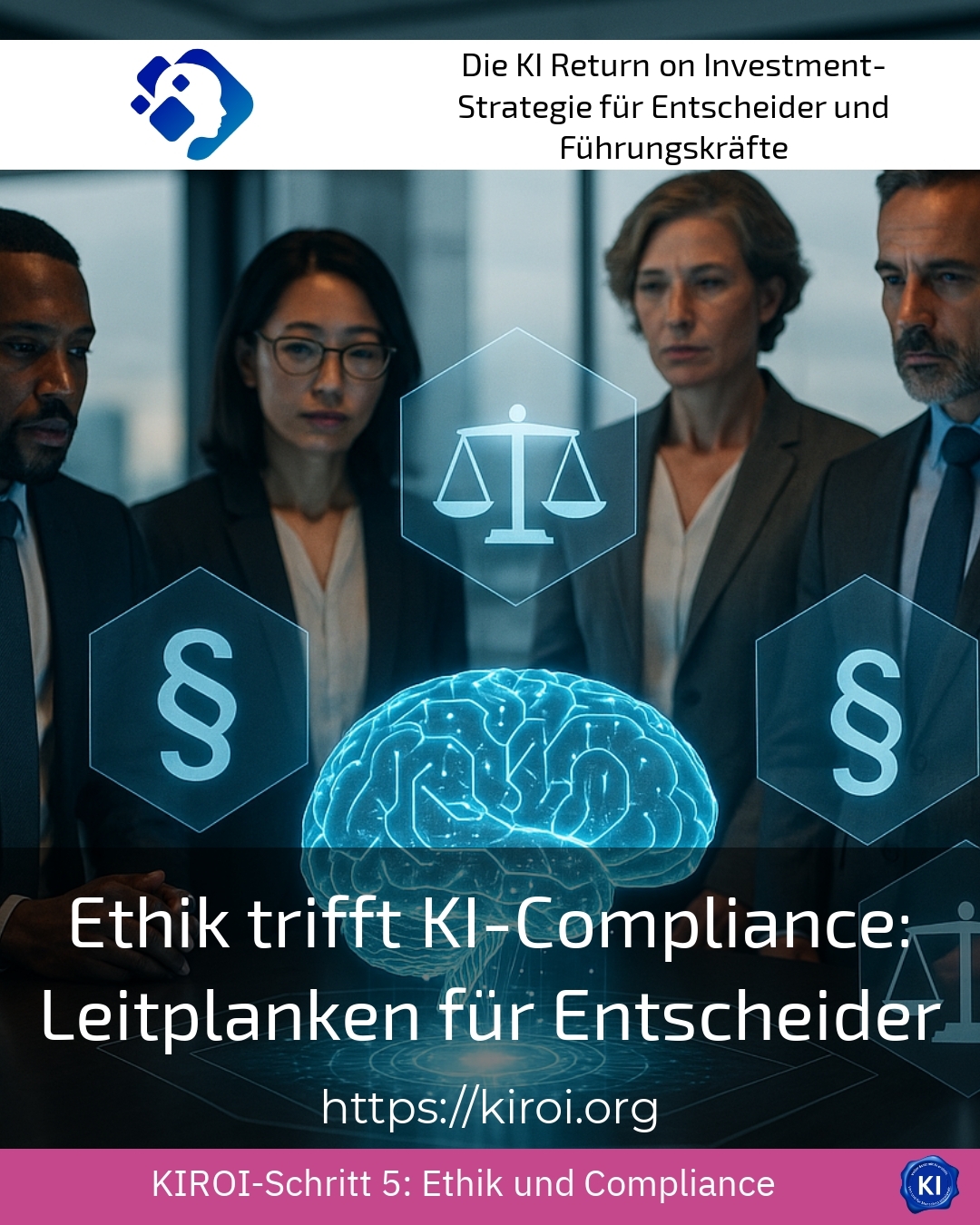
Business decision-makers are facing an unprecedented challenge: algorithmic systems are permeating every area of business, raising fundamental questions that go far beyond mere technology. Ethics meets AI compliance: Guardrails for decision-makers – this thought is now occupying executive boards, supervisory boards and management alike, because the implementation of intelligent systems requires a completely new way of thinking. While in the past the primary focus was on technical feasibility and cost-efficiency, today leaders must integrate complex moral trade-offs into their strategic considerations. This development is fundamentally changing not only corporate structures, but also the self-perception of modern leadership.
Why moral principles are becoming a strategic necessity
The integration of algorithmic decision-making systems into business processes has reached a dimension that seemed unimaginable only a few years ago. Companies use these technologies for recruitment, lending, and medical diagnoses. This creates situations in which automated systems have far-reaching consequences for people. An algorithm can decide on job opportunities. It can determine insurance premiums. It can even issue medical treatment recommendations. This power requires clear structures of accountability and well-thought-out control mechanisms.
This issue is particularly evident in the financial sector. Credit institutions use automated scoring systems that decide on loan applications within seconds. Affected individuals frequently report opaque rejections. Applicants do not understand why they received a negative assessment. Insurance companies use similar systems for risk assessment. There, too, the necessary transparency is often lacking. The healthcare sector is experimenting with diagnostic assistance systems. These support doctors in identifying clinical pictures. However, the question of responsibility often remains unresolved [1].
Transruptions-Coaching supports organisations precisely through these transformation processes. The implementation of intelligent systems requires more than technical know-how. It demands a fundamental reflection on corporate values and social responsibility.
Ethics meets AI compliance: Guardrails for decision-makers in a regulatory environment
European legislators have responded to these developments with comprehensive regulatory initiatives. Companies must now categorise and evaluate their algorithmic systems. High-risk applications are subject to special documentation obligations. The technical implementation of these requirements presents many organisations with significant challenges. At the same time, it offers the opportunity to fundamentally rethink processes.
Best practice with a AIROI customer
A medium-sized financial services company was faced with the task of making its automated credit decision processes compliant with regulations while simultaneously implementing ethical principles. Over the years, the company had developed a sophisticated scoring system based on historical data that showed remarkable accuracy rates in risk assessment. Upon closer analysis, however, it turned out that certain population groups were being systematically disadvantaged without those responsible being aware of it. As part of an intensive consultancy process, all decision criteria were first disclosed and checked for their ethical acceptability. The team developed new fairness metrics to ensure that no group was unjustly discriminated against. The introduction of an explanation module, which clearly sets out to customers which factors led to a decision, proved to be particularly valuable. Customer satisfaction rose measurably, and the regulatory authorities were also impressed by the transparent approach. This case illustrates how ethical reflection and regulatory requirements can lead to better business results.
Practical implementation in various economic sectors
The implementation of ethical guardrails varies depending on the industry. In retail, companies use recommendation systems that analyse purchasing behaviour. These systems can appear manipulative. They can entice consumers into making purchases that are not in their interest. Responsible retailers therefore rely on transparency. They explain why certain products are recommended. In human resources, algorithmic systems pre-screen applications. The risk of hidden discrimination is particularly high here. Companies must ensure that no inadmissible criteria are incorporated [2].
The media industry faces its own challenges. Algorithms determine which news users see. They can reinforce filter bubbles and promote polarisation. Responsible platforms are working on countermeasures. They are developing systems that promote diversity. In the mobility sector, autonomous vehicles make ethically relevant decisions. Programming must anticipate dilemmas. Who is liable in the event of accidents? These questions require a societal consensus.
Governance structures for responsible innovation
The establishment of effective control mechanisms requires new organisational forms. Many companies are setting up interdisciplinary committees. These bring together technical expertise with ethical competence. Lawyers, engineers and philosophers work together on guidelines. This exchange enriches all participants. It leads to more well-thought-out decisions and more robust systems.
An essential element is the continuous review of already implemented systems. Algorithms can change through learning processes. What seemed ethically unproblematic at the time of introduction can become problematic. Regular audits identify such developments at an early stage. In the banking sector, some institutions have established independent review boards. These monitor algorithmic decisions on a random basis. Insurance companies carry out similar checks. Such structures are also gaining importance in the healthcare sector [3].
Ethics meets AI compliance: guidelines for decision-makers in people management
The introduction of intelligent systems is also changing the relationship between managers and employees. Workers frequently fear being replaced by automation. These fears must be taken seriously. Transparent communication about the role of technology builds trust. Further training opportunities impart new competencies. They enable employees to work alongside the systems.
In retail, intelligent systems support staff rostering. They analyse customer flows and forecast demands. However, the decision regarding working hours is still made by a human. In the financial sector, algorithms assist with complex analyses. The final assessment rests with the specialists. In healthcare, diagnostic systems provide suggestions. The treatment decision remains with the doctor. This division of tasks preserves human responsibility.
Best practice with a AIROI customer
A major insurance company implemented an automated claims assessment system that promised significant efficiency gains, but also raised ethical concerns. The executive management recognised early on that a purely technical implementation without accompanying governance measures would lead to problems, and decided on a holistic approach. First, an ethics advisory board was established, which included not only internal specialists but also external experts from philosophy and consumer protection. This board developed binding principles for the use of the system to ensure that no policyholders are unjustly disadvantaged. Particularly innovative was the introduction of an appeals mechanism that allows customers to have algorithmic decisions reviewed by humans. In addition, all employees in the claims department received intensive training to understand how the system works and to monitor it critically. The combination of technical innovation and ethical reflection proved to be a competitive advantage, as the company can now advertise responsible digitalisation and customer trust has been strengthened.
International perspectives and cultural differences
The ethical assessment of algorithmic systems varies considerably across cultures. What is considered legally questionable in terms of data protection in Europe may be accepted elsewhere. International companies must navigate these differences. They require flexible governance structures that take local requirements into account. At the same time, they should establish global minimum standards. This challenge affects all industries equally.
In the financial sector, many institutions operate across borders. They have to meet different regulatory requirements. Insurers face similar challenges. Retail groups with an international presence must adapt their recommendation systems. In the healthcare sector, strict country-specific regulations apply. The media industry operates globally anyway. It has to take various cultural sensitivities into account [4].
Future developments and strategic positioning
Technological development is advancing rapidly. New fields of application are emerging continuously. Decision-makers must act proactively. They should integrate ethical reflection into innovation processes. This makes it possible to identify problems early on. It prevents costly modifications and damage to reputation.
Transruptions coaching provides impetus for this strategic realignment. The support encompasses both conceptual and operational aspects. Leaders develop a deeper understanding of technological possibilities. At the same time, they recognise the limitations and risks. This balance is characteristic of responsible digitalisation.
Ethics meets AI compliance: Guardrails for decision-makers as a competitive factor
Companies that credibly champion ethical principles are becoming increasingly attractive. Consumers are paying more attention to responsible action. Talent chooses employers based on values. Investors take sustainability criteria into account. This development makes ethical positioning an economic imperative.
In the banking sector, customers trust institutions that communicate transparently. They value comprehensible decisions. Policyholders prefer providers with fair evaluation systems. Retail customers respond positively to non-manipulative recommendations. In healthcare, trust is fundamental. Patients must be able to rely on diagnostic support. These relationships underline the strategic value of ethical governance.
My AIROI Analysis
An analysis of numerous transformation projects clearly shows that organisations which integrate ethical reflection into their digitalisation strategy at an early stage achieve more sustainable success than those which neglect this aspect or only take it into account at a later stage. The AIROI approach emphasises the need for a holistic perspective that takes technical feasibility, economic viability and social responsibility into account in equal measure. It is particularly revealing to note that companies with established ethical governance structures are less frequently confronted with regulatory issues and, at the same time, enjoy higher staff satisfaction. Investing in interdisciplinary teams of experts consistently pays off, as they bring different perspectives to the table and can uncover blind spots that would be overlooked in purely technically oriented approaches. Managers who use transruptions coaching to support such projects often report a deeper capacity for reflection and a heightened awareness of the far-reaching implications of their decisions. The coming years will reveal which organisations can successfully strike a balance between innovation and responsibility, thereby securing long-term competitive advantages.
Further links from the text above:
[1] European approach to artificial intelligence – European Commission
[2] Digitalisation of the world of work – Federal Ministry of Labour and Social Affairs
[3] FinTech and digitalisation – BaFin
[4] Artificial Intelligence – OECD
For more information and if you have any questions, please contact Contact us or read more blog posts on the topic Artificial intelligence here.










 Deutsch
  English (UK)