
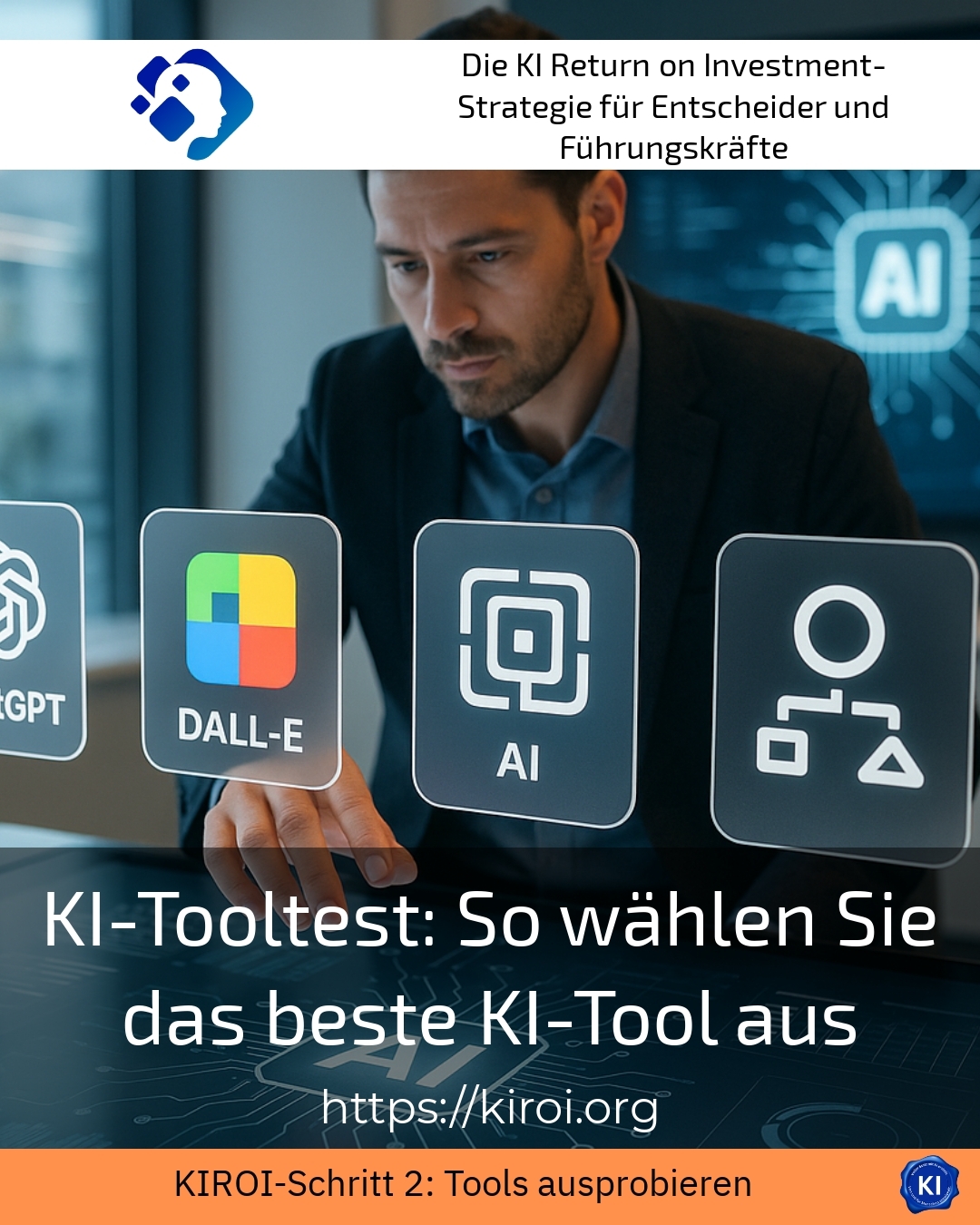
The flood of digital tools is growing rapidly. At the same time, decision-makers are facing an enormous challenge. Which system really suits their own company? A well-founded AI Tool Test helps to gain clarity. Yet selection requires more than superficial comparisons. It demands strategic thinking and practical testing. This article shows you what matters. Discover proven methods and concrete examples. Thus you make informed decisions for your digital future.
Warum ein strukturierter KI-Tooltest unverzichtbar geworden ist
Digital transformation is changing almost all business areas. Companies of all sizes are recognising the potential of intelligent systems. However, blind experimentation rarely leads to success. Instead, organisations need clear criteria for their decisions. The market now offers hundreds of solutions. Each promises unique benefits and better results. Clients frequently report feeling overwhelmed by the selection process. They feel lost in a sea of possibilities.
For example, a medium-sized logistics company was faced with the question: which forecasting tool is suitable for route optimisation? The management initially tested three different providers simultaneously. This showed that technical performance alone is not the deciding factor. Integration into existing systems played an equally important role. In addition, employees had to be able to use the tool intuitively. In the end, the choice fell on a solution with moderate complexity [1].
A commercial enterprise was looking for a solution for inventory forecasting. The initial choice won them over with impressive demonstrations. In practice, however, a different picture emerged. The software required extensive manual adjustments. In addition, high costs were incurred for training. After intensive evaluation, the team switched to a more user-friendly system. This experience highlights the importance of thorough testing.
An insurance company wanted to have claims reports categorised automatically. The first attempt using a standard tool failed due to industry-specific requirements. Only a specialised system delivered satisfactory results. This helped to relieve the workload on employees. This example demonstrates the relevance of industry knowledge when making a selection.
Criteria for a successful AI tool test
The evaluation of intelligent tools requires a well-thought-out catalogue of criteria. Technical aspects form only part of the overall picture. Organisational and human factors are equally important. A comprehensive AI Tool Test therefore considers multiple dimensions simultaneously. This approach assists companies in making more informed decisions.
The accuracy of the results is often the focus. However, decision-makers should also consider explainability. Can the system provide comprehensible reasons for its recommendations? This question is gaining increasing importance. Transparency plays a central role, especially in regulated industries. For example, a financial services provider had to be able to justify credit decisions. Therefore, the company consciously chose an explainable model [2].
A manufacturing company tested various quality control systems. The pure error detection rate varied only minimally between the providers. What ultimately made the difference was the speed of rollout. The winning system was ready for use within a few weeks. The competing products would have required months-long implementation phases.
An energy supplier compared load forecasting solutions. This revealed the importance of data quality. The highest-performing tool required extremely clean input data. This requirement was practically impossible to meet. A more robust system worked reliably even with incomplete information.
Develop practical test scenarios
Realistic test scenarios form the foundation of any serious evaluation. They should reflect typical everyday use cases. Abstract benchmarks often deliver misleading results. Instead, concrete tasks from daily operations are recommended. This method reveals strengths and weaknesses more reliably.
A telecommunications provider developed specific test cases for customer support systems. These included typical enquiries with varying levels of difficulty. The result rather surprised the project team. The supposed market leader performed less well with complex issues. A niche provider, on the other hand, impressed with consistently good performance.
A hotel chain tested booking forecasts under various conditions. Seasonal fluctuations and major events were taken into account. The selected system also proved successful in unusual situations. This robustness was the decisive factor for the decision.
Best practice with a AIROI customer
An internationally active mechanical engineering firm approached us with a complex challenge: the company wanted to optimise its maintenance processes using intelligent predictive analytics and, in doing so, evaluate various systems; however, the management were initially unsure as to which criteria should actually be taken into account. As part of our ‘transruptions’ coaching programme, we worked together to develop a structured testing framework that took into account both technical and organisational aspects, placing particular emphasis on involving the on-site service engineers. These experts were best placed to understand the practical requirements and were able to provide valuable input, which is why their involvement was crucial to the project’s success right from the start. We created ten realistic test scenarios based on historical machine data and evaluated four different suppliers over a period of three months, with each system required to operate under identical conditions. The results were revealing: whilst the most technically advanced provider failed to integrate with the existing ERP system, a medium-sized solution proved to be ideal. Maintenance costs fell by around twenty per cent following implementation, and technicians’ satisfaction levels rose noticeably because the system supported their work rather than making it more difficult.
The human factor in AI tool testing
Technology only unfolds its potential through people. This insight fundamentally shapes successful selection processes. The best solution is of little use without user acceptance. Therefore, companies should involve employees at an early stage. Their perspectives significantly enrich any evaluation process.
A retail group involved branch managers in the tool selection. They contributed valuable practical knowledge to the discussion. They immediately recognised which functions would be helpful in everyday work. At the same time, they identified potential obstacles to implementation. As a result, the chosen system was significantly better accepted [3].
A hospital chain tested documentation aids for nursing staff. The staff's initial scepticism was tangibly present. Through intensive training and open communication, the mood shifted. Today, many report a genuine reduction in workload. This transformation was achieved through consistent support of the change process.
A law firm evaluated research tools for legal questions. The younger lawyers showed themselves to be open-minded towards new methods. Experienced partners, on the other hand, expressed concerns regarding reliability. Through joint testing phases, a constructive dialogue finally emerged. Both groups contributed to the final decision.
Assessing training needs realistically
The learning curve varies greatly between different systems. Some tools can be grasped intuitively within a few hours. Others require weeks of intensive familiarisation. These differences significantly influence the overall costs. Therefore, the training effort is one of the important evaluation criteria.
A pharmaceutical company initially underestimated the onboarding effort. Although the chosen analysis platform offered impressive features, the scientists required months of training. This time was missing for the actual research work. For the next project, the team deliberately chose a simpler tool.
An advertising agency tested creative tools with different operating concepts. The team ultimately decided on the second-best technical solution. The reason was the significantly shorter onboarding period. The staff were able to work productively more quickly. This pragmatic approach proved successful in everyday use.
Long-term perspectives in tool selection
Short-term benefits should not be the only decision criterion. Sustainable investments also take future developments into account. How scalable is the chosen solution in the event of growth? What further developments does the provider plan? These questions deserve thorough consideration.
Initially, a startup chose a cost-effective entry-level tool. After two years, this was no longer capable of handling the company's size. Migrating to a more powerful platform consumed significant resources. Looking back, a more future-proof initial decision would have been cheaper [4].
An automotive supplier consciously considered the vendor roadmap during the selection process. The preferred system promised regular functional enhancements. These commitments were indeed honoured in the subsequent period. The continuous further development ensured long-term benefit.
A media agency paid particular attention to open interfaces. These later enabled the integration of further tools. The initial investment thus retained its value. Closed systems would not have offered this flexibility.
Best practice with a AIROI customer
A medium-sized construction group contacted us with the desire to improve its project planning using intelligent tools, with the heterogeneous IT landscape with established structures presenting a particular challenge. As part of our transruptions coaching support, we first analysed the existing processes and, together with the project managers, identified the greatest potential for optimisation, which was particularly evident in resource planning and schedule monitoring. We supported the team in developing a requirements specification that took both current and foreseeable future needs into account, placing special emphasis on the ability to integrate with the existing accounting system and the construction site software. The evaluation of five different providers spanned four months with defined milestones and regular feedback sessions attended by representatives from all affected departments. The selected system won us over with its adaptability to industry-specific requirements and transparent pricing for future expansions, while German-speaking support was also an important criterion. Following implementation, the project managers report noticeably better predictability and fewer surprises on complex construction projects, which is why the company is now examining further areas of application for intelligent tools.
Carefully weigh up the costs and benefits
Financial evaluation involves more than just the pure licence costs. Implementation, training and ongoing maintenance must be factored in. Indirect impacts on productivity are just as relevant. A holistic AI Tool Test takes all these factors systematically into account.
A food manufacturer compared three quality control systems. The cheapest solution caused the highest costs in the long run. Frequent false alarms tied up staff resources unnecessarily. The mid-priced system proved to be the most economical choice.
A recruitment consultancy calculated the time saved through automated pre-selection. The monthly fee paid for itself after filling just a few positions. This clear cost-benefit analysis made the investment decision significantly easier [5].
A logistics service provider quantified savings through optimised route planning. Annual fuel costs fell by a considerable amount. At the same time, delivery punctuality improved measurably. This double return also convinced skeptical shareholders.
My AIROI Analysis
The selection of suitable intelligent tools remains a multifaceted task that equally requires strategic thinking, practical testing and human judgement, which is why superficial comparisons rarely lead to optimal results. Our experience from numerous accompanying projects clearly shows that successful companies consider multiple dimensions simultaneously, balancing technical performance, user-friendliness, integration capability and long-term development perspectives against one another. Involving various stakeholders from the outset significantly increases the acceptance of subsequent implementations and avoids costly rework that frequently arises when decisions are made exclusively at management level.
Particularly striking is the importance of realistic test scenarios that mirror the actual working day, rather than comparing abstract performance metrics, because only in this way do the true strengths and weaknesses of the evaluated systems reveal themselves. We frequently experience that supposed market leaders fall behind specialised niche providers in practical tests because industry-specific requirements make all the difference. The investment in a thorough AI Tool Test pays off in the long run, because bad decisions can cause significant subsequent costs and would permanently slow down the digital transformation.
Furthermore, companies should never underestimate the human factor and should allocate sufficient resources for training and change management so that the chosen tools can unfold their full potential. The best technical solutions will fail if employees do not accept them or cannot use them properly, which is why user-friendliness and the effort required for familiarisation should be considered decision-making criteria of at least equal weight. We recommend that all organisations view selection processes as learning journeys that provide valuable insights into their own needs and possibilities.
Further links from the text above:
[1] Gartner: Artificial Intelligence Glossary
[2] McKinsey: The State of AI
[3] Harvard Business Review: Artificial Intelligence
[4] Bitkom: Artificial Intelligence
[5] Fraunhofer: Artificial Intelligence
For more information and if you have any questions, please contact Contact us or read more blog posts on the topic Artificial intelligence here.











 Deutsch
  English (UK)