
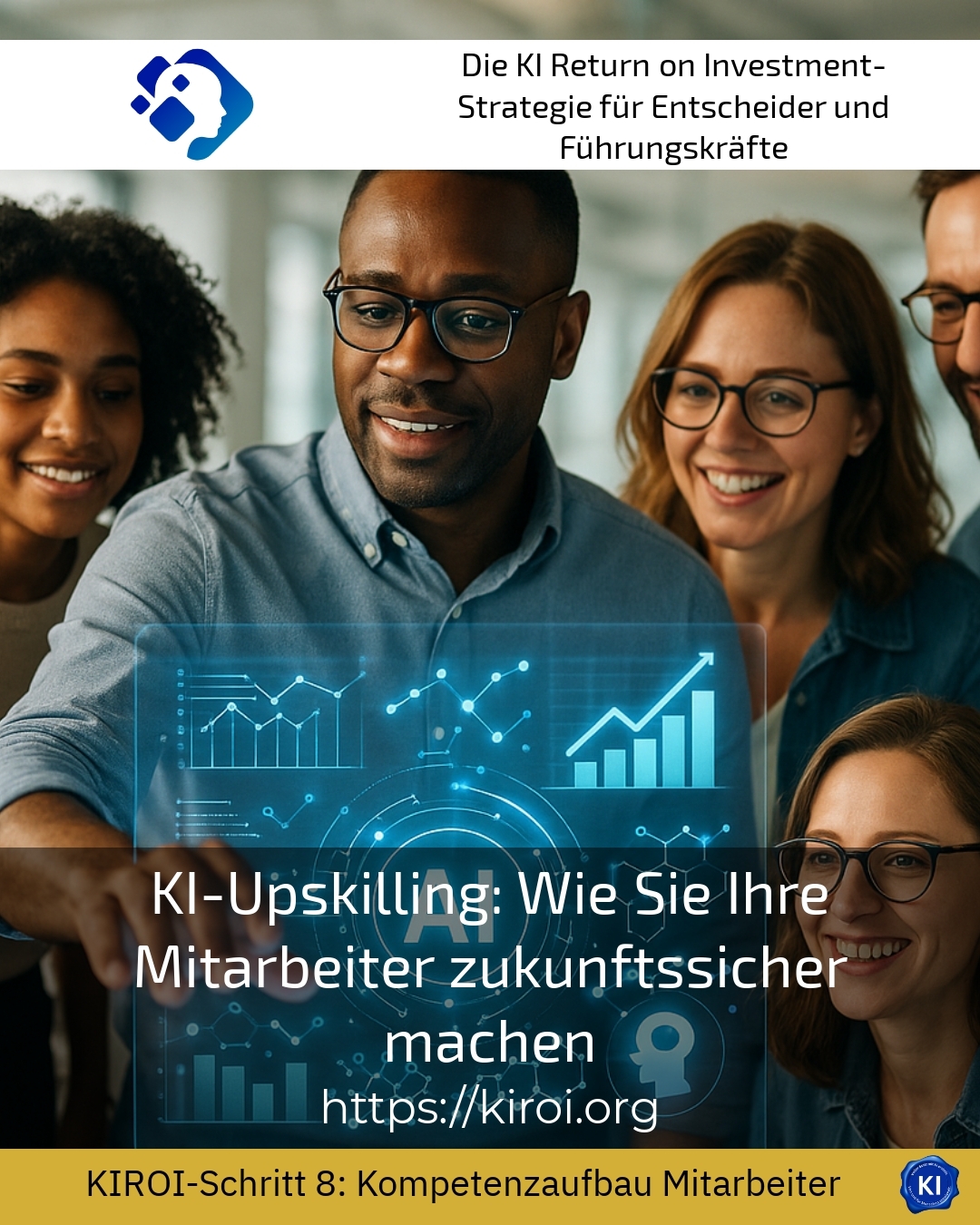
The rapid development of intelligent technologies is fundamentally changing our working world. Companies face a crucial question: How do we prepare our teams for this transformation? AI Upskilling: How to make your employees future-proof is not just a buzzword, but a strategic necessity. Those who don't act today risk losing out tomorrow. The good news, however, is that there are tried and tested ways to successfully develop workforces. This article shows you which approaches are particularly effective.
Why AI upskilling has become indispensable today
The integration of intelligent systems is progressing in almost all economic sectors. Automated processes are taking over repetitive tasks. At the same time, entirely new fields of activity are emerging. This development affects not only technical professions. Commercial and creative positions are also undergoing fundamental change. Studies show that up to seventy percent of all job profiles will change [1]. Therefore, organisations require well-thought-out qualification strategies.
In manufacturing companies, for example, intelligent systems are already handling quality control. Employees now need to understand how to monitor these systems. They learn to interpret anomalies and act accordingly. In customer service, chatbots support communication. This allows service staff to concentrate on more complex issues. Their role is changing from information provider to problem solver. These examples illustrate the profound transformation.
This transformation is also clearly evident in the healthcare sector. Diagnostic imaging is supported by intelligent algorithms. Medical staff must be able to interpret the recommendations made by these systems. The aim is not to replace professional expertise. Rather, technical tools complement human expertise. The ability to critically evaluate system outputs is becoming crucial.
Strategies for effective AI upskilling in organisations
Successful further training programmes follow specific principles. They take into account the varying starting levels of learners. Not everyone requires in-depth technical knowledge. Many benefit from a basic understanding. This is why a tiered approach proves effective. The first tier imparts foundational knowledge about intelligent technologies. The second tier focuses on application-related competences. The third tier is aimed at specialists.
In the financial sector, for example, banks are implementing modular learning paths. Customer advisors learn how to use automated analysis tools. They understand which data is included in recommendations. This allows them to advise customers more competently. Risk management teams delve into algorithmic evaluation models. They develop skills for validating system results. This differentiated approach increases acceptance.
Insurance companies are focusing on practical workshops. Claims handlers practise using realistic scenarios. They learn to critically assess automated claims assessments. Intelligent recommendation systems are being introduced in the sales department. Field staff are being trained to incorporate these into their consultations. The focus is on combining technology with personal advice.
Best practice with a AIROI customer
A medium-sized logistics company with around five hundred employees faced the challenge of implementing intelligent route optimisation systems. The workforce initially showed significant reservations towards the new technology. Dispatchers feared their experience might be devalued. Drivers worried about losing control over their work processes. As part of transruption coaching, we developed a comprehensive support process. First, we conducted information sessions that addressed anxieties. We transparently explained which tasks the systems were intended to take over. At the same time, we clarified the added value of human expertise. Subsequently, we worked out practical application scenarios in small groups. The employees recognised that their experience remained indispensable. They learned to combine system suggestions with their knowledge. After six months, over eighty percent reported an easing of their workload. Route efficiency improved by approximately fifteen percent. Continuous support during the implementation phase was crucial.
The role of leaders in AI upskilling
Managers play a key role in shaping an organisation’s learning culture. Their attitude towards new technologies rubs off on their teams. That is why they must set an example when it comes to learning. Many organisations therefore start by providing training for managers. This training does not merely impart technical knowledge; it also fosters an open attitude towards change.
This is particularly evident in retail. Store managers are introducing intelligent inventory management systems. They need to be able to clearly communicate the benefits to their teams. To do this, they themselves require a solid foundational understanding. In e-commerce, team leads work with automated personalisation tools. They learn to make and explain data-based decisions. This competence strengthens the trust of their employees.
In the automotive industry, production managers undergo specialised programmes. They understand how predictive maintenance systems operate. This knowledge allows them to guide maintenance teams effectively. In engineering, development managers work with generative design tools. They must be able to assess which suggestions are practical. The combination of experience-based knowledge and technical innovation is crucial.
Practical formats for sustainable learning
Traditional training formats face limitations when it comes to imparting technology skills. Modern approaches focus on application orientation and continuity. Microlearning units enable learning within the everyday work routine. Short modules of ten to fifteen minutes can be flexibly integrated. Peer learning concepts promote knowledge exchange among colleagues. Learning partnerships connect those with technical expertise with beginners.
Blended learning approaches are proving particularly effective in the pharmaceutical sector. Researchers combine online modules with face-to-face workshops. They learn how to integrate intelligent analysis tools into their laboratory work. Documentation teams practise using automated text generation systems. They develop skills in quality assurance for machine-generated texts. Combining different learning formats enhances effectiveness.
Energy suppliers are implementing simulation environments for their technicians. They practice collaborating with intelligent grid control systems. Realistic scenarios prepare them for real-world situations. In sales, employees train using role-playing formats. They integrate automated consumption analyses into their customer discussions. These practical exercises reduce inhibitions.
Best practice with a AIROI customer
An international management consultancy wanted to qualify its consultants for the use of intelligent analysis tools. The challenge lay in the geographical distribution of the teams. Traditional in-person training sessions were hardly feasible. Together, we developed an innovative virtual learning concept. Weekly ninety-minute live sessions formed the basic framework. Between sessions, participants independently worked on practical tasks. They applied the learned tools to real project data. A digital community platform enabled continuous exchange. More experienced colleagues supported as mentors. Transruption coaching accompanied the entire process over several months. The reflection on obstacles and concerns was particularly valuable. We created spaces for honest conversations about uncertainties. After completing the programme, over ninety percent of participants regularly used the tools. According to clients, project quality demonstrably improved.
Constructively address resistance
Change processes often provoke resistance. This is natural and understandable. Employees worry about their jobs. They fear they won't be able to cope with the demands. Some doubt the benefits of new technologies. These concerns deserve serious consideration. Ignoring or dismissing them will only intensify the resistance.
In the banking sector, customer advisors frequently report feelings of being overwhelmed. The multitude of new systems appears unmanageable. Structured introductory phases with clear priorities are helpful here. In the healthcare sector, nurses express concerns regarding patient relationships. They fear a dehumanisation through technology. Open dialogues about opportunities and limitations build trust.
Concerns about data security often arise in administration. Case workers critically question the handling of sensitive information. Transparent communication about security concepts is essential here. In education, teachers discuss the pedagogical implications. They reflect on the role technology should play in the learning process. These valuable discussions enrich the implementation.
Long-term embedding of learning competence
Individual training measures are not sufficient for sustainable change. Organisations must establish a continuous learning culture. Regular reflection formats support this process. Retrospectives enable learning from experience. Communities of practice promote cross-departmental exchange. These structures anchor learning in everyday work.
Telecommunications companies are establishing internal competence groups. Technicians exchange information about new diagnostic tools. They collaboratively develop best practices for their use. In marketing, creative labs are being set up for experimental learning. Teams are testing generative design tools within a protected environment. Errors are understood as learning opportunities.
Trading companies are establishing innovation ambassadors in their branches. These act as the first point of contact for technical questions. They act as intermediaries between central IT departments and business operations. In the catering industry, shift leaders are trained as multipliers. They support their teams in using intelligent ordering systems. This decentralised structure accelerates knowledge transfer.
My AIROI Analysis
Equipping employees to collaborate with intelligent technologies is one of the key leadership challenges of our time. AI Upskilling: How to make your employees future-proof requires a holistic approach that goes far beyond traditional training measures. My experience from numerous support projects shows that technical training alone is not sufficient. The human factor determines the success or failure of the transformation. Fears and resistance deserve serious consideration. Only when employees recognise the personal benefit do they open up to change.
Transruption coaching has proven to be invaluable support for these projects [2]. It creates space for honest consideration of concerns. It combines technical qualification with personal development. The AIROI methodology provides a structured framework for this. It takes into account both organisational and individual perspectives. The combination of strategic planning and operational implementation support is particularly effective.
Organisations that invest in the development of their employees create competitive advantages. They retain talent through attractive development prospects. They increase the acceptance of new technologies. They utilise the full potential of human-machine collaboration. The path to this requires patience, consistency, and professional guidance. However, the investment pays off many times over.
Further links from the text above:
[1] McKinsey Global Institute – Future of Work Research
[2] disruptions-Coaching with RisaWave
For more information and if you have any questions, please contact Contact us or read more blog posts on the topic Artificial intelligence here.








 Deutsch
  English (UK)