
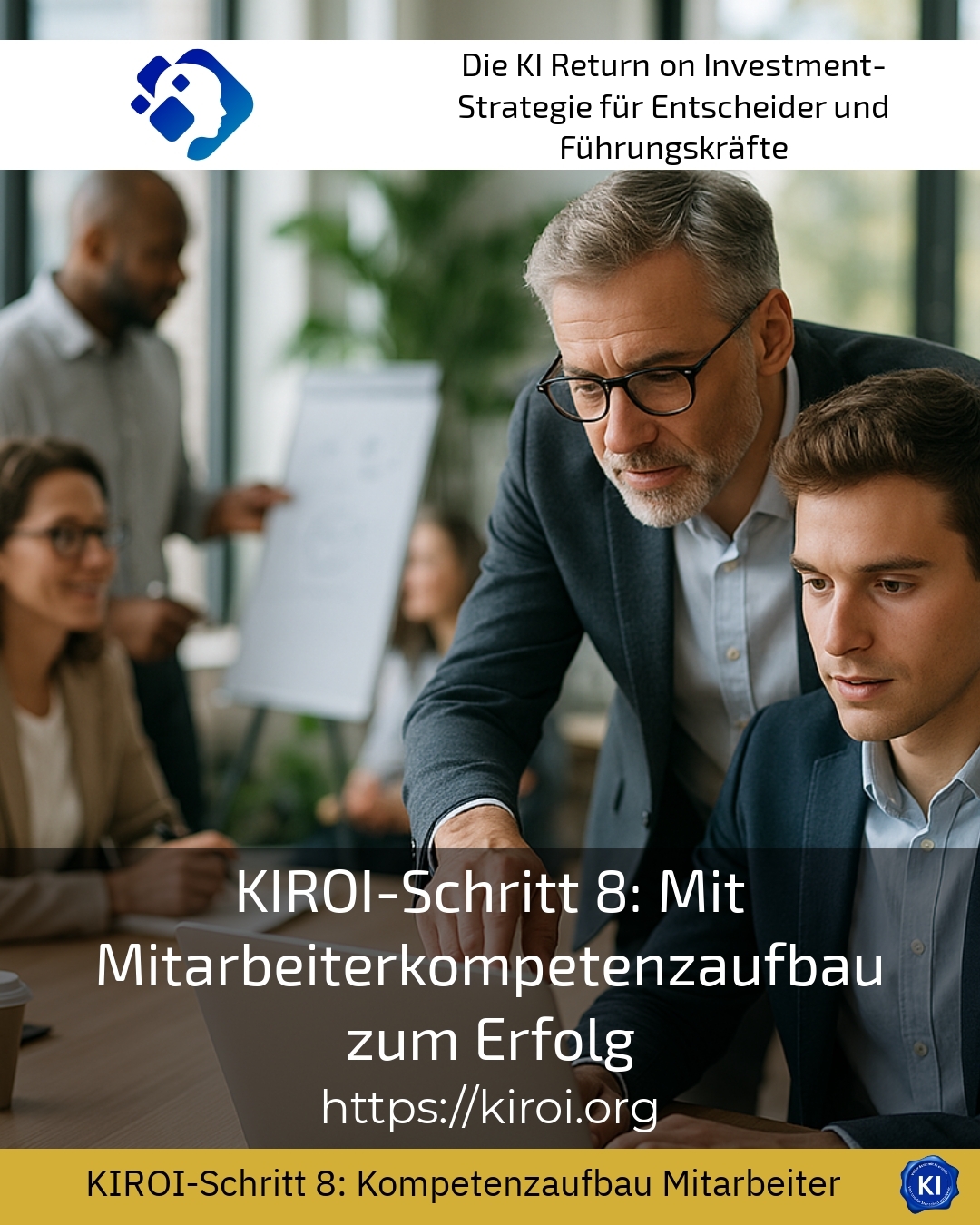
Targeted employee skill development is an essential component for the sustainable success of companies. Through the systematic promotion of skills and abilities, employees further develop their potential and effectively support company objectives. In this article, you will learn how employee skill development can be achieved, which methods have proven particularly successful, and how it can be implemented in practice.
Employee competence development as a strategic foundation
Employee competency development is not a short-term measure but a continuous process. Companies, for example from the manufacturing sector, the IT sector, or the service industry, benefit from regularly analysing and strategically developing the competencies of their teams. This allows gaps to be identified early and closed with suitable offers. As part of planning, individual competency assessments help to record the current status and anticipate future needs.
For example, by introducing regular competence talks, a medium-sized mechanical engineering company has ensured that skilled workers are specifically trained in new technologies. This led to a measurable increase in innovation and process quality. Similarly, employed IT specialists in a software company report that they master new programming languages more quickly through project-related learning phases, thereby developing more efficient solutions.
In the healthcare sector too, it is evident that the combination of further training and practical instruction strengthens teamwork and contributes to the improvement of patient care.
Methods for effective competence development
The spectrum of methods for building employee competence is broad. From classic face-to-face seminars to e-learning, on-the-job training and coaching, there are diverse options for developing skills.
In craft businesses, for example, job rotation promotes employee flexibility and allows them to gain experience in different work areas. At the same time, they acquire practical skills that are difficult to impart through traditional classroom teaching. In sales, role-playing and feedback sessions are often used to strengthen communication and negotiation skills.
A large industrial company uses project-oriented learning phases where employees take responsibility for sub-steps of a new product. This not only increases their technical expertise but also their self-confidence in dealing with complex tasks. In parallel, a professional coaching team supports the teams by identifying and specifically addressing individual development needs.
Practical support through coaching in employee skills development
Coaching plays an important role in building employee competencies as tailored support. It accompanies employees who face particular challenges or wish to develop further in leadership positions. Clients from the financial sector often report positive changes through systematic leadership coaching, which fosters not only technical skills but also social and methodological competencies.
Coaching formats are also used in creative agencies to encourage self-reflection and unlock innovative solutions. These include, among other things, techniques for stress management and improving collaboration. A manufacturing company, in turn, introduced a mentoring programme that pairs experienced professionals with junior employees. This form of collegial exchange helps to pass on valuable practical knowledge and ensures cross-company learning.
BEST PRACTICE with a customer (name hidden due to NDA contract): In a medium-sized IT company, the development of project management skills among team leaders was supported through targeted coaching. The expansion of their competencies significantly accelerated the implementation of several challenging customer projects. The combination of on-the-job learning and regular coaching sessions proved to be particularly effective.
Incentives for everyday implementation
Companies should understand employee competency building as a dynamic process supported by various building blocks. These include:
- Individual development plans that are agreed upon with employees.
- Diverse learning formats, such as in-person events, e-learning and practical training.
- External coaching services as support during change processes.
- Promoting an open feedback culture for continuous improvement.
- Integration of project work in which new skills are directly applied.
A company from the logistics industry reports that exchanges within peer groups help to share practical experience and learn from one another. A construction company also uses digital learning platforms so that employees can acquire new knowledge independently of time and location. Likewise, small retail businesses can benefit from targeted training in customer communication in order to increase service quality.
My analysis
Employee competency development is a key success factor for modern organisations. It not only supports the individual development of employees, but also significantly contributes to competitiveness. Companies should therefore systematically plan and implement competency development by combining various methods and also incorporating coaching as a complementary element. The examples from different industries clearly demonstrate how diverse and effective structured competency building can be.
Further links from the text above:
[1] Successful Competence Development: 9 Tips and 3 Methods
[2] 11 Methods of Staff Development & Benefits
[3] Competence development: definition + examples
[4] Popular methods for developing competencies
[5] Skills development: importance and methods
[8] KIORI Step 8: Building staff competence for decision-makers
For more information and if you have any questions, please contact Contact us or read more blog posts on the topic Artificial intelligence here.











 Deutsch
  English (UK)