
In an era of rapid change in the world of work, the need for genuine transformation is growing, particularly in the area of company culture. Cultural change is not a trend but a necessity for organisations that wish to remain flexible, innovative, and future-proof. This is because only by adapting values and behaviour in the long term can teams and leaders grow together. Transruption Coaching specifically supports companies in these cultural change processes, demonstrating how relevant impetus can be created.
Why cultural change is so important for businesses
Cultural change doesn't start with new visions or attractive posters, but with concrete everyday actions. Many companies face similar challenges: they wish for more trust, better communication, and greater appreciation for each other[2]. At the same time, they observe that old patterns are difficult to break. This is where transruption coaching intervenes with systemic methods, as these address not only the symptoms but also the real causes of stagnation.
For example, a medium-sized manufacturing company wanted to improve collaboration between production and development. Through targeted workshops and the introduction of new meeting formats, an open exchange of processes and ideas was fostered. This helped to overcome obstacles and enabled innovations that had previously seemed unthinkable.
BEST PRACTICE with one customer (name hidden due to NDA contract) An industrial company wanted to strengthen collaboration and personal responsibility. In the first year, the team focused on raising awareness, and in the second, on a shared vision. The decisive step was the integration of new behaviours into everyday work: collaboration zones were created, digital platforms were introduced, and leaders set a positive example. The result: collaboration became more open, willingness to experiment grew, and employees took on more responsibility. It was important that the changes were not isolated incidents but had an impact across all areas – thus, the new culture became permanently established.
Another example from the service industry: a company introduced a new feedback culture by allowing employees to regularly provide input in structured formats. Leaders actively participated, fostering trust and transparency. These small but consistent steps led to a measurable increase in employee satisfaction.
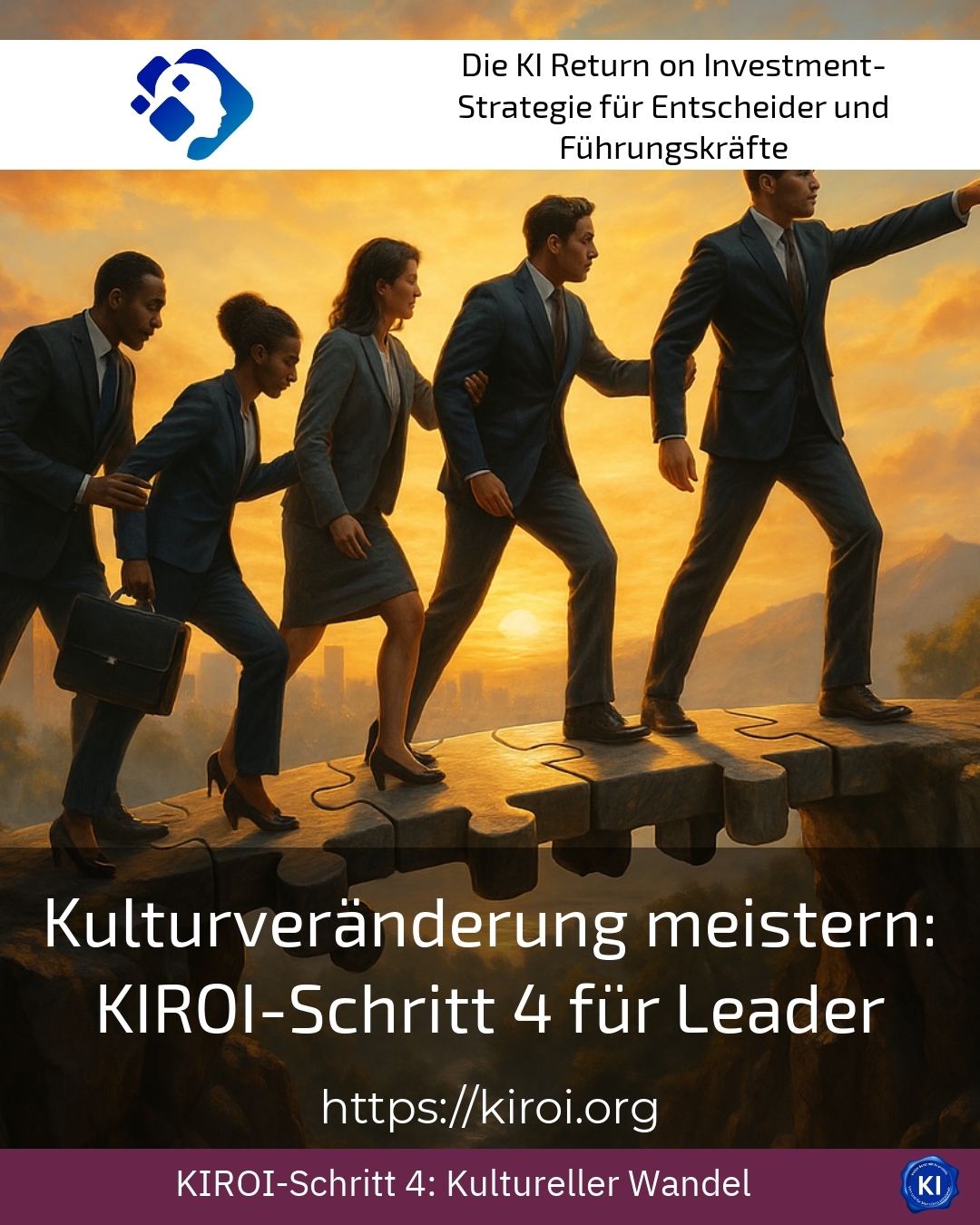
KIROI Step 4: Embedding the New Culture in Everyday Work
The heart of any successful cultural change is the embedding of new values in everyday interactions. In the KIROI approach, step 4 represents this integration: it's about leaders not just talking about values, but actively embodying them[1]. They are role models, shapers, and multipliers all at once – thereby significantly influencing the transformation[2].
Clients frequently report feeling unsure how to establish new behaviours. Targeted coaching helps with this: individual and team formats support leaders in recognising blind spots, clarifying their own values, and credibly implementing desired behaviour[2]. Only in this way does a nucleus of the new culture emerge, which then radiates throughout the entire company.
A concrete example from the IT sector: a company introduced regular retrospectives in which teams openly discussed successes and failures. Management actively participated, demonstrating that a culture of honesty about mistakes and a willingness to learn were taken seriously. This created a new space where openness and development were permitted [1].
Practical tips for implementing cultural change
Cultural change doesn't happen overnight, but through targeted, repeated impulses. Use the following approaches to support change:
Begin by analysing the current culture and together, define a clear target state. Involve all levels so that changes are supported from the outset. Develop concrete, measurable objectives and adapt processes and structures to the new orientation. Create space for experimentation and learn from mistakes, as this is how sustainable behavioural changes arise[5].
An example from the automotive industry: A company adopted agile methods and iterative ways of working. Employees were involved in the process and could contribute their ideas. This led to higher motivation and better results because the cultural change became tangible in everyday work[1].
Use regular reflection sessions to make progress visible and to make adjustments. Invest in the ongoing development of leaders, as they are key to success. And seek external support if necessary, such as through transruptive coaching, to professionally guide the process.
My analysis
Cultural change is a complex but rewarding process. Companies that consistently pursue this path report increased motivation, better collaboration, and greater innovation[4]. The key is not only to articulate new values and behaviours, but to live them daily – involving all levels of the organisation. Leaders play a central role here because they drive change and act as role models[2]. Transruption coaching offers the right support to successfully shape and sustainably anchor such change processes.
Cultural change remains an ongoing task, but it is worthwhile: it creates the basis for sustainable organisations in which people enjoy working and growing together.
Further links from the text above:
Mastering Cultural Transformation: KIROI Step 4 for Decision Makers
Mastering Culture Transformation: KIROI Step 4 for Leaders[2]
Shape with KIROI Step 4 purposefully [3]
KIROI Step 4: Driving Culture Transformation with Purpose
Cultural change: 6 effective steps to transform company culture [5]
For more information and if you have any questions, please contact Contact us or read more blog posts on the topic Artificial intelligence here.











 Deutsch
  English (UK)