
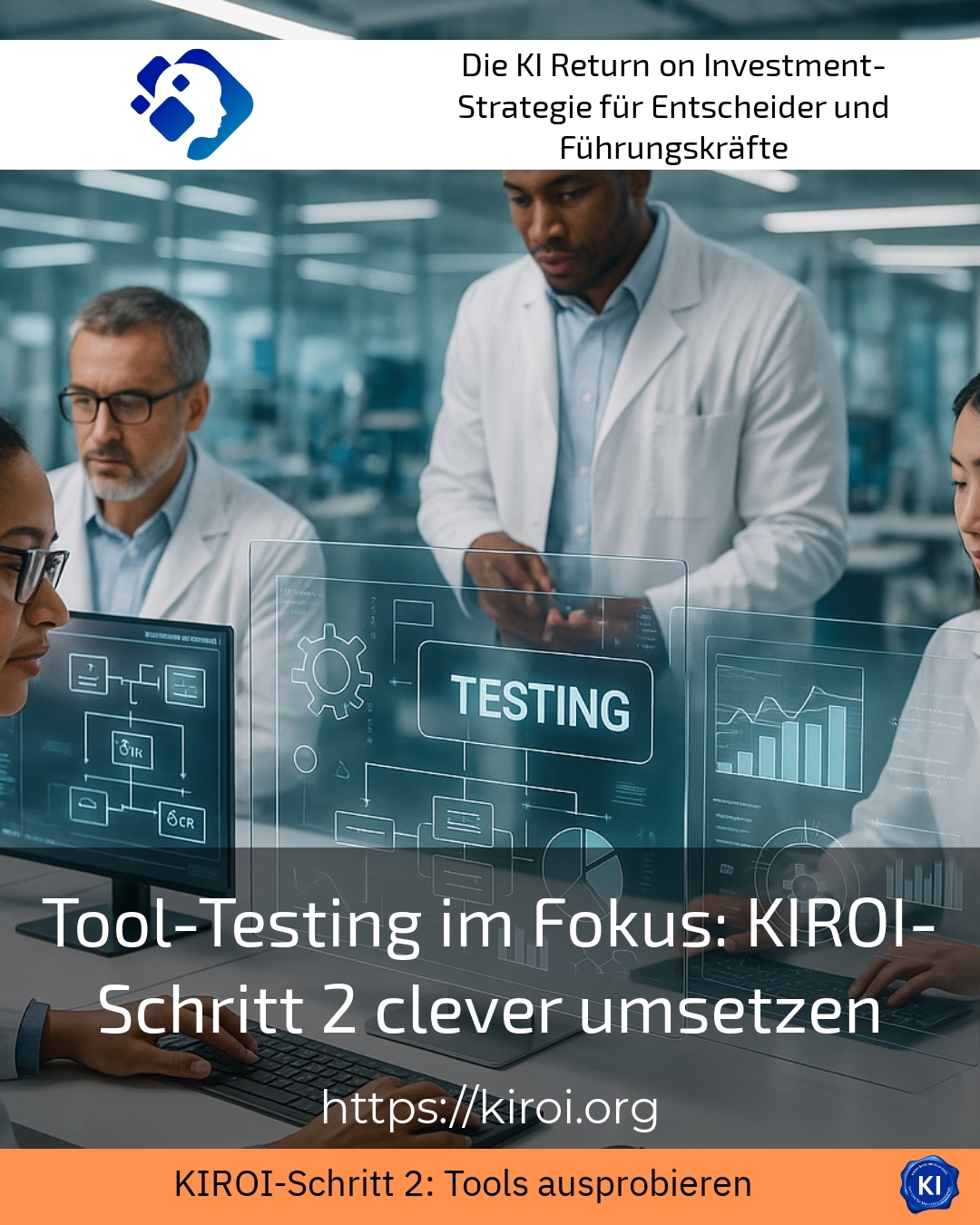
In the context of agile project work, tool testing is gaining increasing importance, particularly when it comes to effectively using innovative digital tools. The practice of tool testing supports teams in truly understanding suitable software solutions and optimally integrating them into their work processes. Within the KIROI system, the second step of tool testing represents a particularly important phase for meaningfully and purposefully trying out the diverse AI tools.
Step 2 in focus: Tool testing as the key to increasing efficiency
Many companies report that the sheer variety of available tools can lead to confusion. That's why Step 2 in the KIROI process focuses not just on getting to know tools, but on testing them in a targeted and systematic way. This provides clarity about the strengths and weaknesses of individual solutions and allows you to specifically leverage them. The results of the tool testing thus support decision-making and promote better integration of newly introduced technologies.
For instance, a publishing house uses tool testing to compare different text generation tools. This revealed that some tools save time, particularly in research and raw text creation. At the same time, other tools were preferred for creative elaboration and individual adjustments. Such practical experience feeds into the selection of the best tool, which is then used productively.
Tool testing also helps in the field of image processing to find optimal software for quality control. Industries such as automotive production or electronics manufacturing benefit from this, as they can reliably identify error patterns and thus reduce scrap. Active use and evaluation of various tools are essential here to ensure the best price-performance ratio and easy integration with existing systems.
Finally, customer service examples show how testing phases for chatbots or virtual assistants provide valuable insights. Teams find that regular testing and iterative adjustments noticeably improve service quality and, furthermore, enhance the customer experience.
KIROI - Best Practice from Practice
BEST PRACTICE with one customer (name hidden due to NDA contract) was a medium-sized industrial company that evaluated various AI-based analysis tools for its production lines as part of tool testing. The support helped to define relevant evaluation dimensions and to define suitable scenarios. In the end, the company was able to identify the best solution, which, in addition to error detection, also impressed with its simple integration into the ERP system, thus significantly improving process quality.
Structured Approach to Tool Testing for Sustainable Success
A successful test of the tool begins with clearly defined objectives. Consider which functions offer real added value and in which context the tool is to be used. For example, in sales, you can specifically test automatic lead scoring, or in marketing, evaluate the personalisation of campaign functionalities. A structured and planned test phase prevents inefficient approaches.
In the second step, it is advisable to involve various stakeholders early on, including specialist departments and future users. This will provide you with diverse perspectives and enable you to define practice-oriented criteria. Interdisciplinary feedback will also improve the acceptance of the selected solutions within the company.
The documentation of test results is another key aspect. This should not only record strengths and weaknesses but also transparently present integration effort, costs, and potential risks. Well-maintained test documentation facilitates later decisions and supports team communication.
Practical examples from various industries
In logistics, tool testing enables the optimisation of AI-based demand forecasting and route planning, for example. Companies report more precise resource planning and associated cost savings. In marketing, the evaluation of automation tools provides valuable insights into which solutions can be flexibly adapted to different campaign objectives.
Customer service also benefits, as chatbots are continuously improved through testing to respond to queries faster and increase user-friendliness. The advantages of a well-executed testing phase become particularly clear with high query volumes.
Tool testing is also of great importance in the field of IT security. Companies test various vulnerability analysis solutions and select tools that offer a balanced mix of detection rate and user-friendliness.
My analysis
In summary, structured and targeted tool testing as part of KIROI Step 2 is an essential success factor for the successful introduction of new software-supported solutions. It not only enables a well-informed selection from numerous tools but also supports later implementation through sound insights. Companies that carefully manage this process benefit from optimised workflows, higher efficiency, and better utilisation of their resources.
Further links from the text above:
KIROI - Step 2 - Trying out AI tools efficiently
Tool Tests for Decision Makers: How to Succeed with KIROI Step 2
How to create and manage test cases with Xray and Jira
For more information and if you have any questions, please contact Contact us or read more blog posts on the topic Artificial intelligence here.











 Deutsch
  English (UK)