
Compliance guidelines are an essential building block of modern corporate governance. They support companies in systematically adhering to legal requirements and ethical standards. Particularly in the fifth step of the KIROI model, the focus is on mastering ethics within the company and bringing compliance guidelines to life. In this way, organisations promote sustainable action and minimise risks.
Compliance Guidelines: The Basis for Ethically Responsible Action
Compliance guidelines encompass all rules that a company introduces to adhere to legal provisions and internal regulations. This involves not only legal obligations but also ethical guidelines that build trust among employees, customers, and partners. In practice, managers repeatedly encounter complex questions, such as how to avoid conflicts of interest or ensure data protection. For example, a leading mechanical engineering company has significantly improved adherence to occupational safety standards through clear compliance guidelines, which has led to fewer workplace accidents.
Compliance guidelines also ensure transparency within the financial sector. Banks must not only meet legal requirements but also prevent corruption and money laundering. For example, a credit institution supports its employees with regular training and a code of conduct that promotes ethical behaviour. On the other hand, compliance guidelines are essential in the retail sector to consistently implement fair trading practices and consumer protection, for instance.
BEST PRACTICE with one customer (name hidden due to NDA contract) An international technology group implemented ethical training for all executives as part of the KIROI Step 5, supported by digital tools. This programme enhanced awareness of compliance guidelines and significantly reduced violations. Employees could therefore be better supported in dealing with complex compliance situations.
Compliance Policies in Focus: Ethics as a Living Component
In the fifth step of the KIROI model, the focus shifts from pure rule-following to a culture of ethical responsibility. Ethics cannot be achieved solely through directives, but through lived values. Companies that understand their compliance policies as dynamic tools encourage open feedback and foster a culture of failure that enables learning. This is particularly important in the pharmaceutical industry, as transparency and responsible action in research and sales build bridges to patients and authorities.
In the IT services sector, challenges also arise concerning data protection and the use of sensitive customer data. Here, compliance guidelines must offer precisely defined rules of conduct, which can sometimes also govern the handling of artificial intelligence. A software company therefore implemented clear guidelines for AI ethics, focusing on transparency, data quality, and user rights.
Even trades businesses can benefit from an ethically led compliance culture: for instance, clear rules on corruption prevention and workplace safety can not only improve their image, but also secure competitive advantages, as customers gain trust.
BEST PRACTICE with one customer (name hidden due to NDA contract) A medium-sized IT service provider introduced transparent documentation and user guides for AI-based applications as part of its compliance policies. This allowed ethical questions to be identified early and users to be better informed, which strengthened market confidence.
Practical Tips for Mastering Ethics in Compliance Management
Establish regular training: Raise employees' awareness of ethical issues and compliance guidelines. Practical examples increase attention.
2. Establish open channels of communication: Foster a culture where employees can report compliance violations or uncertainties without fear of reprisal.
3. Understanding Compliance as a Strategy: Don't just formalise ethical standards, actively incorporate them into business decisions. For example, in supplier evaluations or for new projects.
4. Conduct monitoring and auditing: Regularly check that policies are adhered to, and adapt them when changes occur.
5. Holding leaders accountable: Role models from management can have a strong signalling effect and underline the importance of compliance guidelines.
Compliance policies in practice – diverse industry perspectives
In the healthcare sector, compliance guidelines are often linked to the protection of sensitive patient data and the assurance of ethical research. Clinics are investing in well-structured information systems and awareness training for employees to address this.
The automotive industry places diverse compliance requirements on its supply chains, for example regarding environmental and social standards. An automotive supplier established a compliance framework that systematically identifies risks and also includes suppliers.
Finally, fair examination regulations, data protection, and a respectful approach are part of ethical compliance guidelines in the education sector. Here, universities demonstrate their responsibility towards students through initiatives for transparency and adherence to internal regulations.
BEST PRACTICE with one customer (name hidden due to NDA contract) As part of KIROI Step 5, a university implemented a centrally managed compliance training programme, aimed at both academic and administrative staff. The successful introduction improved adherence to data protection regulations and strengthened the university culture.
My analysis
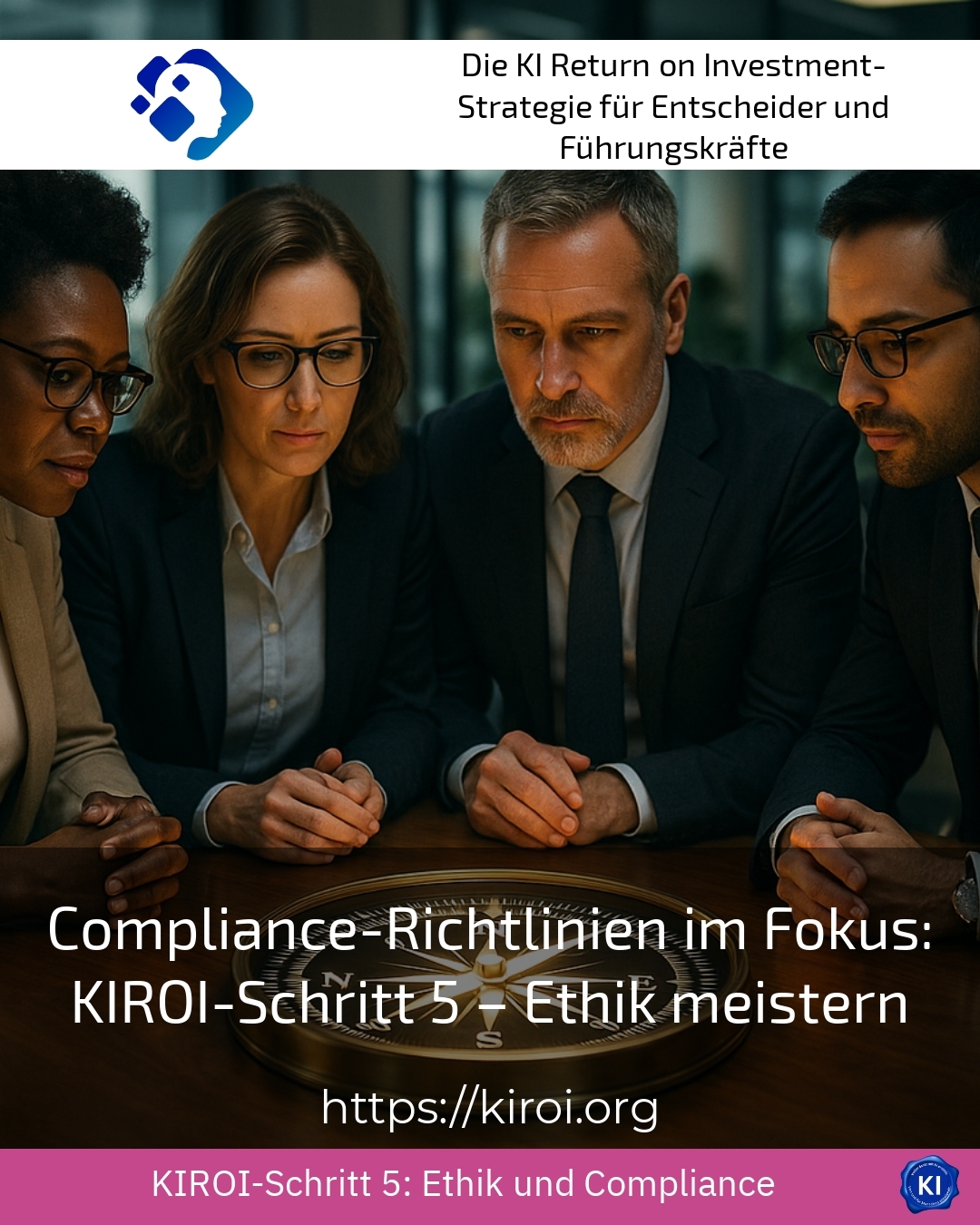
Compliance policies are more than a legal requirement – they are the compass for ethical and sustainable business. KIROI Step 5 highlights the importance of understanding ethics as a living component of compliance management. Companies from various industries demonstrate that through training, open communication, and consistent monitoring, an environment can be created that minimises risks and strengthens trust. Only in this way do compliance policies develop into an effective tool that not only protects but also creates value.
Further links from the text above:
What are compliance policies? – Navan
Implementing the EU AI Act in Business – AIStrategyConsult
Compliance: Definition and Tasks – Personio
How to effectively implement compliance policies – DataGuard
Mastering Compliance Policies: KIROI Step 5 – Sauldie
For more information and if you have any questions, please contact Contact us or read more blog posts on the topic Artificial intelligence here.











 Deutsch
  English (UK)