
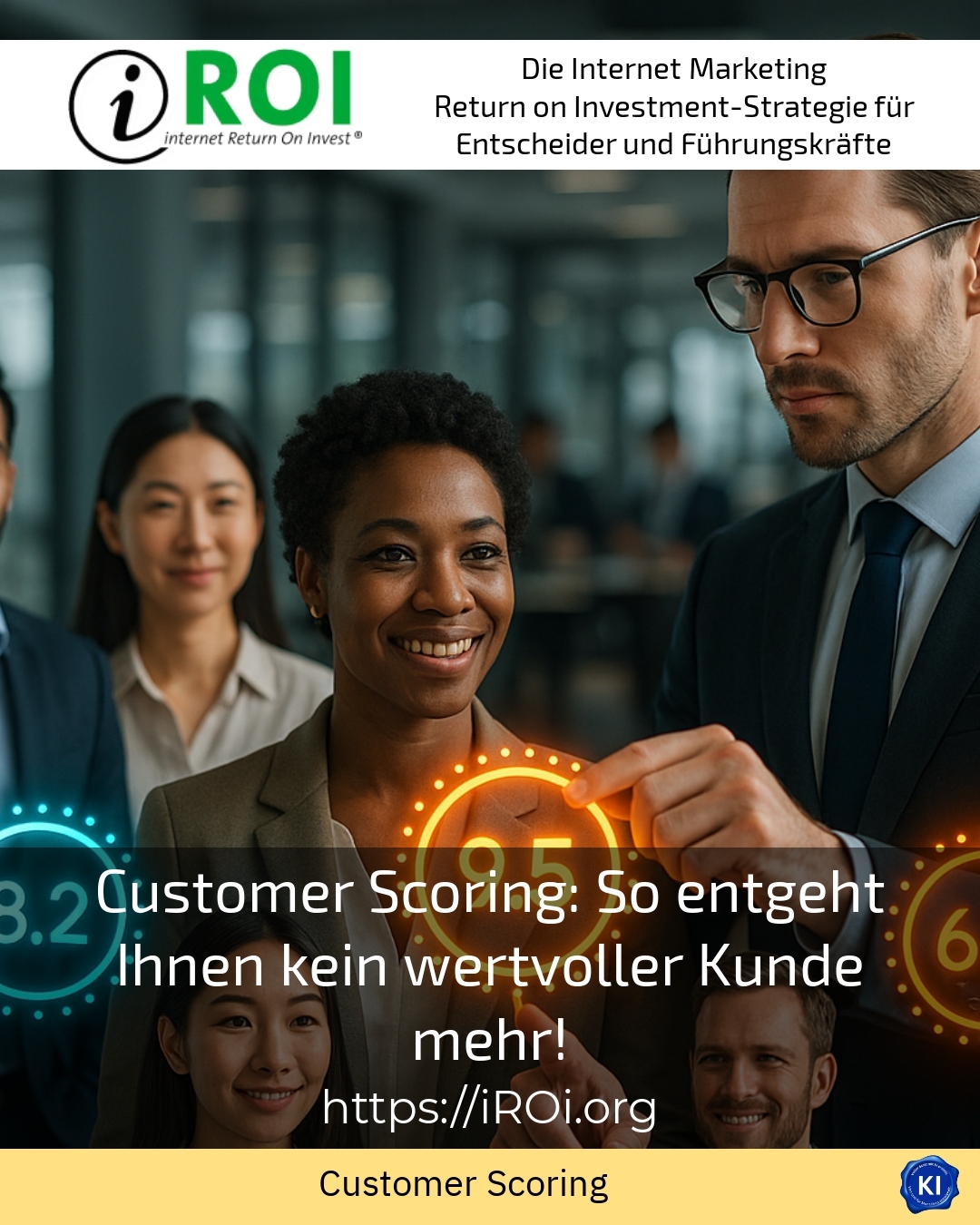
Customer scoring helps companies systematically identify valuable customers and provide them with optimal support. This structured approach fosters targeted marketing and sales strategies, ensuring no important customer is lost. Companies that use customer scoring benefit from in-depth insights into their customer base and can deploy their resources more efficiently.
Customer scoring as the key to precise customer engagement
Customer scoring classifies customers based on various criteria such as purchase history, frequency of interactions, or predicted value. This allows companies to better understand individual customer segments and target them more effectively. For example, retailers optimise their focus on customers with a high propensity to buy, while banks differentiate risky customers using credit scoring. Online shops also use customer scoring for segmentation in order to send tailored offers or vouchers.
In the insurance sector, the method supports churn management by identifying at-risk customers early and supporting them with special retention measures. This way, insurers stabilise their customer base despite market changes. In e-commerce, customer scoring models identify customers who would particularly benefit from up-selling or cross-selling, thereby sustainably increasing revenue.
The versatility of customer scoring is particularly evident in the implementation of personalised marketing campaigns, which are precisely tailored to the needs of individual customer segments. For instance, marketing teams in the telecommunications industry frequently report significantly increased conversion rates when using scoring-based targeting.
BEST PRACTICE with one customer (name hidden due to NDA contract)
By employing customer scoring, a leading telecommunications provider was able to establish personalised customer engagement. The analysis of customer history and usage data enabled the development of a scoring model that identified particularly valuable customers. Based on this, targeted campaigns were launched, which resulted in a significant increase in customer loyalty and new customer acquisition, accompanied by better resource allocation in sales.
How customer scoring supports companies with customer care
A key advantage of customer scoring is the early detection of customer churn. Insurance companies use scoring models to identify at-risk contracts and proactively offer personal advice. This increases the chance of contract renewals and strengthens long-term customer relationships.
Scoring is also used in retail to win back inactive customers. For example, fashion companies can send targeted mailings with special discount offers to customers whose score indicates lower activity. This often leads to an increased reactivation rate.
Furthermore, customer scoring helps marketing teams to better predict the success rates of campaigns and to use budgets more efficiently. Credit institutions, for example, use risk assessments to specifically target credit offers at customers with a high probability of repayment, thereby minimising default risks.
BEST PRACTICE with one customer (name hidden due to NDA contract)
A major financial services provider was able to optimise its lending process through customer scoring. The model integrated data from various sources, such as transaction histories and credit checks, to calculate the default risk score. This resulted in a reduction in the default rate of over 15%, whilst at the same time serving more customers with good scores, thereby increasing profitability.
Practical tips for implementing customer scoring
For a successful implementation, it is advisable to work step by step and first focus on high-quality data. Incomplete or incorrect data significantly impairs the validity of the scores. Also, pay attention to data protection compliance, especially with sensitive customer data.
Successful companies involve various specialist areas – from marketing and sales to customer service – to design the customer scoring process holistically. This ensures that insights are used meaningfully across all departments.
Regular updates to scoring models are important to account for changes in customer behaviour and market conditions. Tools with automated updates simplify this process and enable immediate adaptation of customer engagement.
BEST PRACTICE with one customer (name hidden due to NDA contract)
An international retailer implemented a customer scoring system that is updated weekly. By integrating purchase and interaction data along with social media insights, customer segments were defined with greater precision and flexibility. The marketing department benefited from the ability to adjust campaigns in real-time, thereby sustainably increasing conversion rates.
Customer Scoring as a Strategic Management Tool
In the long term, customer scoring supports companies in fostering growth and increasing profitability. It makes customer targeting more efficient, reduces wasted expenditure, and ensures better customer loyalty. The insights gained assist management in planning new products, expanding services, or controlling investments.
Insurance companies frequently report that customer scoring has enabled them to enhance service quality and measurably improve customer satisfaction. At the same time, customers remain more loyal, and the risk of churn decreases.
Even digitally oriented companies use scoring models to specifically target potential new customers and to intensely support existing customers through personalised customer journeys. To do this, they use big data analyses and artificial intelligence to continually refine scores.
My analysis
Customer scoring offers sustainable added value in managing a heterogeneous customer base. Companies benefit from more precise insights into purchasing behaviour, risk factors, and loyalty. With the support of iROI coaching on customer scoring projects, clients receive expert guidance and tailored impulses. This allows for individual challenges to be addressed and proven procedures to be implemented, which lead to less wasted effort and higher marketing efficiency. Overall, customer scoring helps to ensure no valuable customer is missed while simultaneously increasing profitability in a targeted manner.
Further links from the text above:
Customer scoring: definition, methods, use cases – DinMo [1]
Megatrend Customer Scoring – PwC [2]
Customer Scoring: Definition and Benefits – Skeepers [3]
5 Benefits of Customer Scoring and Segmentation | JustCall Blog [5]
How a scoring model sustainably advances companies [6]
For more information and if you have any questions, please contact Contact us or read more blog posts on the topic internet Return on Investment - Marketing here.











 Deutsch
  English (UK)