
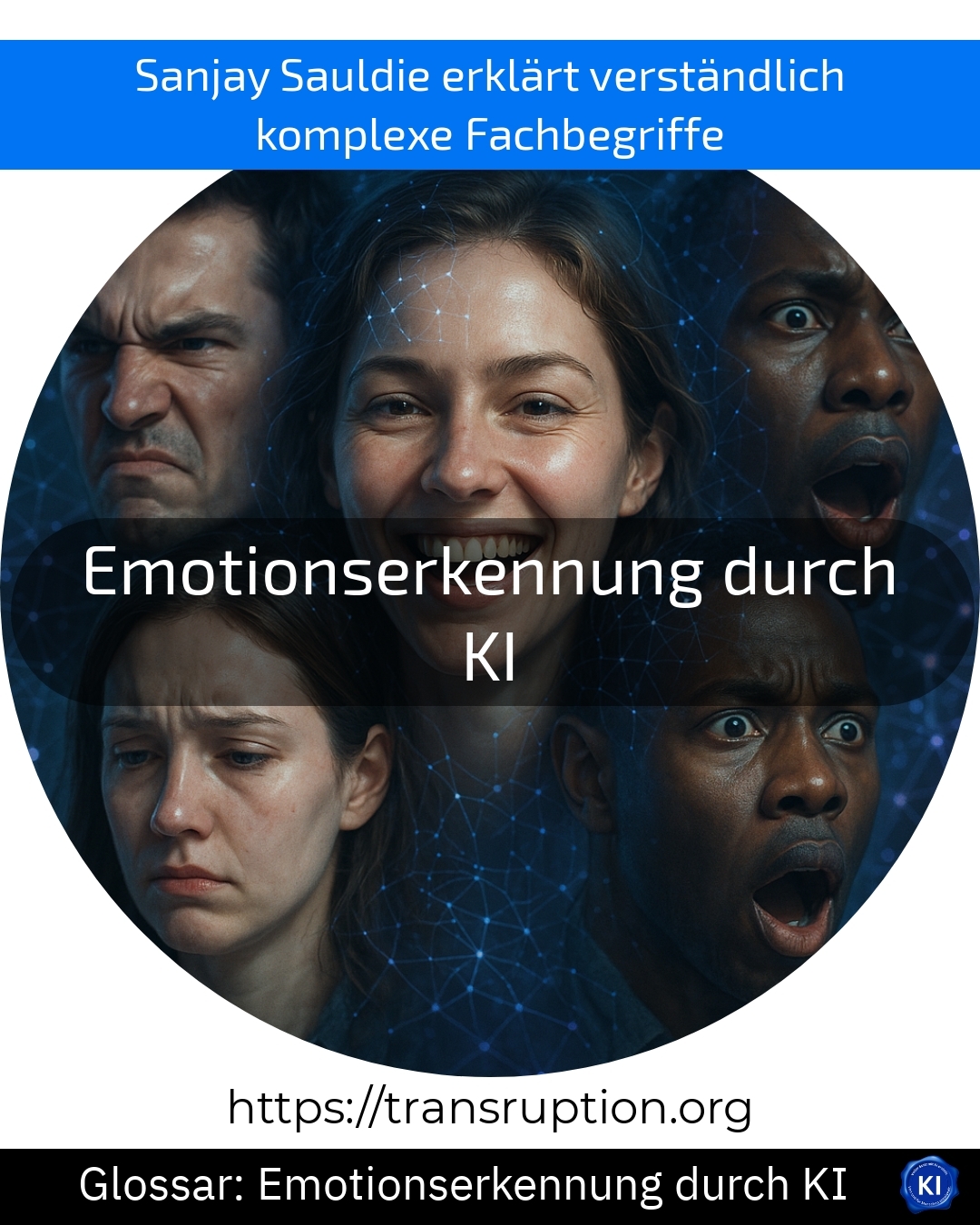
AI-based emotion recognition is particularly relevant in the fields of Artificial Intelligence, Digital Society, and HR work & teams. This involves computers being able to recognise people's feelings using artificial intelligence – for example, whether someone is happy, sad, or angry.
How does it work? Intelligent systems analyse faces in photos or videos, the tone of voice, or even written texts in emails or chats using algorithms. The AI compares this data with patterns it has learned from a multitude of examples, and then provides an assessment of which emotion is present.
A typical example is a company's customer service: here, emotion recognition using AI can be deployed to immediately detect when a customer is particularly dissatisfied or stressed. This allows employees to respond more effectively and resolve the issue before it escalates into a bigger problem.
This technology is also used in human resources management, for example, to better assess the mood and credibility of candidates during job interviews. AI-powered emotion recognition thus supports various areas in better understanding and taking human feelings into account.











 Deutsch
  English (UK)