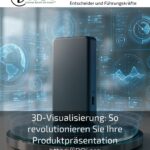
3D visualisation is changing how businesses present their products. It allows products to be depicted photorealistically even before they physically exist. Many industries are using this technology to showcase their offerings in an appealing and flexible way. 3D visualisation supports marketing, sales, and product development. It helps to enthuse customers and speed up processes.
Why 3D visualisation is becoming increasingly important
More and more companies are opting for 3D visualisation as it offers many advantages. It saves time and costs, as physical prototypes are often no longer necessary. Products can be tested and optimised digitally. This is particularly important in industries such as automotive, electronics, or furniture manufacturing.
An example from the automotive industry: Manufacturers show different vehicle configurations in 3D. Customers can select colours, materials and features and see the result immediately. This promotes customer satisfaction and speeds up the purchasing process.
3D visualisation is also popular in the electronics industry. Brands present new devices with detailed animations. Customers can see how products work and how they are used in practice. This increases trust and willingness to buy.
3D visualisation in practice: examples from the industry
Flexibility and variety of options through 3D visualisation
A major advantage of 3D visualisation is its flexibility. Once a model has been created, it can be easily adapted. Colours, materials and shapes can be changed without the need for new photoshoots or prototypes.
Furniture manufacturers use this to digitally showcase various designs and fabrics. Customers can configure their desired furniture and immediately see what it looks like. This saves time and reduces production errors.
In mechanical engineering, complex devices are simulated using 3D visualisation. This allows problems to be identified and rectified early on. This speeds up development and reduces costs.
In the area of packaging, customers can view packaging examples online in a 360-degree view. They can see how colours and shapes affect the impact. This promotes decision-making and confidence.
BEST PRACTICE with one customer (name hidden due to NDA contract) The company used 3D visualisation to digitally develop a variety of product variations and easily align them with end customers. This significantly reduced development costs while increasing customer satisfaction through greater involvement.
Cost-efficiency and time-saving thanks to 3D visualisation
3D visualisation saves a lot of time and money, particularly in product development. Instead of creating expensive physical prototypes, a product can be tested and optimised virtually in various designs. This shortens time-to-market and eliminates the costs of elaborate photoshoots.
In the fashion industry, clothing items are first visualised digitally. Fabrics and cut shapes can be optimised before they go into production. This reduces faulty production runs and supports more sustainable manufacturing.
In the automotive sector, vehicles are displayed in 3D. Customers can select different specifications and colours and see the result immediately. This improves customer satisfaction and speeds up the purchasing process.
In the field of electronics, new devices are presented with detailed animations. Customers see how products work and how they are used in practice. This increases confidence and willingness to buy.
Interactive 3D Visualisation: More Engagement and Better Results
Interactive 3D visualisation creates an exploratory experience. Customers can view, rotate and zoom in on products from all angles. This promotes a deeper understanding and a stronger emotional connection.
In the furniture industry, customers can configure their desired furniture and see how it looks immediately. This promotes customer satisfaction and speeds up the purchasing process.
In the field of electronics, new devices are presented with detailed animations. Customers see how products work and how they are used in practice. This increases confidence and willingness to buy.
In the area of packaging, customers can view packaging examples online in a 360-degree view. They can see how colours and shapes affect the impact. This promotes decision-making and confidence.
My analysis
3D visualisation is a powerful tool for businesses wanting to present their products in an appealing and flexible way. It saves time and costs, promotes customer satisfaction and accelerates the purchasing process. Many industries use this technology to optimise their offerings and increase their competitiveness.
iROI-Coaching supports companies with projects involving 3D visualisation. We provide impetus, assist with implementation, and help to optimise the benefits. Clients often report that 3D visualisation allows them to accelerate their processes and reach their customers more effectively.
Further links from the text above:
3D Product Visualisation – Examples, Costs & Benefits
30 Great 3D Product Showcase & Visualisation Videos
How 3D visualisation revolutionises your product presentation
For more information and if you have any questions, please contact Contact us or read more blog posts on the topic internet Return on Investment - Marketing here.






 Deutsch
  English (UK)