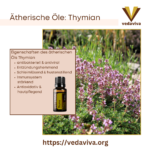
Thyme Oil: The Healing Power of Nature for Body and Mind
Thyme essential oil is an all-rounder and has versatile applications in aromatherapy and natural medicine. Whether as a kitchen spice or a proven home remedy for a number of ailments, the therapeutic properties of thyme have long been valued by people. The essential oil, obtained by carefully distilling the leaves and flowers of the thyme plant (Thymus vulgaris), contains many beneficial components. These are advantageous for the body as they can strengthen the immune system and relieve inflammation. It can also improve mental health by sharpening concentration and is said to stimulate the senses. The properties contained in thyme oil can make it a useful aid for maintaining health and can be integrated into everyday life in many ways.
What does thyme essential oil contain?
The active ingredients in thyme oil include cineole, linalool, carvacrol and thymol. Due to these many components, it has strong antiviral, as well as antibacterial and anti-inflammatory properties. It is often used to treat colds, respiratory illnesses, and muscle pain and is widely known for its immune-boosting properties.
The health benefits of thyme essential oil
- Airway support
Thyme oil is an expectorant that can help with colds, bronchitis and coughs. To experience possible relief, users can apply diluted drops to the chest or inhale a few drops in a steam inhaler. - Natural antiseptic
Thyme oil is often used as an eco-friendly alternative to conventional cleaning agents due to its natural antibacterial properties. For instance, it can be found in household cleaners to naturally cleanse surfaces and rid them of unwanted germs. Similarly, it is occasionally used diluted in skincare products, with some people considering it for the gentle care of minor skin areas. However, it should always be diluted with a carrier oil and tested for compatibility before application to the skin. - Strengthening the immune system
Thyme's properties are particularly valued in winter when temperatures are often lower and people are more exposed to a variety of environmental influences. As thyme has long been used in herbal medicine as a versatile spice and essential oil, many people incorporate it into their diet or daily routine during this time of year. There are many methods for using thyme, such as in skincare products, in teas, and through inhalation. However, each application should be assessed individually, and when in doubt, it can be advisable to consult experts. - Muscle relaxation and pain relief
A massage with diluted thyme oil can relieve joint or tension pain by helping to promote blood circulation. - Energy and mental clarity:
The earthy, spicy aroma of thyme oil stimulates the senses, promotes concentration, and can combat mental fatigue. In aromatherapy, it is often used to revitalise the body and mind.
Tips for daily application
- Aromatherapy: Add a few drops to a diffuser to promote concentration and purify the air.
- Inhalation: Inhale with hot water for colds to clear the airways.
- Massages: Apply the oil after diluting it with a carrier oil such as almond oil to soothe muscles.
- Cleaner: Mix the oil with vinegar and water to make an antibacterial spray for the bathroom and kitchen.
Thyme oil is a potent essential oil that offers several health benefits. Its versatile uses make it an important component of natural health, whether for boosting energy and clarity, strengthening the immune system, or supporting the respiratory tract. Harness its natural power by consciously incorporating it into your daily routine!
And have I piqued your interest in the essential oil of thyme? Then take Contact us with me or visit me on LinkedIn or Instagram. I am at your disposal with advice and practical support in a free initial consultation. For a successful outcome, it is important to use pure oils. I have chosen the brand DoTERRA decided, and if you want to stock up on essential oils, you're welcome to do so through my shop.
Thyme essential oil in aromatherapy
Properties and composition
The essential oil of thyme is obtained by steam distillation from the leaves and flowers of common thyme (Thymus vulgaris) or wild thyme (Wild thymewon[1][4][7]. Its main active ingredient is thymol, a phenolic monoterpene known for its antiseptic, antibacterial, and antiviral properties[1][3][7]. The oil is colourless to yellowish, has a strong spicy, herbaceous scent, and a relative density between 0.895 and 0.937[7].
Applications in aromatherapy
- Respiratory diseases:
Thyme oil is used for colds, bronchitis and coughs. It can loosen mucus and clear the airways. When inhaled (e.g. over hot water or tissues), its expectorant effect is utilised.[1][2][4]. - Immune System and Infections:
Due to its antibacterial and antiviral properties, it can be used to strengthen the immune system and combat bacterial and viral infections[1][6][7]. - Skincare:
In the cosmetics industry, it is used for acne, blemishes, and inflammation. Thymol can act antiseptically and it can reduce skin irritation[1][2][3]. - Emotional and psychological impact:
In aromatherapy, thyme oil can boost mood, strengthen feelings of courage, and help with mental exhaustion. It can also be used to cleanse negative emotions such as anger or resentment[4][6].
Mechanisms of action
- Antimicrobial effectsThymol inhibits the growth of bacteria and viruses, making it a natural disinfectant[1][7].
- Anti-inflammatoryThe anti-inflammatory properties relieve redness and swelling of the skin.
- Circulation enhancementIn hair care, it can improve scalp health through increased blood circulation.
Importance in aromatherapy
Thyme oil is considered a versatile oil with a wide range of applications. Its antiseptic properties make it a key product for respiratory infections, and its mood-lifting effect has established it in emotional aromatherapy [4][6]. It is also valued in natural medicine and cosmetics, with dilution with carrier oils (e.g., almond oil) being essential to avoid skin irritation [2][5]. The lack of clinical studies on its efficacy, despite laboratory-based evidence, is a critical point to consider [7].
Practical application guidelines
- Inhalation: Add 6–8 drops to a handkerchief or into hot water[1][2].
- Topical applicationDilute with base oil (e.g. 3–4 drops to 50 ml of almond oil) for skin problems or massages[5].
- Room fragrance: In diffusers for air purification and mood enhancement[2][4].
Through its historical use as a medicinal herb and modern applications in aromatherapy, thyme oil remains a central oil in natural medicine.
Sources
[1] https://www.mein-schoener-garten.de/lifestyle/gesund-leben/thymianoel-wirkung-und-anwendung-73165
[2] https://www.pharmaphant.de/thymian/thymian-oel/02560737.html
[3] https://naturkosmetik-werkstatt.de/products/thymian-10-ml-atherisches-ol
[4] https://www.wurzelstock.com/aromaoele/aetherische-oele/65/aetherisches-oel-thymian
[5] https://taoasis.com/thymianoel-rot-bio-typ-thymol
[6] https://www.aroma-welt.com/%C3%BCber-doterra/einzel%C3%B6le/doterra-thyme-thymian/
[7] https://de.wikipedia.org/wiki/Thymian%C3%B6l
[8] https://aromapraxis.de/oele-lexikon/thymian-thymus-vulgaris/






 Deutsch
  English (UK)