kiroi.org

KIROI - Artificial Intelligence Return on Invest
The AI strategy for decision-makers and managers

Business excellence for decision-makers & managers by and with Sanjay Sauldie

KIROI - Artificial Intelligence Return on Invest: The AI strategy for decision-makers and managers

KIROI - Artificial Intelligence Return on Invest: The AI strategy for decision-makers and managers

Start » Rethinking change management: Transforming culture with KIROI step 4
29 August 2025

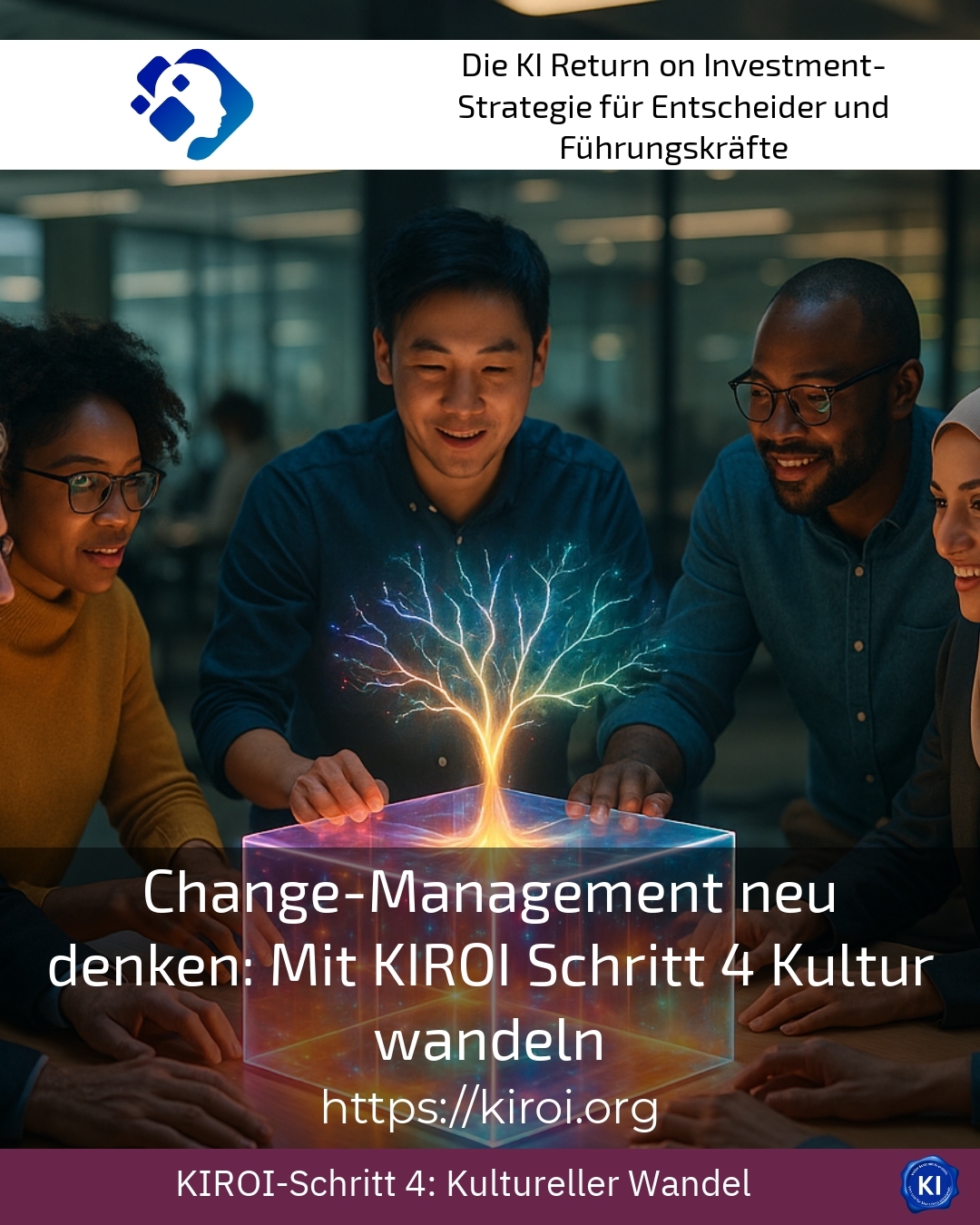
Rethinking change management: Transforming culture with KIROI step 4

4.9
(1754)

Why a new perspective on change management is important

Change management stands for guided transformation, which helps companies adapt in a dynamic environment. Culture is a key driver of this change. People in organisations increasingly face uncertainty, new technologies, and changing roles. Therefore, how culture transforms and how employees remain motivated is crucial. Clients often report that structural adjustments alone are not enough and that accompanied cultural development must be the focus.

Shaping culture actively in a process of change

Changing culture means consciously developing values and behaviour within a company. This can succeed if leaders act as role models and demonstrate new patterns of behaviour. Accompanying methods such as workshops and open discussions enable employees to contribute their perspectives and make the change transparent. In this way, change management not only supports processes but also builds a sustainable culture that offers space for creative solutions and a spirit of experimentation.

KIROI BEST PRACTICE at company XYZ (name changed due to NDA contract)
In a technology company, leaders were empowered through coaching to establish an innovation-promoting culture. Openness and tolerance for mistakes became visible in daily interactions. This paved the way for sustainable developments, without quick promises, but with continuous support.

Leadership as a key role in cultural change

Leaders play a formative role in change management, as they steer both structural and cultural changes. They take responsibility for how values are lived and embedded. Regular reflection helps them to critically examine progress and adjust direction if necessary. This is not just about one-off actions, but about a continuous process that enables creative solutions and identifies obstacles early on.

KIROI BEST PRACTICE at company XYZ (name changed due to NDA contract)
A medium-sized service company introduced structured workshops to support managers in role-modelling new behaviours. At the same time, employees were enabled to form self-responsible teams that can make decisions independently. This fostered a culture that promotes greater flexibility and personal accountability.

Methodological support as the key to success

Successful change management uses clear, structured approaches that can be flexibly adapted to company needs. Individuals are supported along the way by providing concrete impulses and tools that facilitate dealing with change. This strengthens acceptance and helps integrate new habits into everyday life. Impulses can come from reflection sessions, dialogue formats, and practical coaching.

KIROI BEST PRACTICE at company XYZ (name changed due to NDA contract)
An internationally operating logistics company established a process for the annual measurement of cultural change. This made culture measurable and identified areas requiring action at an early stage. Through accompanying coaching, managers and employees were encouraged to work together on cultural development and to actively shape change processes.

How to actively involve employees in change

Employee engagement and motivation are important success factors. Change management therefore relies on transparency, the involvement of those affected, and support in skill development. When employees understand the benefits of changes and can help shape them, the chances of new processes being permanently adopted increase. This is how employees become co-creators of change, rather than mere participants.

KIROI BEST PRACTICE at company XYZ (name changed due to NDA contract)
A manufacturing company initiated regular open discussion rounds, in which values were reflected upon and implemented in joint improvements. This continuous feedback enabled a trusting atmosphere, in which all employees feel heard and the culture can grow in the long term.

My analysis

Change management gains impact through holistic support, with a focus on actively changing the culture. Leaders are crucial as role models, and the involvement of all employees contributes to long-term acceptance. The innovative methods from coaching offer supporting impulses that neither promise quick fixes nor put people under pressure, but are focused on sustainable development.

Further links from the text above:

[1] Change management culture: KIROI step 4 for cultural change

[4] Transforming organisational culture: KIROI Step 4 for Leaders

[5] Prosci Change Management vs. Kotter's Change Management

For more information and if you have any questions, please contact Contact us on the topic or read more blog posts on the topic Artificial Intelligence Blog here.

How useful was this post?

Click on a star to rate it!

Average rating 4.9 / 5. Vote count: 1754

No votes so far! Be the first to rate this post.

Spread the love

transruption.org

The digital toolbox for
the digital winners of today and tomorrow

Business excellence for decision-makers & managers by and with Sanjay Sauldie

transruption
transruption

transruption: The digital toolbox for
the digital winners of today and tomorrow

Start » Rethinking change management: Transforming culture with KIROI step 4
29 August 2025

Rethinking change management: Transforming culture with KIROI step 4

4.9
(1754)

Why a new perspective on change management is important

Change management stands for guided transformation, which helps companies adapt in a dynamic environment. Culture is a key driver of this change. People in organisations increasingly face uncertainty, new technologies, and changing roles. Therefore, how culture transforms and how employees remain motivated is crucial. Clients often report that structural adjustments alone are not enough and that accompanied cultural development must be the focus.

Shaping culture actively in a process of change

Changing culture means consciously developing values and behaviour within a company. This can succeed if leaders act as role models and demonstrate new patterns of behaviour. Accompanying methods such as workshops and open discussions enable employees to contribute their perspectives and make the change transparent. In this way, change management not only supports processes but also builds a sustainable culture that offers space for creative solutions and a spirit of experimentation.

KIROI BEST PRACTICE at company XYZ (name changed due to NDA contract)
In a technology company, leaders were empowered through coaching to establish an innovation-promoting culture. Openness and tolerance for mistakes became visible in daily interactions. This paved the way for sustainable developments, without quick promises, but with continuous support.

Leadership as a key role in cultural change

Leaders play a formative role in change management, as they steer both structural and cultural changes. They take responsibility for how values are lived and embedded. Regular reflection helps them to critically examine progress and adjust direction if necessary. This is not just about one-off actions, but about a continuous process that enables creative solutions and identifies obstacles early on.

KIROI BEST PRACTICE at company XYZ (name changed due to NDA contract)
A medium-sized service company introduced structured workshops to support managers in role-modelling new behaviours. At the same time, employees were enabled to form self-responsible teams that can make decisions independently. This fostered a culture that promotes greater flexibility and personal accountability.

Methodological support as the key to success

Successful change management uses clear, structured approaches that can be flexibly adapted to company needs. Individuals are supported along the way by providing concrete impulses and tools that facilitate dealing with change. This strengthens acceptance and helps integrate new habits into everyday life. Impulses can come from reflection sessions, dialogue formats, and practical coaching.

KIROI BEST PRACTICE at company XYZ (name changed due to NDA contract)
An internationally operating logistics company established a process for the annual measurement of cultural change. This made culture measurable and identified areas requiring action at an early stage. Through accompanying coaching, managers and employees were encouraged to work together on cultural development and to actively shape change processes.

How to actively involve employees in change

Employee engagement and motivation are important success factors. Change management therefore relies on transparency, the involvement of those affected, and support in skill development. When employees understand the benefits of changes and can help shape them, the chances of new processes being permanently adopted increase. This is how employees become co-creators of change, rather than mere participants.

KIROI BEST PRACTICE at company XYZ (name changed due to NDA contract)
A manufacturing company initiated regular open discussion rounds, in which values were reflected upon and implemented in joint improvements. This continuous feedback enabled a trusting atmosphere, in which all employees feel heard and the culture can grow in the long term.

My analysis

Change management gains impact through holistic support, with a focus on actively changing the culture. Leaders are crucial as role models, and the involvement of all employees contributes to long-term acceptance. The innovative methods from coaching offer supporting impulses that neither promise quick fixes nor put people under pressure, but are focused on sustainable development.

Further links from the text above:

[1] Change management culture: KIROI step 4 for cultural change

[4] Transforming organisational culture: KIROI Step 4 for Leaders

[5] Prosci Change Management vs. Kotter's Change Management

For more information and if you have any questions, please contact Contact us on the topic or read more blog posts on the topic Artificial Intelligence Blog here.

How useful was this post?

Click on a star to rate it!

Average rating 4.9 / 5. Vote count: 1754

No votes so far! Be the first to rate this post.

Spread the love

Other content worth reading:

Rethinking change management: Transforming culture with KIROI step 4

written by:

Keywords:

#ChangeManagement 1TP5ManagersBalance #Cultural change #Mitarbeiterbeteiligung #Organisationsentwicklung

Follow me on my channels:

Questions on the topic? Contact us now without obligation

Contact us

[wpforms id="331781" title="false"]

More articles worth reading

    Leave a comment