kiroi.org

KIROI - Artificial Intelligence Return on Invest
The AI strategy for decision-makers and managers

Business excellence for decision-makers & managers by and with Sanjay Sauldie

KIROI - Artificial Intelligence Return on Invest: The AI strategy for decision-makers and managers

KIROI - Artificial Intelligence Return on Invest: The AI strategy for decision-makers and managers

Start » Staff Competency Development: KIROI Step 8 for Managers
21 October 2025

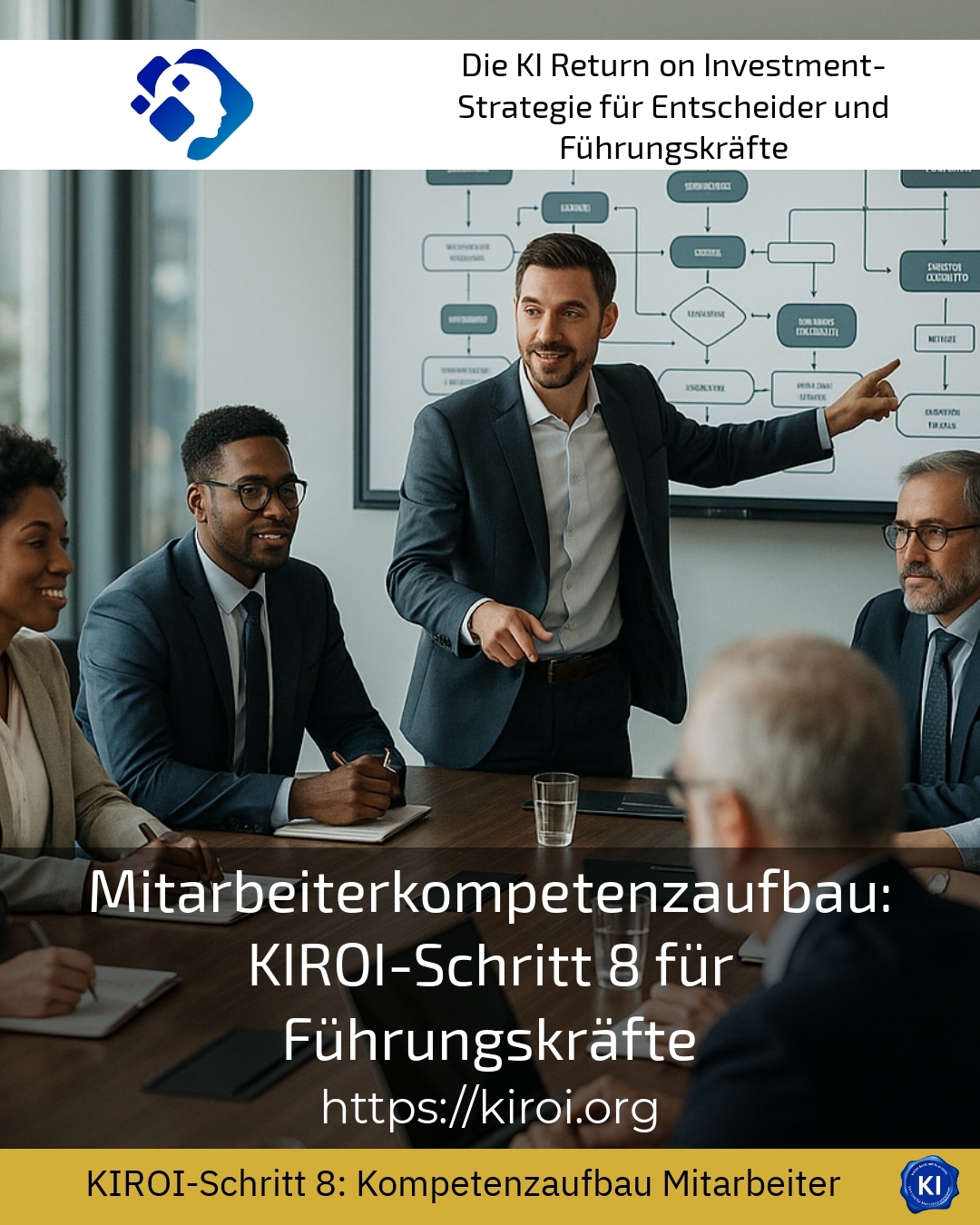
Staff Competency Development: KIROI Step 8 for Managers

5
(743)

Employee competence development is a central building block for sustainable business success. Many managers are looking for effective ways to strengthen the potential of their teams. This involves not only imparting specialist knowledge, but above all developing methodological competence, self-reflection, and teamwork skills. Within the scope of KIORI Step 8, employee competence development is the focus because it puts the practical level at the centre. Here, employees learn through direct application and experience how new skills prove their worth in everyday work.

Employee competence development in practice

Employee competency development begins with an analysis of current competency profiles. Managers identify their employees' strengths and areas for development. This is followed by the creation of individual development plans. These plans combine various learning formats such as workshops, mentoring, and on-the-job training. Employees take on new tasks and improve their skills in a real-world context.

A practical example: In a medium-sized company, methodological competence was strengthened through regular reflection sessions. Employees learned to systematically analyse problems and develop solutions. As a result, the quality of work noticeably improved.

Another example: A team from project management used peer-learning formats to support each other. This allowed everyone involved to benefit from the experiences of others and expand their own skills.

A third example: Leadership coaching was offered in an international company. Managers received individual support and were able to develop their skills in a targeted way.

Employee competency development through job rotation and project work

Job rotation and project work are proven methods for building employee competencies. Employees take on new tasks and improve their skills in a real-world context. They learn to think and act across departments. This leads to a deeper understanding of company processes.

For example: Regular workshops on new technologies were offered at a financial services company. Employees learned to use digital tools effectively and optimise their work.

Another example: A team from the sales department used regular feedback rounds to improve their communication skills. The employees received constructive feedback and were able to specifically build on their strengths.

A third example: A mentoring programme was introduced at a service company. Experienced employees supported new colleagues over a long period. This led to faster integration and higher motivation.

Individual support and feedback

Coaching is crucial for developing employee skills. Mentoring programmes and one-on-one coaching provide targeted feedback and individual support. Coaches help to overcome challenges and build personal strengths.

As an example: In an international company, leadership coaching was offered. Managers received individual support and were able to develop their skills in a targeted way.

Another example: a project management team used peer-learning formats to support each other. This allowed everyone involved to benefit from the experiences of others and expand their own skills.

A third example: A mentoring programme was introduced at a service company. Experienced employees supported new colleagues over a long period. This led to faster integration and higher motivation.

Building employee competence through workshops and teamwork

Workshops and teamwork are an interesting alternative to training. They involve the participants more strongly and give them the opportunity to apply the knowledge gained in practice. By working on tasks together, participants get to know each other better and become more closely connected.

For example: Regular workshops on new technologies were offered at a financial services company. Employees learned to use digital tools effectively and optimise their work.

Another example: A team from the sales department used regular feedback rounds to improve their communication skills. The employees received constructive feedback and were able to specifically build on their strengths.

A third example: A mentoring programme was introduced at a service company. Experienced employees supported new colleagues over a long period. This led to faster integration and higher motivation.

My analysis

Building employee competence is a continuous process that requires individual support, practical application, and regular feedback. Leaders who actively shape this process lay the foundation for sustainable success. The combination of workshops, mentoring, job rotation, and teamwork allows for the systematic strengthening of employees' skills. This creates a high-performing team that overcomes challenges together.

Further links from the text above:

Popular methods for developing the skills of company employees

Employee Competence Development: Tips, Methods, Examples

Successful Skills Development: 9 Tips and 3 Examples

Systematic and successful leadership development

Skills development: importance and methods

For more information and if you have any questions, please contact Contact us or read more blog posts on the topic Artificial intelligence here.

How useful was this post?

Click on a star to rate it!

Average rating 5 / 5. Vote count: 743

No votes so far! Be the first to rate this post.

Spread the love

transruption.org

The digital toolbox for
the digital winners of today and tomorrow

Business excellence for decision-makers & managers by and with Sanjay Sauldie

transruption
transruption

transruption: The digital toolbox for
the digital winners of today and tomorrow

Start » Staff Competency Development: KIROI Step 8 for Managers
21 October 2025

Staff Competency Development: KIROI Step 8 for Managers

5
(743)

Employee competence development is a central building block for sustainable business success. Many managers are looking for effective ways to strengthen the potential of their teams. This involves not only imparting specialist knowledge, but above all developing methodological competence, self-reflection, and teamwork skills. Within the scope of KIORI Step 8, employee competence development is the focus because it puts the practical level at the centre. Here, employees learn through direct application and experience how new skills prove their worth in everyday work.

Employee competence development in practice

Employee competency development begins with an analysis of current competency profiles. Managers identify their employees' strengths and areas for development. This is followed by the creation of individual development plans. These plans combine various learning formats such as workshops, mentoring, and on-the-job training. Employees take on new tasks and improve their skills in a real-world context.

A practical example: In a medium-sized company, methodological competence was strengthened through regular reflection sessions. Employees learned to systematically analyse problems and develop solutions. As a result, the quality of work noticeably improved.

Another example: A team from project management used peer-learning formats to support each other. This allowed everyone involved to benefit from the experiences of others and expand their own skills.

A third example: Leadership coaching was offered in an international company. Managers received individual support and were able to develop their skills in a targeted way.

Employee competency development through job rotation and project work

Job rotation and project work are proven methods for building employee competencies. Employees take on new tasks and improve their skills in a real-world context. They learn to think and act across departments. This leads to a deeper understanding of company processes.

For example: Regular workshops on new technologies were offered at a financial services company. Employees learned to use digital tools effectively and optimise their work.

Another example: A team from the sales department used regular feedback rounds to improve their communication skills. The employees received constructive feedback and were able to specifically build on their strengths.

A third example: A mentoring programme was introduced at a service company. Experienced employees supported new colleagues over a long period. This led to faster integration and higher motivation.

Individual support and feedback

Coaching is crucial for developing employee skills. Mentoring programmes and one-on-one coaching provide targeted feedback and individual support. Coaches help to overcome challenges and build personal strengths.

As an example: In an international company, leadership coaching was offered. Managers received individual support and were able to develop their skills in a targeted way.

Another example: a project management team used peer-learning formats to support each other. This allowed everyone involved to benefit from the experiences of others and expand their own skills.

A third example: A mentoring programme was introduced at a service company. Experienced employees supported new colleagues over a long period. This led to faster integration and higher motivation.

Building employee competence through workshops and teamwork

Workshops and teamwork are an interesting alternative to training. They involve the participants more strongly and give them the opportunity to apply the knowledge gained in practice. By working on tasks together, participants get to know each other better and become more closely connected.

For example: Regular workshops on new technologies were offered at a financial services company. Employees learned to use digital tools effectively and optimise their work.

Another example: A team from the sales department used regular feedback rounds to improve their communication skills. The employees received constructive feedback and were able to specifically build on their strengths.

A third example: A mentoring programme was introduced at a service company. Experienced employees supported new colleagues over a long period. This led to faster integration and higher motivation.

My analysis

Building employee competence is a continuous process that requires individual support, practical application, and regular feedback. Leaders who actively shape this process lay the foundation for sustainable success. The combination of workshops, mentoring, job rotation, and teamwork allows for the systematic strengthening of employees' skills. This creates a high-performing team that overcomes challenges together.

Further links from the text above:

Popular methods for developing the skills of company employees

Employee Competence Development: Tips, Methods, Examples

Successful Skills Development: 9 Tips and 3 Examples

Systematic and successful leadership development

Skills development: importance and methods

For more information and if you have any questions, please contact Contact us or read more blog posts on the topic Artificial intelligence here.

How useful was this post?

Click on a star to rate it!

Average rating 5 / 5. Vote count: 743

No votes so far! Be the first to rate this post.

Spread the love

Other content worth reading:

Staff Competency Development: KIROI Step 8 for Managers

written by:

Keywords:

#Big Data #compliance #Datenintelligenz #Ethikrichtlinien 1TP5Management development #InnovationDurchAchtsamkeit #Kompetenzentwicklung #artificial intelligence #mentoring #Mitarbeiterkompetenzaufbau #Sustainability #SmartData #Teamwork #Unternehmenskultur #Verantwortungsketten

Follow me on my channels:

Questions on the topic? Contact us now without obligation

Contact us

[wpforms id="331781" title="false"]

More articles worth reading

    Leave a comment