
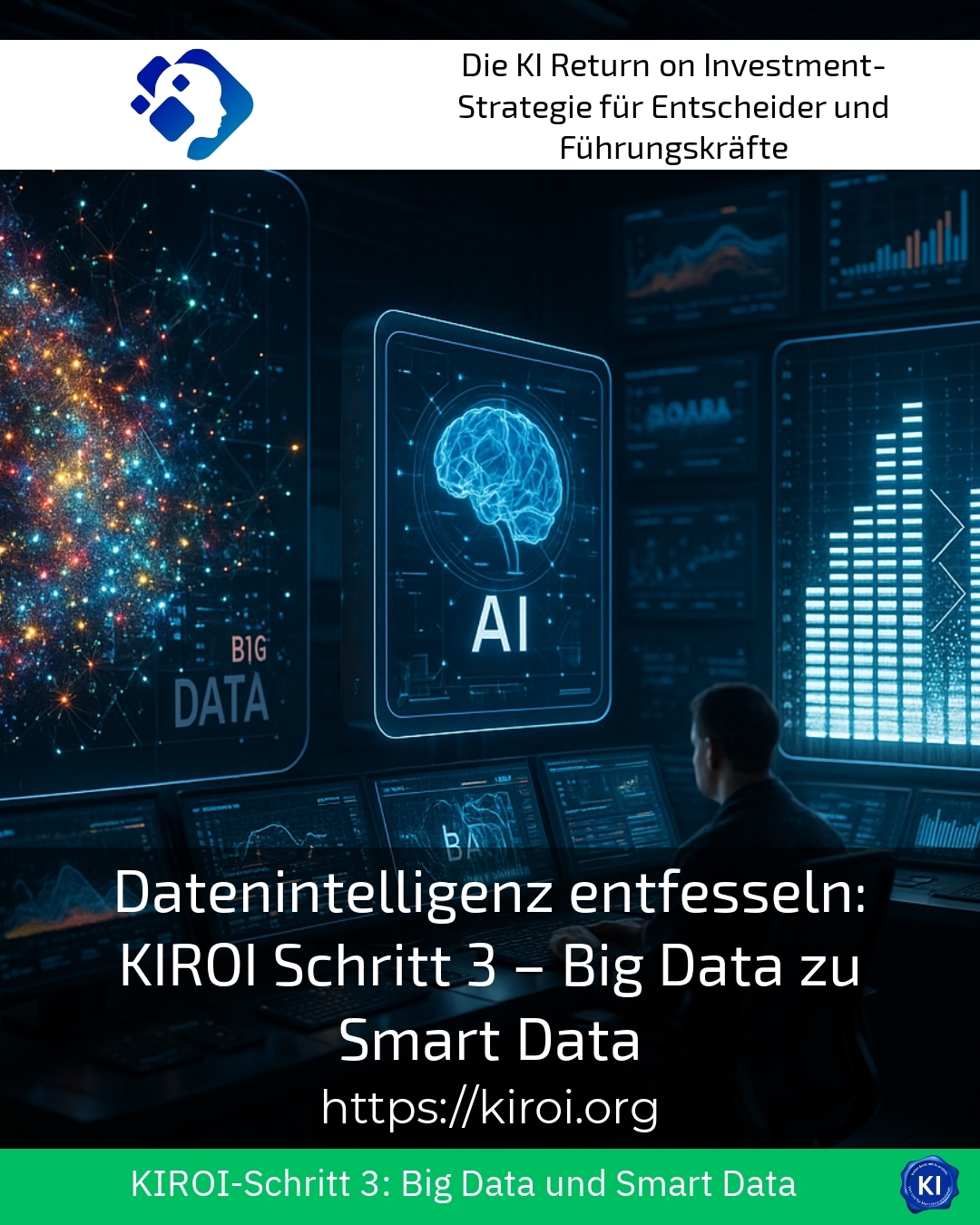
Data intelligence is increasingly developing into an indispensable tool for creating real added value from the abundance of available information. In particular, the step from Big Data to Smart Data, as described in the third section of the KIROI model, opens up new opportunities for companies to better understand their data and use it more efficiently. This article shows how companies can master this transition and improve their decision-making processes with data intelligence.
How Data Intelligence Paves the Way from Big Data to Smart Data
The challenge for many companies lies in structuring and processing large volumes of data – known as Big Data – in a way that delivers practical insights. Data intelligence refers precisely to this process: raw data is analysed, classified, and placed into the appropriate context so that it is transformed into valuable Smart Data. This creates the basis for informed decisions and targeted process optimisations.
For example, a European retailer uses sales.
BEST PRACTICE with one customer (name hidden due to NDA contract) An international medium-sized company in the mechanical engineering sector reduced its machine downtimes by 20 %. The data-intelligent evaluation of real-time sensor data helped to initiate concrete maintenance measures promptly and thus minimise downtimes.
The Role of Artificial Intelligence and Machine Learning
Without the use of modern technologies, the step from Big Data to Smart Data would hardly be achievable. Data intelligence uses AI and machine learning to identify patterns in data sets and make predictions. This allows companies not only to understand what happened in the past but also to derive future trends and risks.
A mobility management service provider, for example, reduced CO₂ emissions and cut costs through data-intelligent analysis by evaluating and controlling traffic flows in real-time. In the financial sector, predictive models enable more accurate credit risk assessment. E-commerce platforms dynamically optimise their pricing strategies based on customer behaviour and inventory levels.
Practical applications of data intelligence: efficiency, risk, and customer loyalty
Data intelligence supports executives in strategically using company data for their decisions. For example, a food delivery service increases its efficiency by analysing sales data and adjusting inventory levels according to demand. An investment manager uses data-intelligent forecasts for more reliable market analyses. Producers also optimise their production processes thanks to data intelligence, in order to conserve resources and avoid downtime.
Such applications demonstrate how data intelligence is flexibly adapted to different industries, helping to manage the complexity of large data flows. It enables faster responses to market developments and supports risk mitigation through informed knowledge.
BEST PRACTICE with one customer (name hidden due to NDA contract) A trading company uses data-driven analytics to forecast seasonal sales peaks and tailor its product range accordingly. This leads to increased customer satisfaction and reduced inventory costs.
Tips for the successful implementation of data intelligence projects
For a successful introduction of data intelligence, a clearly structured roadmap is recommended. Companies should first systematically identify and evaluate their data sources, followed by the selection of suitable analysis tools. The involvement of experts in AI and data science, as well as the training of employees, are crucial for fostering a data-driven culture.
Equally important is ensuring data quality through regular data maintenance and governance. Only in this way can incorrect decisions be avoided. Furthermore, companies should focus on open communication channels so that insights from data intelligence benefit all relevant stakeholders.
My analysis
The step from Big Data to Smart Data through data intelligence is a key factor for success for modern businesses. Through intelligent data preparation and the use of AI and machine learning, decision-makers gain faster and more robust insights. These help them to make processes more efficient, better assess risks, and strengthen customer relationships. At the same time, data intelligence brings more flexibility and promotes a transparent data culture. The KIROI model thus supports companies in a targeted and practical way during data-based transformation.
Further links from the text above:
What is data intelligence and what does it mean?
Data intelligence: big data and smart data for decision-makers
Data intelligence: How decision-makers use big & smart data
What is Data Intelligence? (IBM)
Data intelligence or the art of turning data into gold
For more information and if you have any questions, please contact Contact us or read more blog posts on the topic Artificial intelligence here.













 Deutsch
  English (UK)