

Robotics in agriculture falls under the categories of Automation, Sustainability and Environment 4.0, and Robots. This term describes the use of robots and automated machinery to take over various tasks in agriculture. The aim is to make agricultural work more efficient, precise, and environmentally friendly.
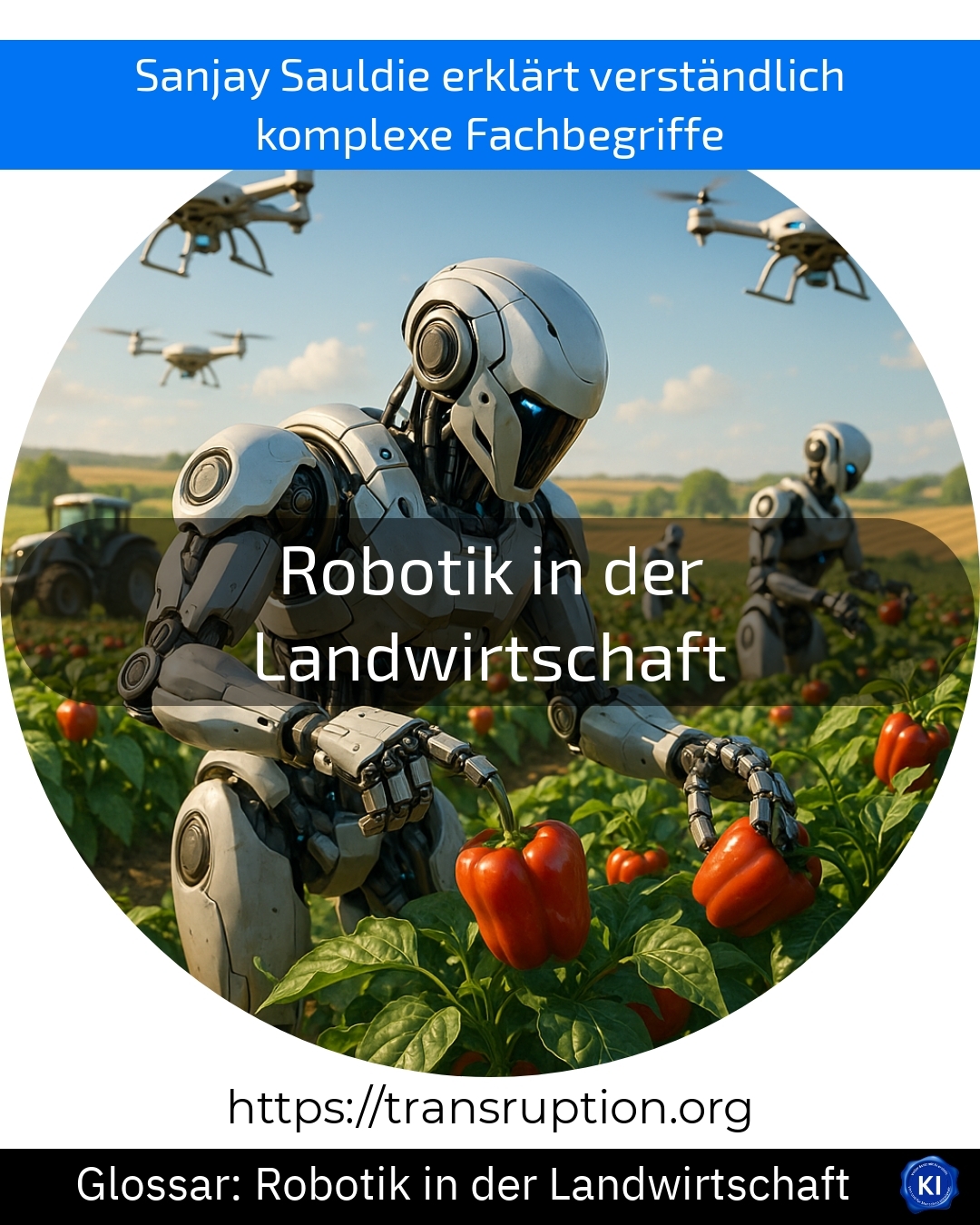
Typical areas of application include, for example, the automatic sowing of seeds, the targeted application of fertilisers or plant protection agents, and the harvesting of fruit. A vivid example is a field robot that drives independently through the rows of tomato plants. Using sensors, the robot detects ripe fruit, carefully picks it, and places it in crates.
Robotics in agriculture can save farmers time and money, reduce the use of chemicals, and conserve resources. At the same time, the physical strain on farmers decreases. This development helps to operate future-proof and sustainably, even with growing challenges such as climate change or labour shortages.






 Deutsch
  English (UK)