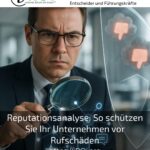
A comprehensive **reputation analysis** is becoming increasingly important in today's business world, as companies with a strong, well-maintained reputation can react better to market changes. By systematically examining public perception, reputation analysis identifies a company's strengths and weaknesses. In doing so, it provides important impetus for improving its own image and protecting itself against potential reputational damage.
What is hidden behind a reputation analysis?
Reputation analysis is understood as a continuous process for evaluating the perception of brands, products, or companies by various target groups and media. The evaluation encompasses traditional media, social media, review platforms, and forums to obtain a holistic picture. This allows for targeted recommendations for action to be derived using relevant key figures and qualitative assessments.
For example, in the automotive industry, customer satisfaction is often analysed on social networks like Facebook and Instagram. Here, customers share their experiences with models and services, which at the same time offers brands opportunities to interact directly with their target audiences. In e-commerce too, reviews on specialised platforms are important indicators for retailers and manufacturers to build trust and proactively counteract potential reputation problems.
BEST PRACTICE with one customer (name hidden due to NDA contract) Reputation analysis helped a B2B manufacturer systematically capture its online reviews and identify weaknesses in customer service. Targeted optimisations in customer communication and faster response times on review portals led to a measurable improvement in brand image within a few months.
Elementary building blocks of reputation analysis
For a successful reputation analysis, various information sources must be considered. These include, among others:
– Reviews on industry-specific portals
– Mentions and discussions on social media
– Media reports and online news
– Feedback from customers, partners and employees
An example from the healthcare sector shows how reviews on portals like Jameda can not only improve perception but also provide relevant indications for quality improvement. Similarly, service providers observe mentions on business networks like LinkedIn or XING to protect their professional image. Industrial groups also analyse press coverage monthly to detect sentiment towards their company early on and to be able to react to criticism.
BEST PRACTICE with one customer (name hidden due to NDA contract) A medium-sized IT service provider relies on regular reputation analysis covering all relevant social media channels. This allows negative trends to be identified more quickly and targeted communication measures to be implemented to strengthen its reputation in the industry.
Securely manage your own reputation through data and monitoring
The timely observation and analysis of data is a core element in preventing reputational risks. Automated tools make it possible to track mentions around the clock. This allows companies not only to react to individual customer responses but also to strategically strengthen their position.
An example from the food industry shows how a swift response to a critical press release helped to minimise negative effects. Likewise, tourism companies can identify early on which topics guests rate particularly positively or negatively by monitoring guest reviews, and adapt their offerings accordingly.
BEST PRACTICE with one customer (name hidden due to NDA contract) An internationally active fashion manufacturer uses reputation analysis combined with social media monitoring to identify trends and potential crisis hotspots at an early stage. The results are directly incorporated into the communication strategy, allowing the brand to continuously improve its perception.
Reputation analysis as the basis for preventive strategies
Identifying negative aspects and potential dangers allows for the implementation of preventive measures. Instead of merely reacting to crises, reputation analysis helps to make the company more resilient in the long term. In doing so, it is advisable to establish internal training on reputation topics and to emphasise the role of each department in protecting the company's image.
For example, in the property sector, many companies place great importance on the careful analysis of customer feedback and media reports in order to react to reviews early on and promote tenant trust. At the same time, consulting firms are also relying on systematic reputation analyses to improve external perception and strengthen customer loyalty.
iROI-Coaching supports companies with exactly these kinds of projects related to reputation analysis, providing tailor-made solutions to optimise processes and nurture the company's reputation long-term.
My analysis
A well-founded **reputation analysis** provides companies with valuable insights into how they are perceived by the public and which factors influence their perception. It helps to sustainably improve the corporate image and to recognise potential reputational damage at an early stage. The analysis combines data from reviews, social media, media coverage and customer feedback, thus forming a solid decision-making tool. Companies that actively monitor their reputation often create better conditions for business success and long-term growth.
Further links from the text above:
Reputation Analysis: How to Optimise Your Digital Reputation [1]
Reputation Analysis – Definition » Wiki [2]
Reputation Analysis: Measurement and Transparency [3]
Image analysis for companies: a step-by-step guide [4]
Why a reputation analysis is important – FOCUS.de [5]
What the media tells us about a company's reputation [6]
Your reputation at a glance: Our reputation analysis [7]
For more information and if you have any questions, please contact Contact us or read more blog posts on the topic internet Return on Investment - Marketing here.






 Deutsch
  English (UK)