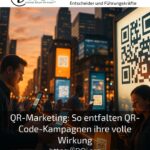
QR marketing is now an indispensable part of modern communication and advertising strategies. The technology of quickly scanning with a smartphone and directly accessing digital content has, in recent years, evolved from a niche tool to a central channel for customer engagement. Companies, in particular, that focus on direct interaction and measurable reach benefit enormously from QR code campaigns.
The Diversity of QR Marketing: Application Possibilities That Inspire
QR marketing opens up numerous possibilities for intelligently connecting the offline and online worlds. This allows printed advertising materials such as flyers, posters, or brochures to be easily linked to digital content. The customer scans – and lands exactly where the campaign is aiming. This not only reduces material consumption but also increases the efficiency and environmental compatibility of advertising[2].
Intelligently complementing classic print media
A QR code on a poster can lead directly to a landing page for tickets, discounts, or exclusive information. Flyers use a code to link to product pages, videos, or surveys. This extends reach and makes advertising interactive.
Starbucks uses QR codes in magazines and on large-format flyers to direct people to its apps and promotions. After scanning, customers are taken to a mobile page with all the news and offers [3]. This noticeably increases engagement and sales.
During the pandemic, Burger King featured QR codes as the main motif in TV commercials. Those who scanned them received a free Whopper – and automatically installed the Burger King app. This connection of the analogue and digital world shows how flexible QR marketing can be.
There are creative approaches in the fashion sector too: FashionTV embedded codes into TV segments. Those who scanned them were taken directly to the websites of exclusive fashion collections. This generated attention and specifically directed target audiences to the desired offering[5].
Innovative product integration through QR codes
QR marketing often appeals where products are directly linked with additional information, bonus promotions or feedback opportunities. Puma attached codes to shoes. After scanning, an augmented reality experience awaited – entertainment and added value in one[2].
Tesco has integrated QR codes directly into product packaging. Customers can scan, order online, and have goods delivered – ideal for busy people[2].
Wendy's distributed QR codes on packaging. Those who scanned them received free food or rewards. This increased customer loyalty and generated valuable data for targeted campaigns[2].
These examples show that QR marketing is not a one-dimensional tactic, but is constantly evolving. The boundaries between the physical and digital worlds are increasingly blurring.
Success factors and best practices for sustainable QR marketing
For QR code campaigns to truly be effective, there are crucial levers to pull. The target audience must be clearly defined and addressed. What motivates customers? What content and incentives encourage scanning? Those who answer these questions lay the foundation for perfectly tailored campaigns.
Creating targeted content adds value
Exclusive offers, discounts, surveys, or interactive promotions are often behind this. Incentives that are only visible to specific target groups are particularly effective. A race car driver like Parker Kligerman placed a QR code on the bonnet of his car. Anyone who scanned it could buy a hoodie for a dollar – this generated a lot of attention and interaction[2].
Budweiser launched a QR treasure hunt with codes at iconic locations. Fans who found all the codes won tickets to the Football World Cup. This generated genuine engagement and boosted social media reach[4].
Adidas combined a thrilling spot with Bollywood star Ranveer Singh and a QR code that led to a World Cup trip giveaway. The hype was huge – and leads shot up[4].
Placement and optimisation determine success.
QR codes must be clearly visible and easily scannable. Reflective surfaces or codes that are too small will make them difficult to use. A clear call to action, such as „Scan here and secure 10 % discount,“ increases interaction[1].
The linked landing page should always be optimised for mobile devices. This is because customers usually scan the code spontaneously with their smartphones. Anyone who redirects to a complex or slow page quickly loses interest.
Transparency and analysis build trust
Customers appreciate knowing what happens after scanning. Transparent communication and a quick, simple user experience are essential. Analysis tools show how many scans were carried out, which content was particularly in demand, and where there's a need for optimisation[1].
QR Marketing in Practice: Best Practice from our Customers
BEST PRACTICE with a customer (name hidden due to NDA contract): In a joint project with iROI Coaching, we developed a campaign for an international food manufacturer. The aim was to launch new products on the market and actively involve the target audience in the communication. Via QR codes on product packaging, PoS materials, and social media posts, customers were directed straight to an interactive landing page. Here, they could request product samples, answer surveys, or enter a prize draw. The results: the interaction rate increased by 43 percent, leads were seamlessly transferred into the CRM, and the social media community grew significantly.
BEST PRACTICE with a customer (name hidden due to NDA contract): A major retailer is using QR codes in-store with iROI coaching. Customers scan codes on daily tickets and information boards. They immediately receive discounts, exclusive offers, or exciting chances to win. App integration ensures all data flows directly into the customer account. Conversion rates increased significantly, and customers praised the ease of use.
BEST PRACTICE with a customer (name hidden due to NDA contract): A national events agency used QR marketing for ticket promotion. Every poster, flyer, and social media post included a code that led to a personalised landing page. There, visitors could buy tickets directly, find out about the programme, or answer surveys about desired artists. Online bookings increased by 28 percent, and the organisers gained valuable insights into their target audience.
My analysis
QR marketing remains a strong driver for companies that value direct customer engagement, measurable reach, and creative campaigns. The technology is flexible, easy to implement, and seamlessly brings together offline and online measures. Those who know their target audience precisely, create clear incentives, and keep the user experience in mind can achieve sustainable success. Many customers report that QR code campaigns increase conversions, strengthen customer loyalty, and modernise brand image.
iROI-Coaching supports companies in the conception, implementation, and optimisation of QR marketing. Together, we develop individual strategies, test various approaches, and measure success transparently.
Further links from the text above:
QR Code Marketing: How advertising in a square works effectively and is targeted [1]
Using QR codes in business: real-world examples and benefits [2]
QR code marketing: how advertising in a square works [3]
The best QR code marketing campaigns ever [4]
Wie man QR-Codes im Marketing verwendet: Tipps und Beispiele [5]
For more information and if you have any questions, please contact Contact us or read more blog posts on the topic internet Return on Investment - Marketing here.






 Deutsch
  English (UK)