
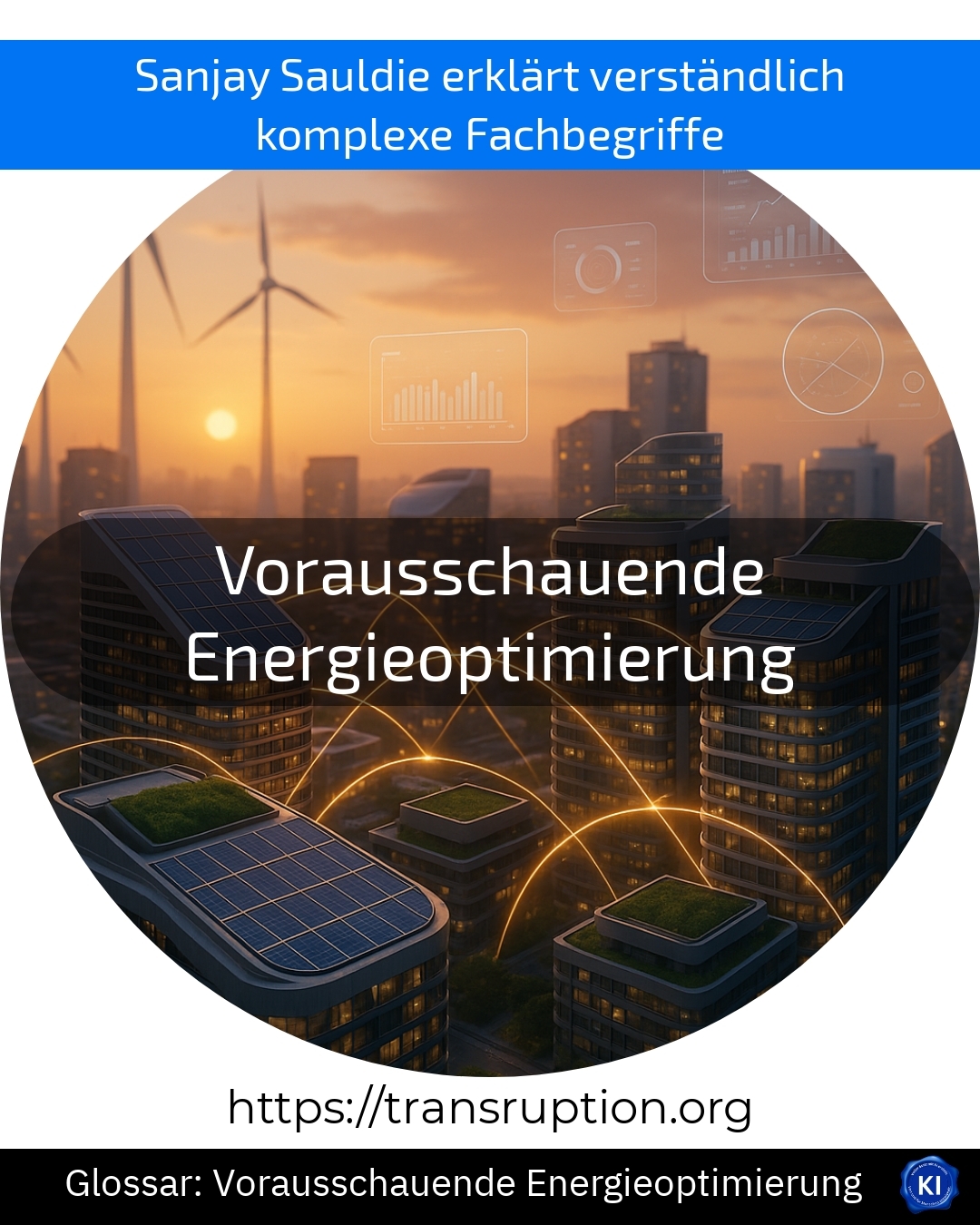
Predictive energy optimisation is particularly relevant in the categories of Industry and Industry 4.0, Artificial Intelligence, and Sustainability and Environment 4.0. This involves the intelligent use of data and smart software to not only monitor energy consumption in companies or buildings, but above all to proactively control it.
Instead of simply reading off how much electricity is currently being consumed, a predictive energy optimisation system analyses numerous data points – such as weather forecasts, production plans, or current machine performance. Using artificial intelligence, the system recognises patterns and can make forecasts: Where will more energy be needed tomorrow? When is it worthwhile to shut down machines or use energy from renewable sources?
A vivid example: In a modern factory, predictive energy optimisation automatically informs the team when it is most environmentally friendly and cost-effective to start machines, because renewable solar energy is currently abundant. This allows costs to be reduced, the climate to be protected, and processes to be made more efficient – long before an energy problem arises.
This technology helps to operate more sustainably and secure a competitive edge.










 Deutsch
  English (UK)