
The term „nanobots“ is primarily found in the fields of nanotechnology, artificial intelligence, and industry and Industry 4.0.
Nanobots are tiny robots, often only a few millionths of a millimetre in size. They are built from special materials and can perform specific tasks at the smallest level. The control of these nanobots is usually automated or achieved using intelligent programmes.
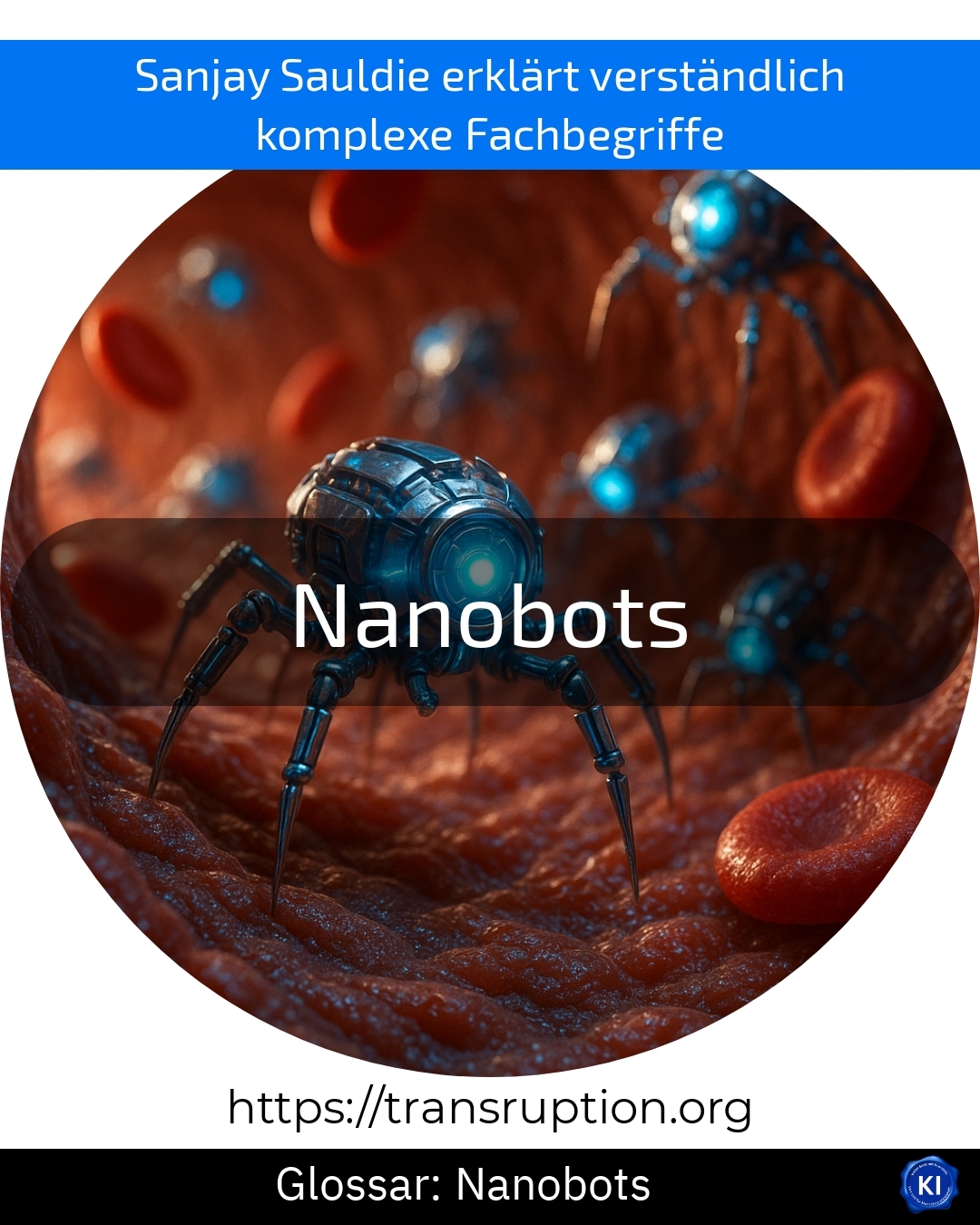
A vivid example: In medicine, nanobots can be programmed to specifically recognise and treat diseased cells directly within the human body. It is conceivable that in the future they could clean blood vessels or destroy cancer cells without damaging healthy tissue. This would mean fewer side effects for patients and more precise treatments.
Even in industry, nanobots help to manufacture particularly small electronic components or clean hard-to-reach surfaces in machines. This makes production processes more efficient and enables entirely new products.
Nanobots are considered one of the most exciting future technologies. They offer huge opportunities, for example in the healthcare sector or for the production of new materials, but at the same time they are an example of how digitalisation and miniaturisation are changing our everyday lives.













 Deutsch
  English (UK)