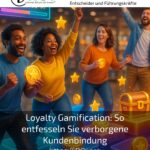
Loyalty Gamification as a Strategic Lever for Sustainable Customer Relationships
Modern companies are looking for ways not just to attract customers, but to retain them in the long term. Loyalty gamification has proven to be one of the most effective tools in this regard, as it specifically addresses human needs for recognition, play, and reward. By incorporating game-like elements such as points, levels, challenges, and leaderboards, an interactive experience is created that goes far beyond traditional discount programmes [5]. This allows brands to engage customers emotionally and make the added value of their offerings tangible – in a way that is both fun and has a lasting impact.
How does loyalty gamification work in practice?
Loyalty gamification picks up where conventional customer loyalty programmes reach their limits: instead of passive participation, it activates users by making their own actions directly tangible. Customers collect points for purchases, reach new levels, receive badges for specific milestones, or measure themselves against other participants in leaderboards[5]. This dynamic creates an emotional connection to the brand and ensures that customers keep coming back – not just for the reward, but for the experience.
Industry examples
A well-known example is the Starbucks Rewards app: customers collect stars for every purchase, reach different status levels, and receive exclusive offers. The app turns collecting into a playful experience, thereby significantly increasing brand loyalty[2][6].
McDonald's' Monopoly promotion demonstrates how a passion for collecting and a competitive spirit can be combined: customers collect stickers, trade them with friends, and win attractive prizes. This not only boosts sales but also fosters a sense of community and repeat purchases[4].
Nike uses gamification through the Nike Run Club app: runners track their activities, collect digital badges, and compete with others. The social component encourages regularity and strengthens the connection to the brand – not least because personal achievements are immediately visible[4][10].
Loyalty gamification is so effective because it taps into our natural human desire for achievement, competition, and reward. By incorporating game-like elements into loyalty programmes, such as points, badges, leaderboards, and challenges, businesses can make the customer experience more engaging and enjoyable. This increased engagement leads to greater brand loyalty, repeat purchases, and a stronger emotional connection with the brand.
Loyalty gamification goes far beyond points and discounts. It appeals to the emotional level and makes interactions with the brand tangible and predictable. Companies benefit because customers become more active, shop more frequently, and gladly share their experiences. Through the targeted use of data, it is possible to offer individual rewards, thereby deepening customer loyalty.
Concrete success factors
Successful loyalty gamification relies on clear objectives, game-like elements, and meaningful rewards. It's important that the challenges aren't too complex and that rewards are communicated transparently. Integration into existing apps or online platforms enhances user-friendliness and ensures a seamless customer journey. The combination of social interaction and personal recognition is particularly effective – because people want to be seen and valued.
BEST PRACTICE with one customer (name hidden due to NDA contract) and then the example with at least 50 words.
A major German fashion retailer is implementing an app-based loyalty gamification strategy. Customers earn points for every purchase, can form teams and tackle challenges together. Weekend challenges are particularly successful: anyone who shops on both days receives a bonus, and the top teams are publicly featured on a „Wall of Fame“. Users feel part of a community, engage more actively and remain loyal to the brand. The integration of social media amplifies the effect, as successes and rewards can be shared. Since then, the repeat purchase rate has risen by 18%.
Targeted implementation of loyalty gamification – with support from iROI-Coaching
Many companies are looking for inspiration on how to successfully integrate loyalty gamification into their customer retention efforts. The aim is often to modernise existing programmes or find new approaches that truly resonate with the target audience. iROI-Coaching supports you in conceptualising, implementing, and optimising your gamification strategy – from defining objectives to measuring success.
Further inspiring examples from practice
Across sectors, numerous opportunities become apparent: The fitness app Fitbit relies on challenges, badges and leaderboards to motivate athletes to be more active. The feeling of improving and comparing oneself with others ensures long-term engagement[4].
The language learning app Duolingo uses gamification to make learning fun. Daily streaks, experience points, and social comparisons motivate users to learn regularly and stay engaged[4][6].
Adidas Running by Runtastic also scores with a community of runners who complete challenges together, collect points and improve their status. The combination of personal progress and community experience ensures long-term engagement[8].
My analysis
Loyalty gamification isn't a short-term trend, but a central element of modern customer loyalty. It specifically links game mechanics, rewards, and social interaction to emotionally engage customers and foster long-term retention. Companies that enhance their loyalty strategy with gamified elements benefit from increased engagement, more data, and sustainable customer relationships. Especially in the digital age, where attention is a scarce commodity, gamification successfully strengthens customer loyalty noticeably—in a way that brings joy and creates real value.
Further links from the text above:
The Game of Loyalty: Gamification’s Role in Customer Retention [1]
11 Gamification Examples for Retailers in Practice [2]
Gamification – Fun and play for customer loyalty [3]
How to increase customer engagement and loyalty with gamification [4]
Loyalty Gamification: Revolutionising Customer Loyalty [5]
How Gamification Strengthens Customer Loyalty [6]
Gamification: The Best Examples from Online Marketing [8]
Examples of gamification in companies [10]
For more information and if you have any questions, please contact Contact us or read more blog posts on the topic internet Return on Investment - Marketing here.






 Deutsch
  English (UK)