kiroi.org

KIROI - Artificial Intelligence Return on Invest
The AI strategy for decision-makers and managers

Business excellence for decision-makers & managers by and with Sanjay Sauldie

KIROI - Artificial Intelligence Return on Invest: The AI strategy for decision-makers and managers

KIROI - Artificial Intelligence Return on Invest: The AI strategy for decision-makers and managers

Start » Unleashing Ideas Management: KIROI Step 7 for Your Business
21 July 2025

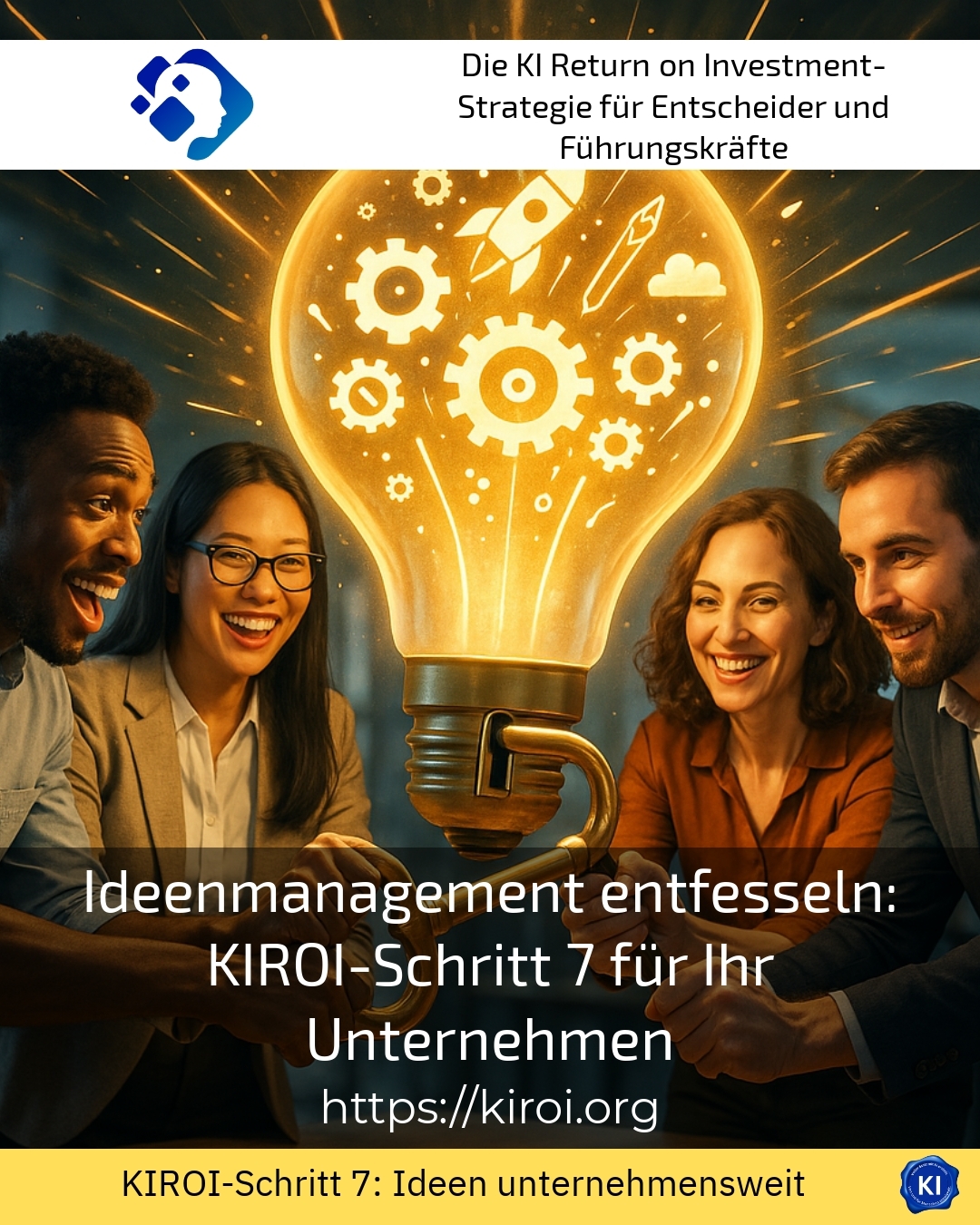
Unleashing Ideas Management: KIROI Step 7 for Your Business

4.2
(1044)

Ideas management is a crucial lever for companies looking to strengthen their innovative power and position themselves for the future. The KIROI Step 7 illustrates how companies can not only capture ideas but actively unleash them. The focus here is on systematically supporting and promoting innovation impulses, as ideas develop best in a transparent, supportive environment.

Ideas management as a continuous support process

Many companies find that while ideas can be gathered, implementation and feedback are often lacking. This is where the KIROI Step 7 comes in: It views idea management not as an isolated task, but as a long-term process with coaching, communication, and the involvement of all employees. This way, everyone's creative potential is harnessed and blockages are dismantled.

A mechanical engineering company, for instance, established regular innovation workshops within this framework. There, teams could improve existing ideas and conduct tests more quickly, which significantly shortened development cycles. In software development, fostering interdisciplinary collaboration led to faster software releases. And in retail, digital tools helped to transparently capture ideas from store employees and strengthen their exchange.

Practical examples for implementing KIROI step 7

BEST PRACTICE with one customer (name hidden due to NDA contract)
A technology-focused company implemented a company-wide feedback system that documents all submitted ideas and communicates the status of projects. This transparency significantly increased employee engagement and resulted in a noticeable strengthening of the innovation culture.

Furthermore, service companies demonstrate that an open culture promotes knowledge sharing, leading to new ideas being developed and tested for feasibility more quickly. In manufacturing firms, the formation of interdisciplinary teams results in well-founded assessments and prioritizations, ensuring that resources are specifically allocated to promising innovations.

How companies can strategically anchor idea management

KIROI Step 7 goes beyond collecting suggestions. It calls for the binding anchoring of ideas management within the company. Responsibilities are clearly defined, milestones are planned, and continuous feedback processes are established. This systematically removes implementation obstacles, and innovation becomes part of the corporate culture.

For example, a manufacturing company can assign clear roles for evaluating and implementing ideas. In a retail business, digital platforms ensure that every idea is reviewed promptly and communicated transparently. In the service sector, an open communication culture not only supports exchanges but also rapid coordination between teams.

Practical tips for supporting innovation processes

Encourage regular meetings where employees can present and develop their ideas.
Utilise digital tools that capture, evaluate, and make idea requests visible to all.
– Establish coaching services that empower employees to clearly articulate their ideas and contribute to implementation strategies.

Businesses across a wide range of sectors are reporting higher employee motivation and improved innovation capabilities. The systematic management of ideas ignites creative forces and makes the entire company more resilient to change.

Ideas Management – A Key to Sustainable Competitiveness

The full potential for efficiency and innovation that comes from an ideas management system is best realised when it's understood as a dynamic, integrated process. KIROI Step 7 shows that companies shouldn't just collect suggestions, but should also nurture them, evaluate them, and consistently integrate them into the daily workflow. Only in this way can creative contributions become effective long-term and lead to tangible improvements.

The combination of transparency, open communication, and targeted coaching supports teams in going beyond mere idea generation. Innovation is created through collaboration, the inclusion of diverse perspectives, and the structured utilisation of existing potential. This turns idea management into a reliable engine that helps companies remain competitive in the long term.

My analysis

KIROI Step 7 is a powerful approach that positions idea management as a comprehensive accompanying process. Companies benefit when they establish clearly defined roles, transparent processes, and an open culture. Practical examples from mechanical engineering, software development, and trade show how such measures lead to shorter development times, increased employee participation, and sustainable success. This unleashes the creative potential of the entire company and makes it systematically usable.

Further links from the text above:

What is idea management? Definition, processes and...
Rethinking idea management: KIROI Step 7…
What is Idea Management | Definition, Importance & …
What is Ideation Management 2025: Introduction + Definition
Idea Management: Definition, Processes & Benefits

For more information and if you have any questions, please contact Contact us or read more blog posts on the topic Artificial intelligence here.

How useful was this post?

Click on a star to rate it!

Average rating 4.2 / 5. Vote count: 1044

No votes so far! Be the first to rate this post.

Spread the love

transruption.org

The digital toolbox for
the digital winners of today and tomorrow

Business excellence for decision-makers & managers by and with Sanjay Sauldie

transruption
transruption

transruption: The digital toolbox for
the digital winners of today and tomorrow

Start » Unleashing Ideas Management: KIROI Step 7 for Your Business
21 July 2025

Unleashing Ideas Management: KIROI Step 7 for Your Business

4.2
(1044)

Ideas management is a crucial lever for companies looking to strengthen their innovative power and position themselves for the future. The KIROI Step 7 illustrates how companies can not only capture ideas but actively unleash them. The focus here is on systematically supporting and promoting innovation impulses, as ideas develop best in a transparent, supportive environment.

Ideas management as a continuous support process

Many companies find that while ideas can be gathered, implementation and feedback are often lacking. This is where the KIROI Step 7 comes in: It views idea management not as an isolated task, but as a long-term process with coaching, communication, and the involvement of all employees. This way, everyone's creative potential is harnessed and blockages are dismantled.

A mechanical engineering company, for instance, established regular innovation workshops within this framework. There, teams could improve existing ideas and conduct tests more quickly, which significantly shortened development cycles. In software development, fostering interdisciplinary collaboration led to faster software releases. And in retail, digital tools helped to transparently capture ideas from store employees and strengthen their exchange.

Practical examples for implementing KIROI step 7

BEST PRACTICE with one customer (name hidden due to NDA contract)
A technology-focused company implemented a company-wide feedback system that documents all submitted ideas and communicates the status of projects. This transparency significantly increased employee engagement and resulted in a noticeable strengthening of the innovation culture.

Furthermore, service companies demonstrate that an open culture promotes knowledge sharing, leading to new ideas being developed and tested for feasibility more quickly. In manufacturing firms, the formation of interdisciplinary teams results in well-founded assessments and prioritizations, ensuring that resources are specifically allocated to promising innovations.

How companies can strategically anchor idea management

KIROI Step 7 goes beyond collecting suggestions. It calls for the binding anchoring of ideas management within the company. Responsibilities are clearly defined, milestones are planned, and continuous feedback processes are established. This systematically removes implementation obstacles, and innovation becomes part of the corporate culture.

For example, a manufacturing company can assign clear roles for evaluating and implementing ideas. In a retail business, digital platforms ensure that every idea is reviewed promptly and communicated transparently. In the service sector, an open communication culture not only supports exchanges but also rapid coordination between teams.

Practical tips for supporting innovation processes

Encourage regular meetings where employees can present and develop their ideas.
Utilise digital tools that capture, evaluate, and make idea requests visible to all.
– Establish coaching services that empower employees to clearly articulate their ideas and contribute to implementation strategies.

Businesses across a wide range of sectors are reporting higher employee motivation and improved innovation capabilities. The systematic management of ideas ignites creative forces and makes the entire company more resilient to change.

Ideas Management – A Key to Sustainable Competitiveness

The full potential for efficiency and innovation that comes from an ideas management system is best realised when it's understood as a dynamic, integrated process. KIROI Step 7 shows that companies shouldn't just collect suggestions, but should also nurture them, evaluate them, and consistently integrate them into the daily workflow. Only in this way can creative contributions become effective long-term and lead to tangible improvements.

The combination of transparency, open communication, and targeted coaching supports teams in going beyond mere idea generation. Innovation is created through collaboration, the inclusion of diverse perspectives, and the structured utilisation of existing potential. This turns idea management into a reliable engine that helps companies remain competitive in the long term.

My analysis

KIROI Step 7 is a powerful approach that positions idea management as a comprehensive accompanying process. Companies benefit when they establish clearly defined roles, transparent processes, and an open culture. Practical examples from mechanical engineering, software development, and trade show how such measures lead to shorter development times, increased employee participation, and sustainable success. This unleashes the creative potential of the entire company and makes it systematically usable.

Further links from the text above:

What is idea management? Definition, processes and...
Rethinking idea management: KIROI Step 7…
What is Idea Management | Definition, Importance & …
What is Ideation Management 2025: Introduction + Definition
Idea Management: Definition, Processes & Benefits

For more information and if you have any questions, please contact Contact us or read more blog posts on the topic Artificial intelligence here.

How useful was this post?

Click on a star to rate it!

Average rating 4.2 / 5. Vote count: 1044

No votes so far! Be the first to rate this post.

Spread the love

Other content worth reading:

Unleashing Ideas Management: KIROI Step 7 for Your Business

written by:

Keywords:

#Big Data #compliance #Datenintelligenz #Ethikrichtlinien #Ideenmanagement #InnovationDurchAchtsamkeit #yellow #artificial intelligence #Mitarbeiterbeteiligung #Sustainability #SmartData #Unternehmenskultur #Verantwortungsketten Innovation culture Transparency

Follow me on my channels:

Questions on the topic? Contact us now without obligation

Contact us

[wpforms id="331781" title="false"]

More articles worth reading

    Leave a comment