
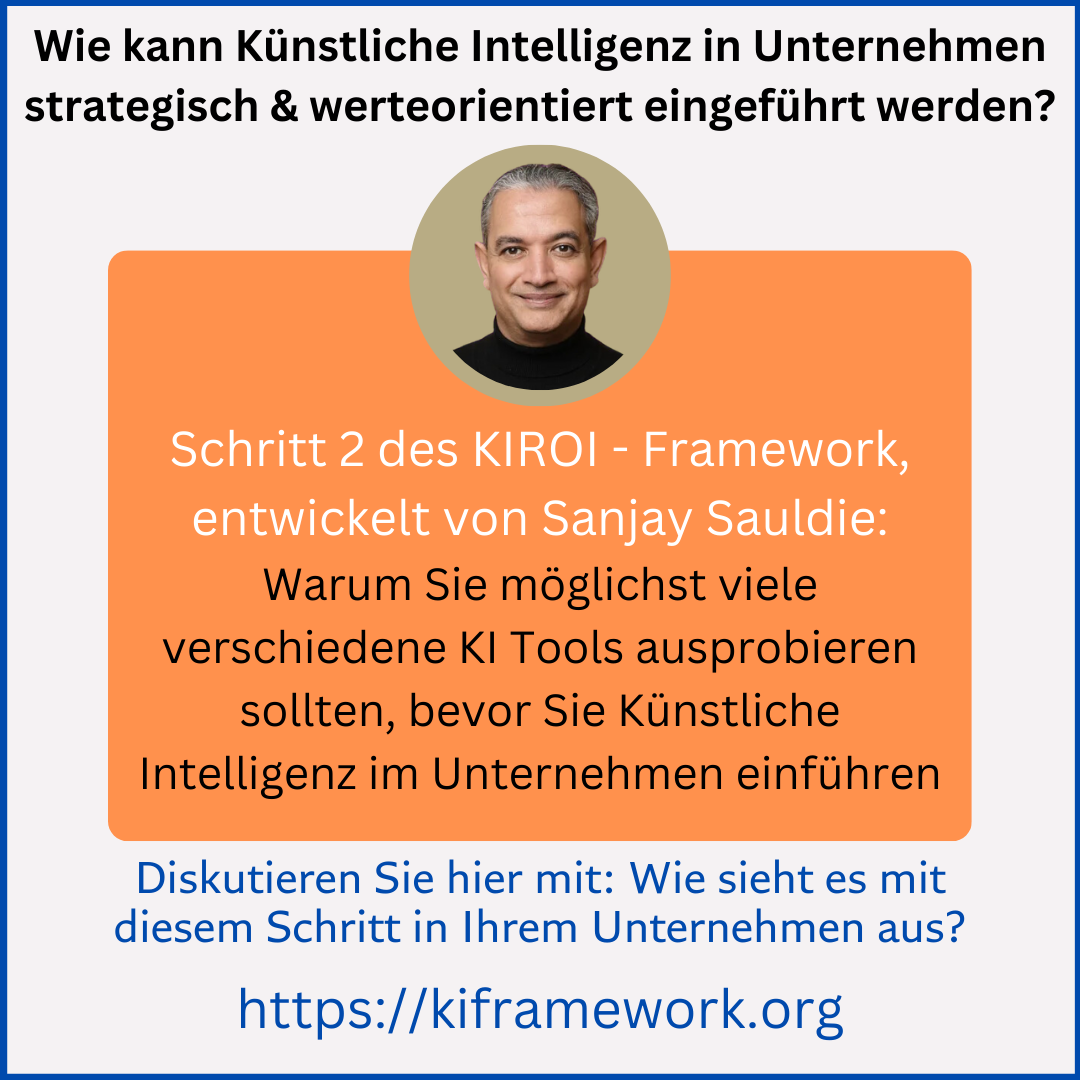
Choosing the right tools is crucial for the success of AI initiatives within a company. The second step of KIROI (Artificial Intelligence Return on Investment) Strategy focuses on identifying the right tools that meet a company's specific requirements and objectives.
Customer example: XYZ Logistics AG (name changed due to NDA agreements)
XYZ Logistics AG, a leading transport and logistics company, faced the challenge of making their supply chains more efficient and improving customer satisfaction. The second step of the KIROI strategy helped them find the optimal AI tools for their needs.
Needs assessment
- Process analysis Initially, the existing logistical processes were analysed to identify weaknesses and pinpoint areas with the greatest potential for optimisation.
- Definition of Objective: The main objectives were to reduce delivery times and improve inventory management.
Tool evaluation
- Market overview An expert team at XYZ Logistics AG created an overview of the AI tools available on the market that are relevant to the logistics industry.
- Pilot projects Pilot projects were carried out with various providers to test the functionality and benefit of the tools in practice.
Decision criteria
- Integration A key criterion was the easy integration of the new tools into the existing IT infrastructure.
- Scalability: The chosen solutions had to be scalable to keep pace with the company's growth.
- User friendliness: To ensure high acceptance among employees, particular attention was paid to user-friendly interfaces.
This example illustrates how companies can optimise their business processes by carefully selecting AI tools. Share these insights to help find the right solutions for your company too.
Result:
XYZ Logistics AG opted for a combination of an AI-driven warehouse management system and real-time route optimisation software. These tools enabled the company to manage inventory more efficiently and significantly reduce delivery times. Customer satisfaction noticeably increased, and costs were reduced.
The second step of the KIROI (Artificial Intelligence Return on Investment) Strategy shows the importance of selecting the right tools for a company's specific needs. Through targeted evaluation and testing, it can be ensured that the AI tools used actually deliver the desired added value.











 Deutsch
  English (UK)