kiroi.org

KIROI - Artificial Intelligence Return on Invest
The AI strategy for decision-makers and managers

Business excellence for decision-makers & managers by and with Sanjay Sauldie

KIROI - Artificial Intelligence Return on Invest: The AI strategy for decision-makers and managers

KIROI - Artificial Intelligence Return on Invest: The AI strategy for decision-makers and managers

Start » KIROI Step 5: Ethical Guidelines as a Success Factor for Decision-Makers
6 November 2025

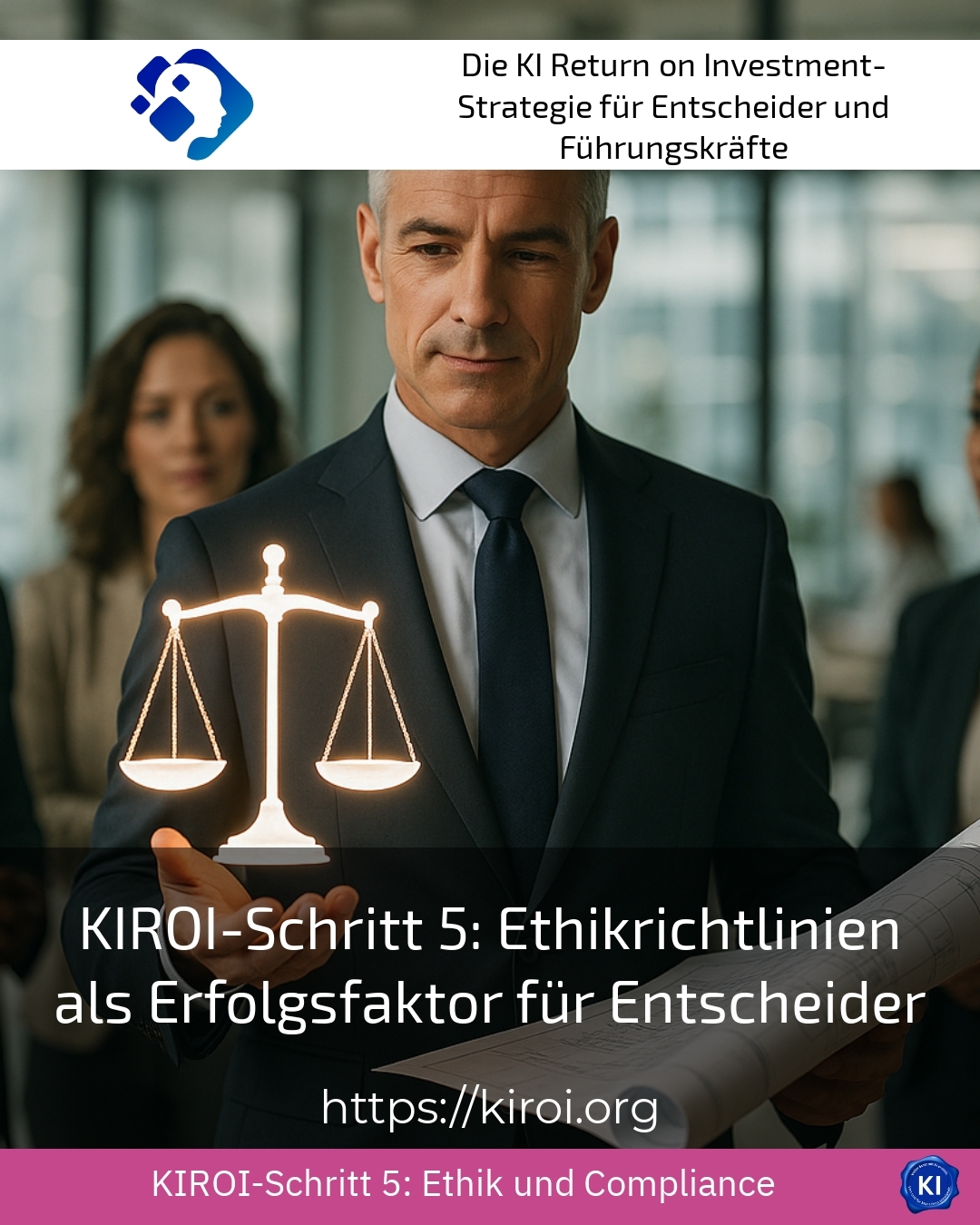
KIROI Step 5: Ethical Guidelines as a Success Factor for Decision-Makers

4.8
(1846)

Ethical guidelines play a central role in today's corporate management. They support decision-makers in acting responsibly and promoting sustainable business models. Especially in complex projects, clearly formulated guidelines are a success factor that not only improves internal processes but also strengthens the trust of partners and customers. In this article, we shed light on diverse examples and areas of application that illustrate how ethical guidelines provide essential support for managers.

Ethical Guidelines – Basis for Informed Decisions

Ethical guidelines define behavioural requirements that anchor moral principles in business practice. They help to avoid conflicts of interest and create a framework for action in challenging situations. For example, they regulate the handling of gifts, the reporting of misconduct (whistleblowing), or the safeguarding of privacy. In doing so, they contribute significantly to maintaining integrity and transparency[2].

In practice, ethical guidelines accompany decision-makers in areas such as customer communication: A telecommunications provider clarifies that customer data must be treated with strict confidentiality and not misused for marketing purposes. This builds trust and minimises risks. Similarly, a mechanical engineering company sets clear rules for dealing with business partners to prevent corruption. In the pharmaceutical industry, ethical guidelines support regulatory requirements, thereby ensuring patient safety.

BEST PRACTICE with one customer (name hidden due to NDA contract) A medium-sized technology company specifically integrated ethical guidelines into its development process. This allowed potential conflicts of interest to be identified and resolved early on. The guidelines fostered open communication within the team, which had a positive impact on innovation.

Ethical guidelines as an integral part of corporate culture

Ethical values are not only formally recorded in codes of conduct, but also sustainably shape the corporate culture. Executives benefit when values such as transparency, fairness, and respect are actively lived. This fosters stable relationships with employees, suppliers, and customers.

A well-known example from the financial sector shows how ethical guidelines, as part of compliance management, can prevent misconduct. Banks incorporate strict rules for handling insider information and conflicts of interest into these. An international automotive industry group uses a combination of ethical guidelines and regular training to prevent corruption and bribery.

Even in the fashion industry, companies are increasingly focusing on ethical guidelines to ensure social responsibility throughout the supply chain. Manufacturers are thus committing to fair working conditions and environmental protection. This not only benefits them with a positive brand image but also provides sustainable impetus in the industry.

Ethical Guidelines and Their Implementation – Practical Tips for Decision-Makers

For managers, it is essential not only to formulate ethical guidelines but also to implement them practically. This includes:

  • Early involvement of all stakeholders to build acceptance.
  • Regular training sessions that help to understand and apply ethical issues.
  • An open ear for concerns and the establishment of safe channels for reporting misconduct.

In the IT sector, for example, a software company set up an anonymous reporting office. Within a short period, this led to a higher number of tips regarding potential compliance violations and thus to more targeted corrective measures. In the consulting sector, the clear definition of ethical guidelines has helped to ensure that advice is practical and responsible, without neglecting the profit motive. A manufacturer of consumer goods strengthened its internal awareness of sustainability through its ethical guidelines, thereby promoting innovative product developments.

Ethical guidelines as a success factor in corporate leadership

Ethical guidelines complement the strategic management of companies because they ensure reliability and credibility. They offer decision-makers a reliable compass in uncertain situations. They foster a culture that is friendly towards mistakes, as misconduct can be recognised and addressed early on.

An energy provider reported how the introduction of ethical guidelines improved collaboration with municipal partners by communicating clear values. In the pharmaceutical industry, ethical guidelines helped maintain the balance between profit and social responsibility. A sports apparel manufacturer relies on ethical guidelines to meet high standards in both working conditions and environmental standards, which is viewed positively by customers and partners.

BEST PRACTICE with one customer (name hidden due to NDA contract) Established ethical guidelines at a logistics company fostered a new awareness of environmental protection. With the help of accompanying coaching programmes, employees were motivated to actively implement sustainable measures. This strengthened competitiveness and improved the working atmosphere.

My analysis

Ethical guidelines are an important success factor for decision-makers. They provide clear direction in the conflict between economic success and social responsibility. Concrete examples from various industries show that ethical guidelines can sustainably improve day-to-day business operations. Executives gain more confidence in their decisions and promote a positive corporate culture. Thus, ethical guidelines are indispensable for responsible and future-oriented corporate management.

Further links from the text above:

Ethical Guidelines • Definition – Gabler Economics Lexicon
Business Ethics: Definition, Explanation & Example – StudySmarter
Ethics in Business – Corporate Social Responsibility – JobTeaser
Ethics Guidelines | Works Council Lexicon - ifb
Code of Conduct and Ethical Guidelines - Survitec Group

For more information and if you have any questions, please contact Contact us or read more blog posts on the topic Artificial intelligence return on investment here.

How useful was this post?

Click on a star to rate it!

Average rating 4.8 / 5. Vote count: 1846

No votes so far! Be the first to rate this post.

Spread the love

transruption.org

The digital toolbox for
the digital winners of today and tomorrow

Business excellence for decision-makers & managers by and with Sanjay Sauldie

transruption
transruption

transruption: The digital toolbox for
the digital winners of today and tomorrow

Start » KIROI Step 5: Ethical Guidelines as a Success Factor for Decision-Makers
6 November 2025

KIROI Step 5: Ethical Guidelines as a Success Factor for Decision-Makers

4.8
(1846)

Ethical guidelines play a central role in today's corporate management. They support decision-makers in acting responsibly and promoting sustainable business models. Especially in complex projects, clearly formulated guidelines are a success factor that not only improves internal processes but also strengthens the trust of partners and customers. In this article, we shed light on diverse examples and areas of application that illustrate how ethical guidelines provide essential support for managers.

Ethical Guidelines – Basis for Informed Decisions

Ethical guidelines define behavioural requirements that anchor moral principles in business practice. They help to avoid conflicts of interest and create a framework for action in challenging situations. For example, they regulate the handling of gifts, the reporting of misconduct (whistleblowing), or the safeguarding of privacy. In doing so, they contribute significantly to maintaining integrity and transparency[2].

In practice, ethical guidelines accompany decision-makers in areas such as customer communication: A telecommunications provider clarifies that customer data must be treated with strict confidentiality and not misused for marketing purposes. This builds trust and minimises risks. Similarly, a mechanical engineering company sets clear rules for dealing with business partners to prevent corruption. In the pharmaceutical industry, ethical guidelines support regulatory requirements, thereby ensuring patient safety.

BEST PRACTICE with one customer (name hidden due to NDA contract) A medium-sized technology company specifically integrated ethical guidelines into its development process. This allowed potential conflicts of interest to be identified and resolved early on. The guidelines fostered open communication within the team, which had a positive impact on innovation.

Ethical guidelines as an integral part of corporate culture

Ethical values are not only formally recorded in codes of conduct, but also sustainably shape the corporate culture. Executives benefit when values such as transparency, fairness, and respect are actively lived. This fosters stable relationships with employees, suppliers, and customers.

A well-known example from the financial sector shows how ethical guidelines, as part of compliance management, can prevent misconduct. Banks incorporate strict rules for handling insider information and conflicts of interest into these. An international automotive industry group uses a combination of ethical guidelines and regular training to prevent corruption and bribery.

Even in the fashion industry, companies are increasingly focusing on ethical guidelines to ensure social responsibility throughout the supply chain. Manufacturers are thus committing to fair working conditions and environmental protection. This not only benefits them with a positive brand image but also provides sustainable impetus in the industry.

Ethical Guidelines and Their Implementation – Practical Tips for Decision-Makers

For managers, it is essential not only to formulate ethical guidelines but also to implement them practically. This includes:

  • Early involvement of all stakeholders to build acceptance.
  • Regular training sessions that help to understand and apply ethical issues.
  • An open ear for concerns and the establishment of safe channels for reporting misconduct.

In the IT sector, for example, a software company set up an anonymous reporting office. Within a short period, this led to a higher number of tips regarding potential compliance violations and thus to more targeted corrective measures. In the consulting sector, the clear definition of ethical guidelines has helped to ensure that advice is practical and responsible, without neglecting the profit motive. A manufacturer of consumer goods strengthened its internal awareness of sustainability through its ethical guidelines, thereby promoting innovative product developments.

Ethical guidelines as a success factor in corporate leadership

Ethical guidelines complement the strategic management of companies because they ensure reliability and credibility. They offer decision-makers a reliable compass in uncertain situations. They foster a culture that is friendly towards mistakes, as misconduct can be recognised and addressed early on.

An energy provider reported how the introduction of ethical guidelines improved collaboration with municipal partners by communicating clear values. In the pharmaceutical industry, ethical guidelines helped maintain the balance between profit and social responsibility. A sports apparel manufacturer relies on ethical guidelines to meet high standards in both working conditions and environmental standards, which is viewed positively by customers and partners.

BEST PRACTICE with one customer (name hidden due to NDA contract) Established ethical guidelines at a logistics company fostered a new awareness of environmental protection. With the help of accompanying coaching programmes, employees were motivated to actively implement sustainable measures. This strengthened competitiveness and improved the working atmosphere.

My analysis

Ethical guidelines are an important success factor for decision-makers. They provide clear direction in the conflict between economic success and social responsibility. Concrete examples from various industries show that ethical guidelines can sustainably improve day-to-day business operations. Executives gain more confidence in their decisions and promote a positive corporate culture. Thus, ethical guidelines are indispensable for responsible and future-oriented corporate management.

Further links from the text above:

Ethical Guidelines • Definition – Gabler Economics Lexicon
Business Ethics: Definition, Explanation & Example – StudySmarter
Ethics in Business – Corporate Social Responsibility – JobTeaser
Ethics Guidelines | Works Council Lexicon - ifb
Code of Conduct and Ethical Guidelines - Survitec Group

For more information and if you have any questions, please contact Contact us or read more blog posts on the topic Artificial intelligence return on investment here.

How useful was this post?

Click on a star to rate it!

Average rating 4.8 / 5. Vote count: 1846

No votes so far! Be the first to rate this post.

Spread the love

Other content worth reading:

KIROI Step 5: Ethical Guidelines as a Success Factor for Decision-Makers

written by:

Keywords:

#Big Data #compliance #Datenintelligenz #Ethikrichtlinien #InnovationDurchAchtsamkeit #artificial intelligence #Sustainability #SmartData #Unternehmensethik #Unternehmenskultur #Verantwortungsketten

Follow me on my channels:

Questions on the topic? Contact us now without obligation

Contact us

[wpforms id="331781" title="false"]

More articles worth reading

    Leave a comment