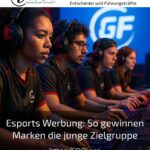
Anyone wanting to talk to young people today cannot ignore digital game worlds – and therefore cannot ignore esports advertising. Traditional channels are losing relevance among the 14-to-29 age group, while gaming and streaming platforms like Twitch, YouTube, or Discord connect millions of users daily. Brands that appear authentic and interactive capture attention there, which is hard to gain elsewhere. But how can companies succeed in this complex arena? And what insights can be drawn from successful practical examples? iROI-Coaching supports you in developing and effectively implementing the right measures for your business – from the initial analysis to the continuous optimisation of your campaigns.
Why esports advertising offers so much potential
The number of spectators at major esports tournaments now frequently surpasses the reach of traditional sports broadcasts. Digital events not only offer a global audience but also the opportunity for targeted advertising placement – be it through sponsorship, product placement, in-game advertising, or directly on popular streaming platforms. A major strength of esports advertising is its clear audience targeting: so-called Gen Z naturally moves in digital worlds and perceives brand messages there with particular attentiveness when they become part of the experience. Many companies therefore utilise special collaborations with teams, leagues, or events to reach their target audience on an equal footing – and to track them measurably, for example, through social media analyses or targeted community engagement.
The Techniker Krankenkasse, which has been successfully active as a health partner in esports for years, provides a prime example. At offline events such as the Uniliga finals, the TK ensures the well-being of the players, thereby building a trusting relationship with the community[1]. At the same time, it specifically addresses topics that matter to young people on digital channels – such as mental health or work-life balance. Feedback from the target group shows: authenticity and added value are crucial for the success of esports advertising. Conversely, those who only want to run short-term advertising campaigns are quickly perceived as disruptive.
New channels, new opportunities: How esports advertising works in practice
As soon as companies delve into esports advertising, they discover a wide range of opportunities that go far beyond traditional banner ads. In addition to classic team or league sponsorships – such as Deutsche Telekom’s involvement with the Uniliga – there are numerous innovative approaches, which we will outline below.
In-game advertising and product placement
Integrating brand messages directly into the game environment is one of the most promising forms of esports advertising. Here, logos, products, or short video clips appear on advertising hoardings in virtual football stadiums, for example, as known from traditional sports broadcasts [4]. Product placement is now going even further: Nike, for instance, designed its own jerseys for the Chinese League of Legends Pro League, attracting enormous attention [3]. The success shows how important targeted and authentic integration is – brands are thus perceived not as outsiders, but as part of the gaming culture.
BEST PRACTICE at company XYZ (name changed due to NDA contract) and then the example with at least 50 words.
A major sports equipment manufacturer, working with iROI-Coaching, implemented a comprehensive in-game advertising campaign in a popular football game. The brand not only placed its logo on virtual advertising boards but also introduced player items such as skins and kits into the digital shop. Through accompanying social media activities and exclusive giveaways on Twitch, they successfully engaged the community and built sustainable brand loyalty. The campaign was continuously optimised using streaming analytics, achieving a significantly higher resonance than traditional online advertising.
It is important that in-game advertising is not perceived as disruptive. According to a recent study, over 60% of players find in-game advertising disruptive, particularly when it is not seamlessly integrated into the gaming experience[7]. Companies should therefore always test their approaches in collaboration with the community and make iterative improvements.
Community Building on Twitch, YouTube & Co.
The most important platforms for esports advertising are undoubtedly Twitch and YouTube, but Discord, Steam, and Reddit also offer diverse opportunities for direct engagement with the gaming community[6]. Here, brands can not only place classic advertising slots but, above all, distinguish themselves through participation and interaction. Companies that, for example, host tournaments, produce their own content series, or enlist influencers as brand ambassadors, create sustainable attention.
BEST PRACTICE at company XYZ (name changed due to NDA contract) and then the example with at least 50 words.
A well-known beverage brand launched a campaign in conjunction with iROI Coaching, offering exclusive giveaways and interactive live polls during a major esports event on Twitch. The community was encouraged to create and share their own content, such as memes or creative reactions to the campaign. Simultaneously, the chat was moderated to facilitate open dialogue. The combination of sponsorship, user-generated content, and social listening led to a noticeable increase in brand awareness and broad engagement with the target audience.
Another example can be found with Deutsche Telekom, who, as the official partner of the Uniliga in Germany, not only provides logo presence but also technical solutions for broadcasts and community management. This creates real added value for everyone involved.
Physical presence at events
Alongside digital channels, a physical presence at esports events also remains a crucial factor. Brands can place their products directly in front of players and spectators, for example, through giveaways, pop-up stores, or interactive experience zones at major tournaments. This transforms advertising into a genuine event for the community, making the brand tangible.
BEST PRACTICE at company XYZ (name changed due to NDA contract) and then the example with at least 50 words.
An international tech corporation, in co-operation with iROI-Coaching, realised a gaming lounge area at Gamescom. There, visitors could test innovative devices, complete exclusive challenges, and exchange ideas directly with developers. The event was accompanied by a livestream promotion on Twitch, which generated additional momentum through interactive prize draws and live interviews. The synergy between the physical and digital experience led to a lasting brand perception and significantly increased reach.
Measurability and Optimisation: How esports advertising stays successful
A significant advantage of esports advertising is the precise measurability of campaign success. Platforms such as Twitch and YouTube offer detailed tools to analyse reach, stream time, average watch duration, and chat activity [3]. This allows companies to quickly identify which measures are effective and what adjustments are necessary. iROI Coaching assists in defining the right KPIs, conducting impact analyses, and continuously optimising the campaign.
One example of this is the continuous adaptation of advertising formats: many brands today rely on a mix of short-term activations and long-term partnerships. This allows spontaneity and sustainability to be optimally combined. At the same time, it is advisable to pay attention to new trends such as interactive advertising formats, augmented reality or NFTs, which are becoming increasingly present in gaming culture.
The challenge for companies is to find the right mix of presence, authenticity, and innovation. Those who understand and actively involve the needs of the community will win their trust and attention in the long term.
My analysis
Esports advertising is no longer a niche topic, but a central success factor for brands wanting to reach young audiences. The combination of digital closeness, innovative advertising formats, and direct community engagement creates unique opportunities to stand out from competitors. Companies such as Techniker Krankenkasse, Nike, or Deutsche Telekom demonstrate how to be authentically and effectively present in esports. It is crucial that the measures do not just appear superficial, but offer real added value for the community.
iROI-Coaching accompanies companies on this path, supporting them in developing suitable formats, implementing them successfully and optimising them on an ongoing basis. This way, Esports advertising not only becomes a driver for marketing but also an enabler for digital innovations and sustainable brand loyalty.
Further links from the text above:
See the following articles for example:
Esports Marketing – Strategies and Examples [1]
E-Sports: How to Win in the Digital Advertising Competition [3]
The current status of esports worldwide and in Germany [5]
Statista: Esports Market Forecast Germany [9]
Esports Marketing: The 10 Best Strategies for Sports Betting [2]
For more information and if you have any questions, please contact
Contact us or read more blog posts on the topic
internet Return on Investment - Marketing here.
Sources
[1] https://www.omt.de/marketing/esport-marketing/
[3] https://www.new-communication.de/neues/detail/e-sports/
[2] https://www.blockchain-ads.com/de/post/esports-marketing
[5] https://www.game.de/guides/game-fokus-esport/status-quo-des-esports-weltweit-und-in-deutschland/
[7] https://www.pwc.de/de/technologie-medien-und-telekommunikation/digital-trend-outlook-2019-esport/das-esport-oekosystem-publikum.html
[6] https://www.localup.io/de/blog/gaming-marketing-in-game-advertising/
[4] E-Sports – Analysis of Opportunities and Risks for Businesses
[9] https://de.statista.com/outlook/amo/esports/deutschland






 Deutsch
  English (UK)