
Digital transformation as a challenge for decision-makers
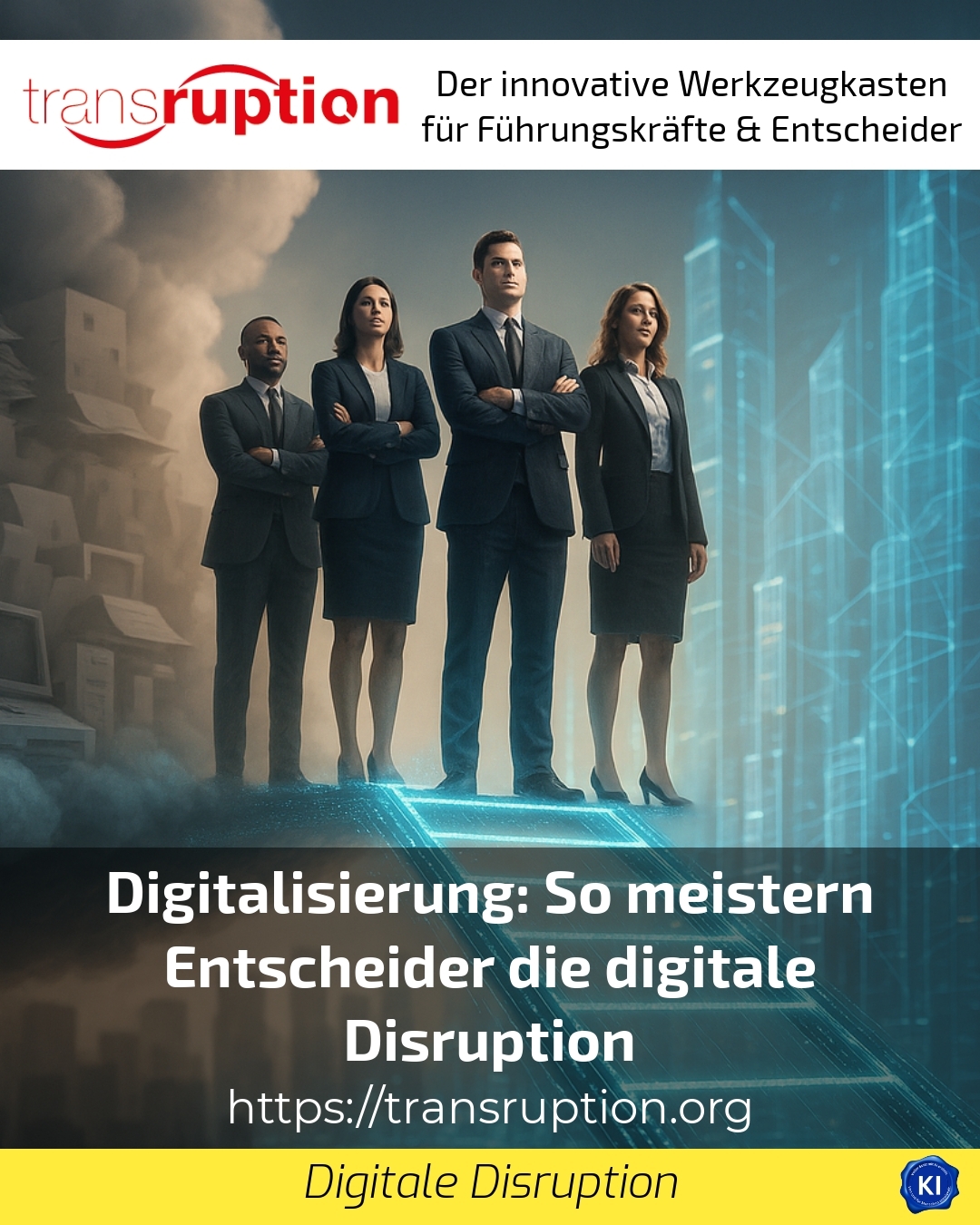
**Digitalisation** presents companies with complex challenges. Many decision-makers are looking for ways not only to manage digital disruption but to make it beneficial for their company. This is where the creation of a holistic strategy plays a central role. The focus is no longer on individual digital projects, but on a sustainable alignment of business processes, corporate culture, and technology.
Clear goals and holistic strategy for digitalisation
Decision-makers first define clear objectives, with digital transformation being strategically embedded. This includes a thorough analysis of the current state of the IT infrastructure and the digital competencies within the company. Only with a comprehensive understanding can needs be recognised and opportunities identified. The formulation of these objectives forms the foundation of any **digitalisation**.
Following this, setting up an interdisciplinary team to coordinate the change is recommended. This group will oversee implementation and ensure knowledge transfer between departments.
BEST PRACTICE at company XYZ (name changed due to NDA contract) In a medium-sized manufacturing company, a transformation team was formed with members from IT, sales, and production. This team employed agile methods to digitally map internal processes, thereby saving resources. This resulted in a measurable improvement in manufacturing efficiency and simultaneously increased responsiveness to customer demands.
Technological foundations and agile methods complement each other
The technological architecture must be open, flexible, and secure to integrate new technologies such as Artificial Intelligence, Big Data, or IoT. In parallel, the development of a digital culture is essential. Employee training and agile working methods promote the company's adaptability and prepare it for constant change. Here, **digitalisation** is only successful through the interplay of technology and people.
BEST PRACTICE at ABC (name changed due to NDA contract) A trading company introduced digital literacy training and implemented agile teams in customer service. This enabled them to introduce AI-powered chatbots, which relieve employees of routine queries and thus increase customer satisfaction.
Pilot projects as a key to learning
Start small pilot projects to test hypotheses on digitalisation and gain insights quickly. The risk remains low, and errors can be corrected in a timely manner. Subsequently, functioning solutions should be scaled across the entire company. This way, digital disruption can be actively managed without jeopardising operations.
BEST PRACTICE at DEF (name changed due to NDA contract) A digital platform for warehouse management was first tested at one branch. Following successful operation, it was rolled out to further regions, supported by KPI-driven dashboards that provided real-time data.
Trends and technologies in focus for digitalisation
Primarily, the targeted use of advanced technologies brings advantages in **digitalisation**. AI, for example, automates routine processes and supports more complex decisions. 5G improves connectivity, for instance for IoT solutions in manufacturing or smart cities. Low-code and no-code platforms facilitate the development of new applications, even without extensive IT expertise.
Modern technologies are also changing the expectations for search engine optimisation (SEO) and marketing. Companies need to design content so that it matches users' search intentions and is technically optimised at the same time.
Continuous control and adjustment ensure success
Effective **digitalisation** requires ongoing monitoring of efficiency and flexible adaptation of strategy. Methods such as OKR (Objectives and Key Results) help to make goals measurable and to evaluate results. This ensures that digital initiatives are not only implemented but also have a sustainable effect.
My analysis
Many decision-makers experience digital disruption as a challenge, but at the same time as an opportunity for realignment. They focus on strategic planning, agile implementation, and technological innovation. It is important not only to rely on digital tools but also to develop the corporate culture. Clients often report that it is precisely the combination of clear goals, pilot projects, and targeted use of technology that helps to manage complexity.
Further links from the text above:
[1] Digital Transformation Strategy 2025
[3] Top Digitalisation Trends 2025
[4] How Artificial Intelligence (AI) is changing SEO in E-commerce
For more information and if you have any questions, please contact Contact us or read more blog posts on the topic TRANSRUPTION here.











 Deutsch
  English (UK)