kiroi.org

KIROI - Artificial Intelligence Return on Invest
The AI strategy for decision-makers and managers

Business excellence for decision-makers & managers by and with Sanjay Sauldie

KIROI - Artificial Intelligence Return on Invest: The AI strategy for decision-makers and managers

KIROI - Artificial Intelligence Return on Invest: The AI strategy for decision-makers and managers

Start » Digital Disruption: How decision-makers can secure their market leadership
3 November 2025

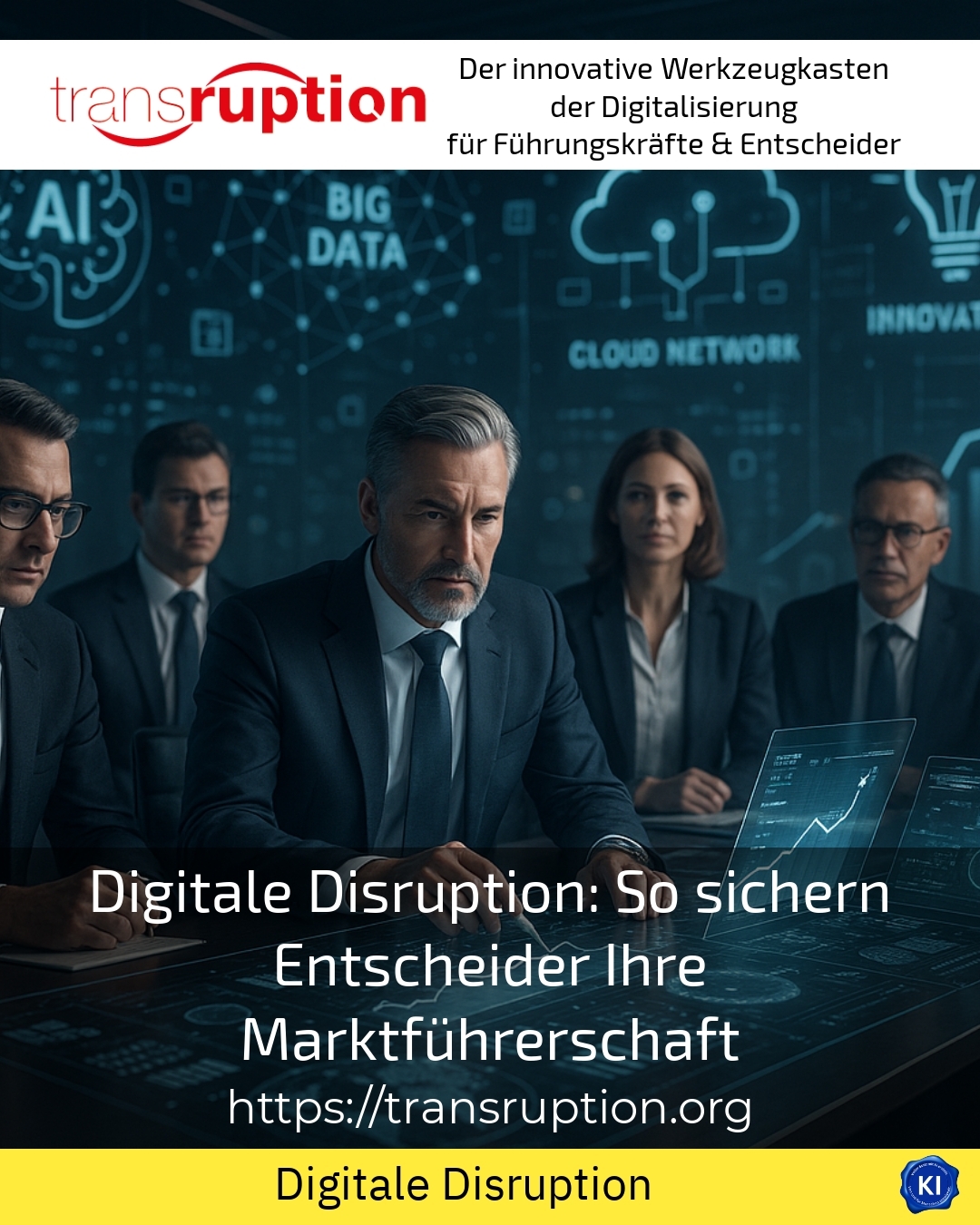
Digital Disruption: How decision-makers can secure their market leadership

4.6
(1137)

**Digital disruption** presents a profound challenge for companies seeking to maintain their market leadership. Technological innovations are radically transforming industries by increasingly challenging established business models, products, and services.

Understanding Digital Disruption: The Fundamentals and Their Importance for Decision-Makers

The key phrase **Digital Disruption** refers to the radical transformation of markets by digital technologies, which displace or transform existing business models. A striking example is streaming services like Netflix, which challenge traditional media companies, or platforms like Uber and Airbnb, which redefine consumer behaviour and industry structures[1][6].

These developments offer companies opportunities on the one hand, through new market access and increased efficiency. On the other hand, they represent risks if established structures cling to the status quo for too long. Decision-makers are therefore called upon to recognise and actively shape the dynamics of digital disruption at an early stage.

How decision-makers should react to digital disruption

A successful response to digital disruption begins with a precise analysis of one's own industry and the identified digital trends. Various concrete examples from different industries show how companies can leverage these:

In the automotive sector, electromobility and connected driving technology are shaking up traditional manufacturers. Companies like Tesla have set new standards with their innovative battery technologies and software updates, while traditional car makers are having to adapt their business models.

The financial industry is experiencing disruptive pressure from fintech startups. Digital payment solutions such as mobile banking or cryptocurrencies offer convenience and transparency, forcing traditional banks to think more digitally.

Retail is also changing through e-commerce, AI-driven personalization and automated logistics. Amazon is a prime example here, challenging the market for many and shaping new customer expectations with innovative services.

These examples illustrate that decision-makers today must continuously evaluate and adapt not only their core product but their entire business model in order to remain sustainably competitive.

BEST PRACTICE at the customer (name hidden due to NDA contract)

BEST PRACTICE at the customer (name hidden due to NDA contract) An established logistics service provider has made its processes more efficient through targeted digitalisation of the supply chain and the introduction of AI-based forecasting systems. This has enabled it to reduce costs and significantly increase customer satisfaction. At the same time, a new digital service offering was developed, which skilfully complements existing business models and makes market entry for new competitors more difficult.

Strategies for securing market leadership during digital transformation

To keep pace with **digital disruption** and secure market leadership, leaders should focus on the following priorities:

  • Early detection and monitoring of digital trends: Continuous analysis of emerging technologies and business models and how they influence one's own industry.
  • **Agile Corporate Culture:** Creating flexibility to react quickly to changes. Examples of this include start-up-like innovation centres within larger companies.
  • Openness to collaborations: Partnerships with technology providers or start-ups can open up access to new areas of innovation.
  • **Strengthening Digital Literacy:** Further training for employees to effectively use digital tools and foster an innovative mindset.

Practical examples include corporations like Siemens, which test new digital business models with internal incubators, or telecommunications companies that promote the expansion of the 5G network and associated applications through targeted cooperations.

BEST PRACTICE at the customer (name hidden due to NDA contract)

BEST PRACTICE at the customer (name hidden due to NDA contract) A medium-sized mechanical engineering company implemented systematic innovation management, which intentionally incorporated digital technologies. The introduction of IoT sensors increased maintenance efficiency and enabled new service models such as predictive maintenance. This allowed the company to strengthen customer loyalty and simultaneously differentiate itself from newly emerged competitors.

Understanding and actively leveraging digital disruption as an opportunity

Digital disruption is not purely a risk or threat factor. It also opens up new opportunities to rethink existing value creation and develop innovative solutions. For example, digitalisation in healthcare has given rise to telemedicine, which offers patients more flexibility and security of care while simultaneously challenging established practice procedures.

In the education sector, digitally supported learning methods lead to individualised offerings and expand accessibility. Companies that proactively recognise such trends often foster innovative product developments, thereby securing their future viability.

BEST PRACTICE at the customer (name hidden due to NDA contract)

BEST PRACTICE at the customer (name hidden due to NDA contract) A major insurer took an early lead in implementing AI-powered claims processing, enabling transparent and rapid assessments. This resulted in an improved customer experience, enhanced process quality, and savings in internal resources. This digital innovation significantly boosted the company's competitiveness against rivals.

My analysis

**Digital disruption** requires companies to actively manage change on an ongoing basis. Market leaders who act rather than react can maintain and even expand their position in the long term. This means openly questioning existing business models and integrating new digital potential. At the same time, this requires courage to change, agile structures, and a corporate culture that promotes innovation. Examples from various industries impressively illustrate that digital disruption primarily offers opportunities if companies use it as a catalyst to reinvent themselves.

Further links from the text above:

Digital Disruption in Marketing, Sales, and Customer Service
Digital Disruption - OMR
Innolytics Digital Disruption
Digital Disruption and Megatrends
Disruptive Technologies: A Guide for Businesses
What is digital disruption?
Digital Disruption: How to Secure Your Market Leadership Now

For more information and if you have any questions, please contact Contact us or read more blog posts on the topic TRANSRUPTION here.

How useful was this post?

Click on a star to rate it!

Average rating 4.6 / 5. Vote count: 1137

No votes so far! Be the first to rate this post.

Spread the love

transruption.org

The digital toolbox for
the digital winners of today and tomorrow

Business excellence for decision-makers & managers by and with Sanjay Sauldie

transruption
transruption

transruption: The digital toolbox for
the digital winners of today and tomorrow

Start » Digital Disruption: How decision-makers can secure their market leadership
3 November 2025

Digital Disruption: How decision-makers can secure their market leadership

4.6
(1137)

**Digital disruption** presents a profound challenge for companies seeking to maintain their market leadership. Technological innovations are radically transforming industries by increasingly challenging established business models, products, and services.

Understanding Digital Disruption: The Fundamentals and Their Importance for Decision-Makers

The key phrase **Digital Disruption** refers to the radical transformation of markets by digital technologies, which displace or transform existing business models. A striking example is streaming services like Netflix, which challenge traditional media companies, or platforms like Uber and Airbnb, which redefine consumer behaviour and industry structures[1][6].

These developments offer companies opportunities on the one hand, through new market access and increased efficiency. On the other hand, they represent risks if established structures cling to the status quo for too long. Decision-makers are therefore called upon to recognise and actively shape the dynamics of digital disruption at an early stage.

How decision-makers should react to digital disruption

A successful response to digital disruption begins with a precise analysis of one's own industry and the identified digital trends. Various concrete examples from different industries show how companies can leverage these:

In the automotive sector, electromobility and connected driving technology are shaking up traditional manufacturers. Companies like Tesla have set new standards with their innovative battery technologies and software updates, while traditional car makers are having to adapt their business models.

The financial industry is experiencing disruptive pressure from fintech startups. Digital payment solutions such as mobile banking or cryptocurrencies offer convenience and transparency, forcing traditional banks to think more digitally.

Retail is also changing through e-commerce, AI-driven personalization and automated logistics. Amazon is a prime example here, challenging the market for many and shaping new customer expectations with innovative services.

These examples illustrate that decision-makers today must continuously evaluate and adapt not only their core product but their entire business model in order to remain sustainably competitive.

BEST PRACTICE at the customer (name hidden due to NDA contract)

BEST PRACTICE at the customer (name hidden due to NDA contract) An established logistics service provider has made its processes more efficient through targeted digitalisation of the supply chain and the introduction of AI-based forecasting systems. This has enabled it to reduce costs and significantly increase customer satisfaction. At the same time, a new digital service offering was developed, which skilfully complements existing business models and makes market entry for new competitors more difficult.

Strategies for securing market leadership during digital transformation

To keep pace with **digital disruption** and secure market leadership, leaders should focus on the following priorities:

  • Early detection and monitoring of digital trends: Continuous analysis of emerging technologies and business models and how they influence one's own industry.
  • **Agile Corporate Culture:** Creating flexibility to react quickly to changes. Examples of this include start-up-like innovation centres within larger companies.
  • Openness to collaborations: Partnerships with technology providers or start-ups can open up access to new areas of innovation.
  • **Strengthening Digital Literacy:** Further training for employees to effectively use digital tools and foster an innovative mindset.

Practical examples include corporations like Siemens, which test new digital business models with internal incubators, or telecommunications companies that promote the expansion of the 5G network and associated applications through targeted cooperations.

BEST PRACTICE at the customer (name hidden due to NDA contract)

BEST PRACTICE at the customer (name hidden due to NDA contract) A medium-sized mechanical engineering company implemented systematic innovation management, which intentionally incorporated digital technologies. The introduction of IoT sensors increased maintenance efficiency and enabled new service models such as predictive maintenance. This allowed the company to strengthen customer loyalty and simultaneously differentiate itself from newly emerged competitors.

Understanding and actively leveraging digital disruption as an opportunity

Digital disruption is not purely a risk or threat factor. It also opens up new opportunities to rethink existing value creation and develop innovative solutions. For example, digitalisation in healthcare has given rise to telemedicine, which offers patients more flexibility and security of care while simultaneously challenging established practice procedures.

In the education sector, digitally supported learning methods lead to individualised offerings and expand accessibility. Companies that proactively recognise such trends often foster innovative product developments, thereby securing their future viability.

BEST PRACTICE at the customer (name hidden due to NDA contract)

BEST PRACTICE at the customer (name hidden due to NDA contract) A major insurer took an early lead in implementing AI-powered claims processing, enabling transparent and rapid assessments. This resulted in an improved customer experience, enhanced process quality, and savings in internal resources. This digital innovation significantly boosted the company's competitiveness against rivals.

My analysis

**Digital disruption** requires companies to actively manage change on an ongoing basis. Market leaders who act rather than react can maintain and even expand their position in the long term. This means openly questioning existing business models and integrating new digital potential. At the same time, this requires courage to change, agile structures, and a corporate culture that promotes innovation. Examples from various industries impressively illustrate that digital disruption primarily offers opportunities if companies use it as a catalyst to reinvent themselves.

Further links from the text above:

Digital Disruption in Marketing, Sales, and Customer Service
Digital Disruption - OMR
Innolytics Digital Disruption
Digital Disruption and Megatrends
Disruptive Technologies: A Guide for Businesses
What is digital disruption?
Digital Disruption: How to Secure Your Market Leadership Now

For more information and if you have any questions, please contact Contact us or read more blog posts on the topic TRANSRUPTION here.

How useful was this post?

Click on a star to rate it!

Average rating 4.6 / 5. Vote count: 1137

No votes so far! Be the first to rate this post.

Spread the love

Other content worth reading:

Digital Disruption: How decision-makers can secure their market leadership

written by:

Keywords:

#DigitaleDisruption #Business models #InnovationDurchAchtsamkeit #Technologiewandel #Competitiveness

Follow me on my channels:

Questions on the topic? Contact us now without obligation

Contact us

[wpforms id="331781" title="false"]

More articles worth reading

    Leave a comment