

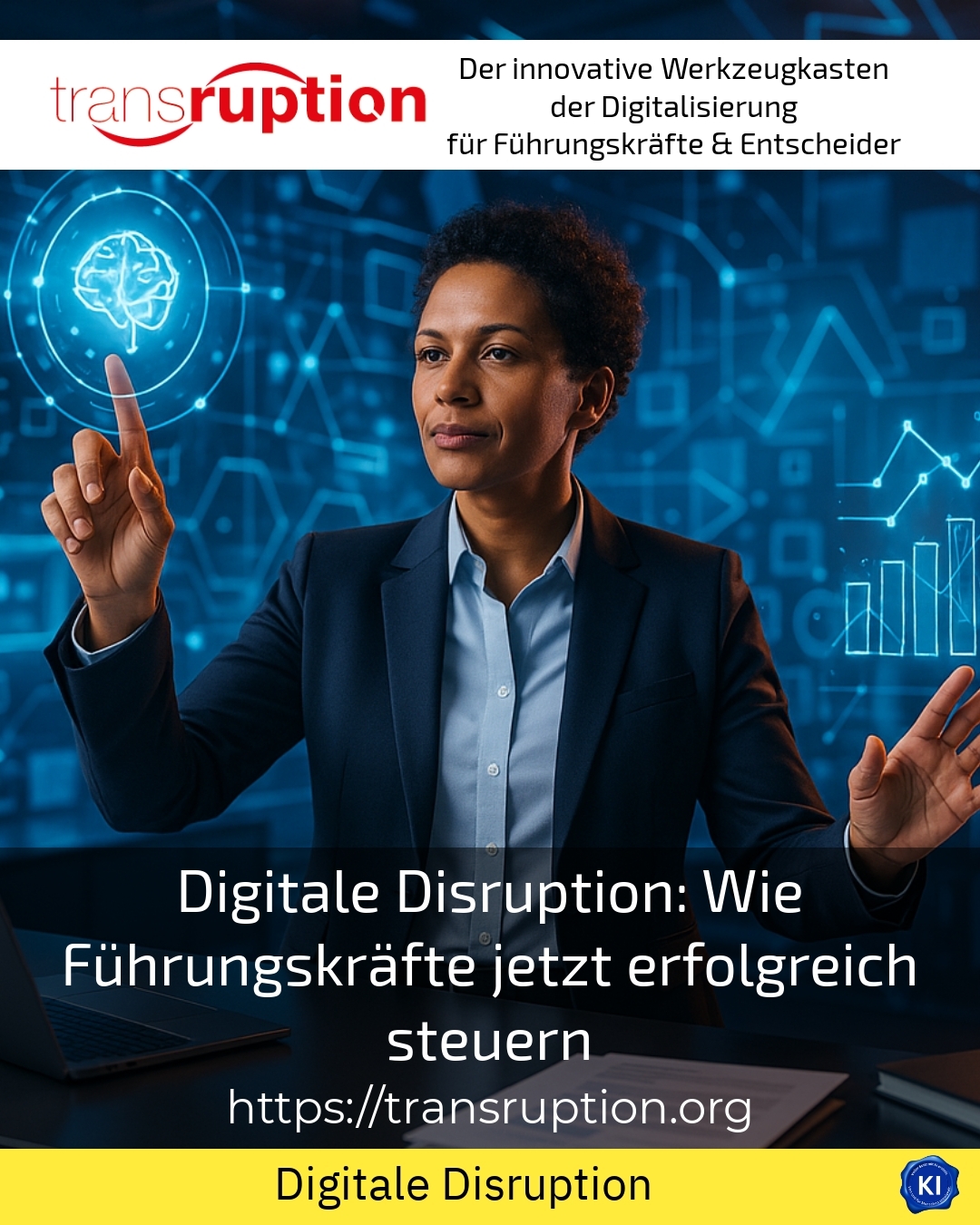
The Digital disruption revolutionises the business world and presents leaders with new challenges. It requires decision-makers not only to understand technological developments but also to actively use them to position their organisations for the future. Those who recognise and shape change can tap into new markets and secure their competitiveness.
Digital Disruption: Understanding and Actively Managing Opportunities
Under digital disruption understands the radical transformation of existing business models through digital innovations. Examples of this can be found in numerous industries:
- In the hospitality sector, Airbnb has established a platform that complements or challenges traditional hotel chains, without owning any properties itself.
- The mobility sector is experiencing a direct connection between drivers and passengers through Uber, which is reshaping the traditional taxi industry.
- Streaming services like Spotify and Netflix have completely changed music and film consumption, almost displacing physical media.
These examples show that disruption doesn't just mean technological innovation, but fundamentally changes business processes and customer needs. For leaders, this means recognising new developments early and using them strategically. This way, risks can be minimised and new opportunities can be specifically addressed.
Digital business models as drivers of disruption
Ein wichtiges Muster bei der digital disruption is the creation of digital platforms that efficiently aggregate supply and demand. The following industry examples illustrate this:
- Amazon operates as a marketplace without its own inventory, connecting millions of sellers with customers worldwide.
- The sharing economy at Uber allows private individuals to become active as drivers via a digital platform and offer services flexibly.
- With its App Store, Apple controls access for developers and users, thereby creating an ecosystem of digital services.
For leaders, the tasks here include understanding digital ecosystems, strategically building partnerships, and making their own innovation process agile. Only in this way can control over new, digital sales channels and customer interfaces be maintained.
Practical impulses for leaders in dealing with digital disruption
Many leaders report facing uncertainties in digitalisation projects. The following approaches can offer support:
- Proactive analysis Identify technological trends early and examine how they can affect your business model.
- Agile Organisation Foster a culture that enables experimentation and rapid learning, so innovations are implemented quickly.
- Leveraging partnerships Collaborate with start-ups and technology providers to pool expertise and resources.
- Transparent communication: Be open about change processes to reduce anxiety and promote acceptance.
These steps help to overcome resistance and involve employees as co-creators of the digital transformation.
BEST PRACTICE at the customer (name hidden due to NDA contract) An international retailer has optimised its supply chain through the targeted introduction of digital platforms and new logistics solutions. This has enabled it to respond more quickly to customer demands and maintain stable sales despite market changes. Support from transruption coaching assisted the management in shaping the transformation in a structured and successful manner.
Digital Disruption: Managing Challenges
Dealing with digital disruption is not only an opportunity but also a risk. Technological complexity, the protection of sensitive data, and cultural changes are relevant issues. Practical examples illustrate this:
- In the automotive industry, the rapid development of electric and autonomous vehicles can present significant challenges to traditional production processes.
- Telecommunications companies are competing with agile start-ups and must continuously modernise their IT infrastructure.
- Banks are adapting to new digital payment methods and financial technologies (FinTech) in order to meet customer needs in a contemporary way.
These situations require targeted change management and clear leadership vision to guide organisations safely through the transition.
BEST PRACTICE at the customer (name hidden due to NDA contract) A telecommunications provider embraced digital customer portals and automated processes early on. This enabled them to maintain their market position despite fierce competition. The supporting coaching helped to align internal structures flexibly and secure digital expertise.
My analysis
The Digital disruption is a continuous process that is sustainably changing all industries. Successful leaders actively embrace this process by recognizing and strategically leveraging technological developments. Agile organisational structures, open communication, and targeted partnerships are key elements for successfully managing change. In this context, transruption coaching supports many companies in reducing uncertainties and implementing digital transformation in a targeted manner. This is how targeted management of digital disruption future viability and opens up opportunities for developing new markets.
Further links from the text above:
Digital disruption: How managers are now steering successfully
Disruptive Business Models: Creating New Markets
Digital Disruption: Seizing Opportunities, Risks for Businesses
Digital Disruption – IT Portal
What is digital disruption?
For more information and if you have any questions, please contact Contact us or read more blog posts on the topic TRANSRUPTION here.












 Deutsch
  English (UK)