kiroi.org

KIROI - Artificial Intelligence Return on Invest
The AI strategy for decision-makers and managers

Business excellence for decision-makers & managers by and with Sanjay Sauldie

KIROI - Artificial Intelligence Return on Invest: The AI strategy for decision-makers and managers

KIROI - Artificial Intelligence Return on Invest: The AI strategy for decision-makers and managers

Start » Department optimisation: With KIROI Step 6 to innovative ideas
5 May 2025

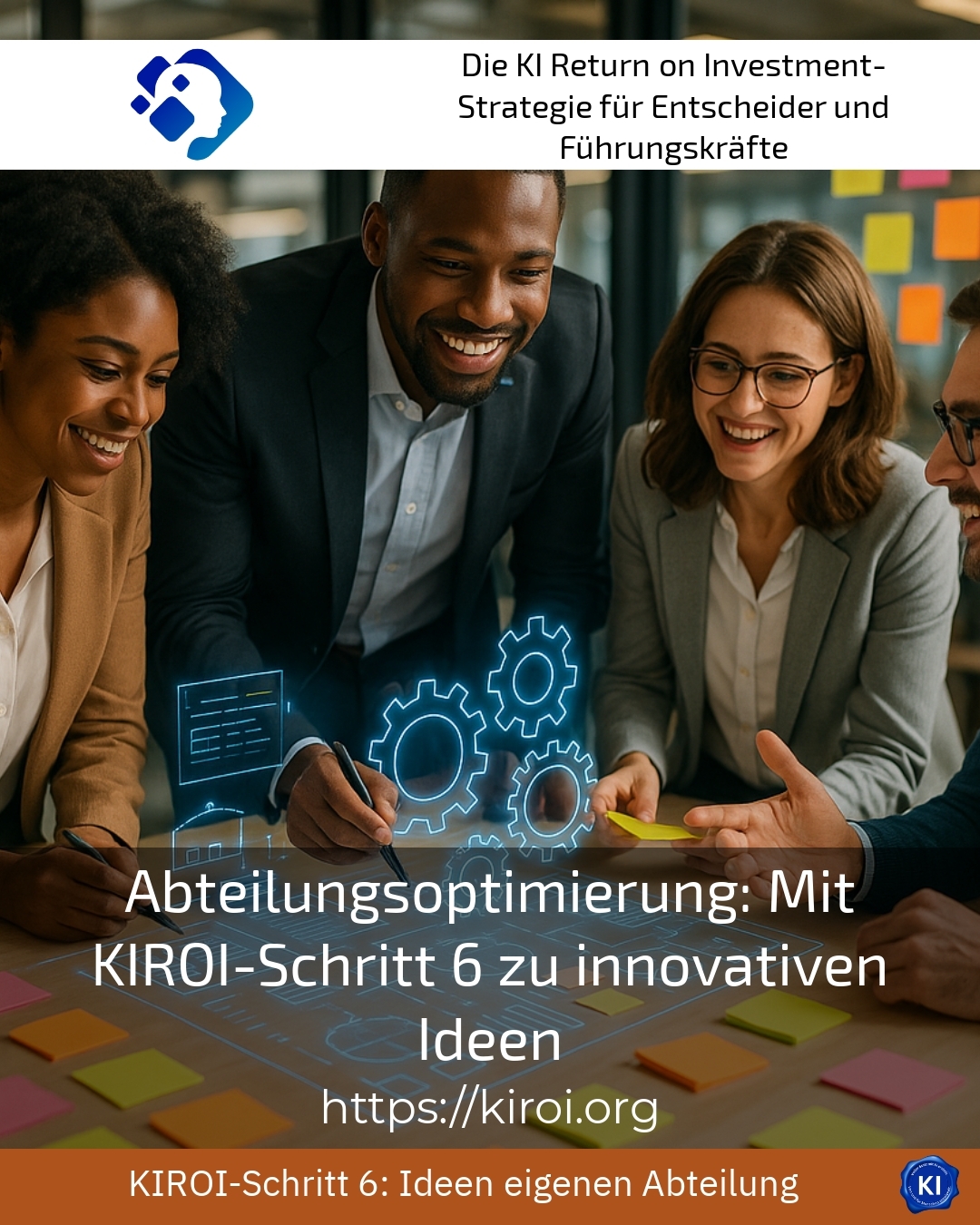
Department optimisation: With KIROI Step 6 to innovative ideas

4.8
(952)

Many managers and teams are wondering how they can sustainably improve their work processes, especially when markets are changing rapidly. Department optimisation is the key term here, which is gaining increasing importance. It's not just about making existing processes more efficient, but also about specifically fostering innovation and strengthening teamwork. Approaches like KIROI Step 6, in particular, are creating new ways to unleash employees' creative potential and thus ensure long-term success. Transruption coaching supports companies in mastering these challenges together.

Understanding Departmental Optimisation: What's Behind It?

Departmental optimisation means systematically questioning working methods, structures, and processes within a unit and purposefully further developing them. It is not enough to simply speed up old workflows. Rather, it is important to establish new ways of thinking that enable innovation. Clients often report that classic optimisation methods may help in the short term, but do not adequately support change. This is precisely where KIROI-Step 6 comes in, as it challenges teams to develop creative solutions and implement them directly.

An example from production: A team uses KIROI Step 6 to identify weaknesses in material planning. Instead of just monitoring stock levels, employees develop a tool for automatic order triggering that is based on real-time data. This ensures a seamless supply and avoids bottlenecks.

In Human Resources, meanwhile, work is being done together on how employees can be more involved. New formats for feedback and further training are being created, tailored to the individual needs of the workforce. Such measures not only improve cooperation but also boost motivation.

Even in sales, innovative approaches can be implemented through targeted departmental optimisation. Instead of running standardised advertising campaigns, the team collaboratively develops new formats, such as interactive webinars or personalised offers, that directly address customer needs and thereby increase customer loyalty.

Set innovative impulses with KIROI Step 6

KIROI Step 6 represents a structured approach to developing departments as idea generators. The focus is on the systematic collection, evaluation, and prioritisation of ideas. This way, theoretical suggestions are avoided, and instead, a concrete catalogue of measures is created that can be implemented directly. The method promotes personal responsibility and gives teams a clear framework to become creative[2].

A practical example: A company is using KIROI step 6 in its IT department to improve collaboration with other specialist areas. Together, digital tools are being developed that simplify coordination between development, support, and users. The teams decide for themselves which innovations are prioritised.

In logistics, a group is developing an automated route planning system using this method, which not only saves time but also improves its environmental impact. Employees contribute their experience, actively shaping the process.

Teams also benefit from this approach in quality management. Instead of just documenting errors, they develop preventive measures to identify and eliminate sources of error at an early stage. This sustainably increases the quality of products and services.

Practical tips for implementing department optimisation

The successful application of KIROI Step 6 begins with an open and appreciative team culture. It is important that everyone involved can contribute their ideas without judgement or pressure. Transruption Coaching supports companies in developing this attitude and embedding it firmly in their daily work.

Regular workshops encourage the exchange of ideas and ensure that new approaches aren't lost. It helps to define concrete goals and make progress transparent. The best results are achieved when teams learn to take responsibility and shape changes themselves.

Another success factor is the use of digital tools for idea management and implementation planning. This keeps the process clear and comprehensible. Small, quickly implementable measures ensure quick wins and motivate the team to continue.

And last but not least: regularly evaluate the optimisation process, adjust goals and measures, and gather feedback from all stakeholders. Only in this way can departmental optimisation remain a dynamic process that actually drives innovation.

My analysis

Department optimisation is not a one-off project, but a continuous process that sustainably increases the innovative strength and efficiency of teams. With approaches such as KIROI Step 6, structures are created that promote creative ideas and facilitate implementation. Companies that value an open feedback culture and actively involve their teams can quickly adapt to new requirements and remain successful in the long term.

Further links from the text above:

Department Optimisation: With KIROI Step 6 to... [2]

Department Optimisation: With KIROI Step 6 to Innovative… [4]

Process optimisation: definition, objectives, phases, procedure [1]

For more information and if you have any questions, please contact Contact us or read more blog posts on the topic Artificial intelligence here.

How useful was this post?

Click on a star to rate it!

Average rating 4.8 / 5. Vote count: 952

No votes so far! Be the first to rate this post.

Spread the love

transruption.org

The digital toolbox for
the digital winners of today and tomorrow

Business excellence for decision-makers & managers by and with Sanjay Sauldie

transruption
transruption

transruption: The digital toolbox for
the digital winners of today and tomorrow

Start » Department optimisation: With KIROI Step 6 to innovative ideas
5 May 2025

Department optimisation: With KIROI Step 6 to innovative ideas

4.8
(952)

Many managers and teams are wondering how they can sustainably improve their work processes, especially when markets are changing rapidly. Department optimisation is the key term here, which is gaining increasing importance. It's not just about making existing processes more efficient, but also about specifically fostering innovation and strengthening teamwork. Approaches like KIROI Step 6, in particular, are creating new ways to unleash employees' creative potential and thus ensure long-term success. Transruption coaching supports companies in mastering these challenges together.

Understanding Departmental Optimisation: What's Behind It?

Departmental optimisation means systematically questioning working methods, structures, and processes within a unit and purposefully further developing them. It is not enough to simply speed up old workflows. Rather, it is important to establish new ways of thinking that enable innovation. Clients often report that classic optimisation methods may help in the short term, but do not adequately support change. This is precisely where KIROI-Step 6 comes in, as it challenges teams to develop creative solutions and implement them directly.

An example from production: A team uses KIROI Step 6 to identify weaknesses in material planning. Instead of just monitoring stock levels, employees develop a tool for automatic order triggering that is based on real-time data. This ensures a seamless supply and avoids bottlenecks.

In Human Resources, meanwhile, work is being done together on how employees can be more involved. New formats for feedback and further training are being created, tailored to the individual needs of the workforce. Such measures not only improve cooperation but also boost motivation.

Even in sales, innovative approaches can be implemented through targeted departmental optimisation. Instead of running standardised advertising campaigns, the team collaboratively develops new formats, such as interactive webinars or personalised offers, that directly address customer needs and thereby increase customer loyalty.

Set innovative impulses with KIROI Step 6

KIROI Step 6 represents a structured approach to developing departments as idea generators. The focus is on the systematic collection, evaluation, and prioritisation of ideas. This way, theoretical suggestions are avoided, and instead, a concrete catalogue of measures is created that can be implemented directly. The method promotes personal responsibility and gives teams a clear framework to become creative[2].

A practical example: A company is using KIROI step 6 in its IT department to improve collaboration with other specialist areas. Together, digital tools are being developed that simplify coordination between development, support, and users. The teams decide for themselves which innovations are prioritised.

In logistics, a group is developing an automated route planning system using this method, which not only saves time but also improves its environmental impact. Employees contribute their experience, actively shaping the process.

Teams also benefit from this approach in quality management. Instead of just documenting errors, they develop preventive measures to identify and eliminate sources of error at an early stage. This sustainably increases the quality of products and services.

Practical tips for implementing department optimisation

The successful application of KIROI Step 6 begins with an open and appreciative team culture. It is important that everyone involved can contribute their ideas without judgement or pressure. Transruption Coaching supports companies in developing this attitude and embedding it firmly in their daily work.

Regular workshops encourage the exchange of ideas and ensure that new approaches aren't lost. It helps to define concrete goals and make progress transparent. The best results are achieved when teams learn to take responsibility and shape changes themselves.

Another success factor is the use of digital tools for idea management and implementation planning. This keeps the process clear and comprehensible. Small, quickly implementable measures ensure quick wins and motivate the team to continue.

And last but not least: regularly evaluate the optimisation process, adjust goals and measures, and gather feedback from all stakeholders. Only in this way can departmental optimisation remain a dynamic process that actually drives innovation.

My analysis

Department optimisation is not a one-off project, but a continuous process that sustainably increases the innovative strength and efficiency of teams. With approaches such as KIROI Step 6, structures are created that promote creative ideas and facilitate implementation. Companies that value an open feedback culture and actively involve their teams can quickly adapt to new requirements and remain successful in the long term.

Further links from the text above:

Department Optimisation: With KIROI Step 6 to... [2]

Department Optimisation: With KIROI Step 6 to Innovative… [4]

Process optimisation: definition, objectives, phases, procedure [1]

For more information and if you have any questions, please contact Contact us or read more blog posts on the topic Artificial intelligence here.

How useful was this post?

Click on a star to rate it!

Average rating 4.8 / 5. Vote count: 952

No votes so far! Be the first to rate this post.

Spread the love

Other content worth reading:

Department optimisation: With KIROI Step 6 to innovative ideas

written by:

Keywords:

#Abteilungsoptimierung #compliance #Ethikrichtlinien #Innovationsmanagement #yellow #Sustainability #Prozessverbesserung #Teamwork #Unternehmenskultur #Verantwortungsketten

Follow me on my channels:

Questions on the topic? Contact us now without obligation

Contact us

[wpforms id="331781" title="false"]

More articles worth reading

    Leave a comment