kiroi.org

KIROI - Artificial Intelligence Return on Invest
The AI strategy for decision-makers and managers

Business excellence for decision-makers & managers by and with Sanjay Sauldie

KIROI - Artificial Intelligence Return on Invest: The AI strategy for decision-makers and managers

KIROI - Artificial Intelligence Return on Invest: The AI strategy for decision-makers and managers

Start » Data Intelligence: Using Big Data and Smart Data for decision-makers
24 October 2025

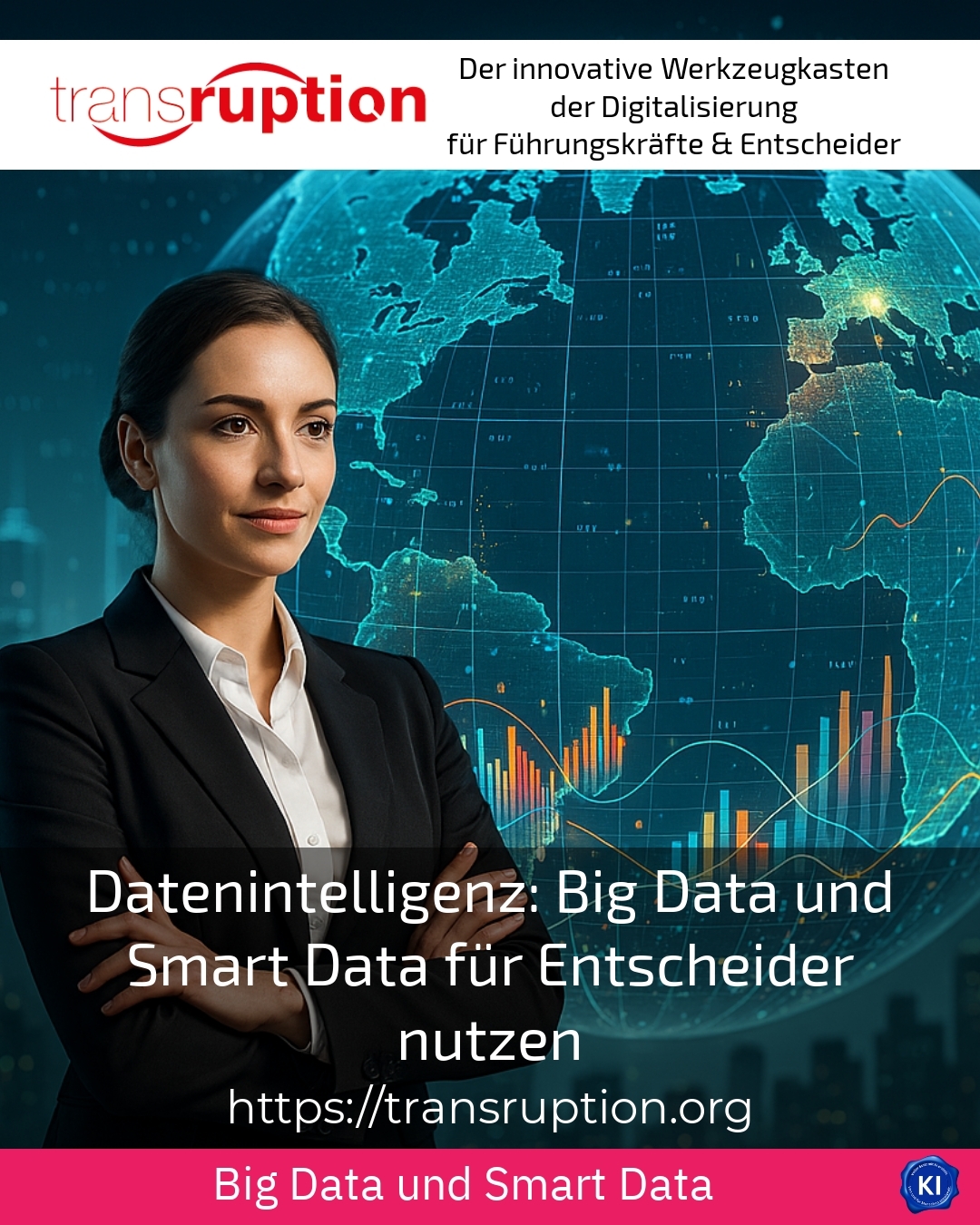
Data Intelligence: Using Big Data and Smart Data for decision-makers

5
(642)

The term is gaining prominence in the digital age Data intelligence is becoming increasingly important. Nowadays, companies are faced with a veritable sea of data, often referred to as big data. The challenge is not only to store this wealth of information, but also to gain meaningful and usable insights from it. This is precisely where the concept of Data intelligence It connects Big Data and Smart Data to provide decision-makers with a supportive foundation for informed decisions.

Data Intelligence: Combining Mass and Added Value

Big Data describes vast amounts of diverse data that are generated by companies nowadays. Examples include transaction data in the financial sector or sensor data from Industry 4.0.

Smart Data, on the other hand, embodies the intelligent filtering and processing of these data volumes. It is about the quality, relevance, and speed of information. For example, a retail company can filter data from millions of customer interactions that provide insights into the purchasing behaviour of specific demographic groups. This leads to targeted marketing campaigns with a higher chance of success.

In the automotive industry, which today produces highly networked vehicles, data intelligence is used to continuously analyse vehicle statuses. This supports predictive maintenance, for example: Smart data is used to analyse only truly relevant sensor values in order to detect failures at an early stage and optimally plan workshop appointments.

Working intelligently with data also offers advantages in the healthcare sector. Large amounts of data from patient records, laboratory results and wearables are processed in such a way that doctors can create more individual therapeutic approaches. This improves the course of treatment and can reduce costs.

How decision-makers benefit from data intelligence

It is increasingly important for managers not only to collect data but to use it purposefully for decision-making. Data intelligence supports companies in this:

1. Efficiency improvements through process optimisation: For example, logistics service providers analyse smart data from GPS and traffic data to shorten delivery times and plan routes more efficiently.

2. Early Risk Detection: Banks use Big Data analytics to identify fraudulent transactions more quickly and better assess credit risks.

3. Understanding and retaining customers: Retailers optimise their stock and personalise offers through data-driven analysis of past sales figures and customer preferences.

Another advantage of data intelligence is greater flexibility. Companies maintain a better overview of their data streams, allowing decisions to be adjusted more quickly, even in dynamic markets.

BEST PRACTICE at the customer (name hidden due to NDA contract) An international medium-sized company in the mechanical engineering sector was able to reduce downtimes by 20 % with the help of data-intelligent analysis of machine data. Sensor information was filtered in real time and specific maintenance measures were recommended.

A structured approach for more data intelligence

The implementation of data-intelligent projects requires a systematic approach. Decision-makers should consider the following steps:

  • Analyse data origin: Where does the relevant data originate? This could be the production hall, the customer platform or a CRM system.
  • Clarify the objective: What should the data be used for? To increase growth, reduce costs, or identify risks?
  • Select technologies: Use of big data platforms combined with smart data analyses, machine learning or AI.
  • Ensuring data quality: Only reliable, complete, and up-to-date data leads to robust results.
  • Communicate results: Data intelligence must be translated into understandable impulses for action.

In the energy sector, for example, huge amounts of data from different sources are brought together – weather data, consumption measurements, market prices. Here, data intelligence shows the best time for energy purchasing or grid utilisation.

In e-commerce, intelligent algorithms are used to dynamically adjust prices and discounts, which leads to increased sales.

In retail, data intelligence projects help with assortment planning to make space for high-selling products and utilise store space profitably.

Data intelligence as a continuous companion for projects

Many companies face the challenge of realising their potential from Big Data. transruptions-Coaching can support the implementation of data-intelligent processes.

In the coaching process, individual requirements are identified and suitable data strategies are developed. This provides project teams with valuable impetus and helps them to overcome typical stumbling blocks.

BEST PRACTICE at the customer (name hidden due to NDA contract) A leading provider in the healthcare sector received practical support from transruptions coaching for the integration of smart data platforms. This led to noticeable improvements in patient management and data quality.

BEST PRACTICE at the customer (name hidden due to NDA contract) A logistics company was able to manage its supply chains more efficiently through data-intelligent analyses. The coaching helped to rethink processes and translate big data into concrete actions.

This confirms that data intelligence means more than just technology: it supports decision-makers in a wide range of industries in sustainably developing their strategies and business models.

My analysis

Data intelligence is the key to creating real added value from the mass of available information. It combines the comprehensive possibilities of big data with the targeted quality of smart data. Managers should use this concept to make well-founded decisions, optimise operational processes and secure competitive advantages. Individual support, such as transruption coaching, is helpful in successfully implementing projects and mastering the path from the flood of data to actionable insights.

Further links from the text above:

Big Data vs. Smart Data: Is More Always Better? – Netconomy
Big Data: Definition, Applications, Tips – mfr
Big Data vs. Smart Data – Dataversity
Smart + Big Data | Artificial Intelligence
Smart data: definition, application and difference to big data
Difference Between Big Data and Smart Data - Esa Automation

For more information and if you have any questions, please contact Contact us or read more blog posts on the topic TRANSRUPTION here.

How useful was this post?

Click on a star to rate it!

Average rating 5 / 5. Vote count: 642

No votes so far! Be the first to rate this post.

Spread the love

transruption.org

The digital toolbox for
the digital winners of today and tomorrow

Business excellence for decision-makers & managers by and with Sanjay Sauldie

transruption
transruption

transruption: The digital toolbox for
the digital winners of today and tomorrow

Start » Data Intelligence: Using Big Data and Smart Data for decision-makers
24 October 2025

Data Intelligence: Using Big Data and Smart Data for decision-makers

5
(642)

The term is gaining prominence in the digital age Data intelligence is becoming increasingly important. Nowadays, companies are faced with a veritable sea of data, often referred to as big data. The challenge is not only to store this wealth of information, but also to gain meaningful and usable insights from it. This is precisely where the concept of Data intelligence It connects Big Data and Smart Data to provide decision-makers with a supportive foundation for informed decisions.

Data Intelligence: Combining Mass and Added Value

Big Data describes vast amounts of diverse data that are generated by companies nowadays. Examples include transaction data in the financial sector or sensor data from Industry 4.0.

Smart Data, on the other hand, embodies the intelligent filtering and processing of these data volumes. It is about the quality, relevance, and speed of information. For example, a retail company can filter data from millions of customer interactions that provide insights into the purchasing behaviour of specific demographic groups. This leads to targeted marketing campaigns with a higher chance of success.

In the automotive industry, which today produces highly networked vehicles, data intelligence is used to continuously analyse vehicle statuses. This supports predictive maintenance, for example: Smart data is used to analyse only truly relevant sensor values in order to detect failures at an early stage and optimally plan workshop appointments.

Working intelligently with data also offers advantages in the healthcare sector. Large amounts of data from patient records, laboratory results and wearables are processed in such a way that doctors can create more individual therapeutic approaches. This improves the course of treatment and can reduce costs.

How decision-makers benefit from data intelligence

It is increasingly important for managers not only to collect data but to use it purposefully for decision-making. Data intelligence supports companies in this:

1. Efficiency improvements through process optimisation: For example, logistics service providers analyse smart data from GPS and traffic data to shorten delivery times and plan routes more efficiently.

2. Early Risk Detection: Banks use Big Data analytics to identify fraudulent transactions more quickly and better assess credit risks.

3. Understanding and retaining customers: Retailers optimise their stock and personalise offers through data-driven analysis of past sales figures and customer preferences.

Another advantage of data intelligence is greater flexibility. Companies maintain a better overview of their data streams, allowing decisions to be adjusted more quickly, even in dynamic markets.

BEST PRACTICE at the customer (name hidden due to NDA contract) An international medium-sized company in the mechanical engineering sector was able to reduce downtimes by 20 % with the help of data-intelligent analysis of machine data. Sensor information was filtered in real time and specific maintenance measures were recommended.

A structured approach for more data intelligence

The implementation of data-intelligent projects requires a systematic approach. Decision-makers should consider the following steps:

  • Analyse data origin: Where does the relevant data originate? This could be the production hall, the customer platform or a CRM system.
  • Clarify the objective: What should the data be used for? To increase growth, reduce costs, or identify risks?
  • Select technologies: Use of big data platforms combined with smart data analyses, machine learning or AI.
  • Ensuring data quality: Only reliable, complete, and up-to-date data leads to robust results.
  • Communicate results: Data intelligence must be translated into understandable impulses for action.

In the energy sector, for example, huge amounts of data from different sources are brought together – weather data, consumption measurements, market prices. Here, data intelligence shows the best time for energy purchasing or grid utilisation.

In e-commerce, intelligent algorithms are used to dynamically adjust prices and discounts, which leads to increased sales.

In retail, data intelligence projects help with assortment planning to make space for high-selling products and utilise store space profitably.

Data intelligence as a continuous companion for projects

Many companies face the challenge of realising their potential from Big Data. transruptions-Coaching can support the implementation of data-intelligent processes.

In the coaching process, individual requirements are identified and suitable data strategies are developed. This provides project teams with valuable impetus and helps them to overcome typical stumbling blocks.

BEST PRACTICE at the customer (name hidden due to NDA contract) A leading provider in the healthcare sector received practical support from transruptions coaching for the integration of smart data platforms. This led to noticeable improvements in patient management and data quality.

BEST PRACTICE at the customer (name hidden due to NDA contract) A logistics company was able to manage its supply chains more efficiently through data-intelligent analyses. The coaching helped to rethink processes and translate big data into concrete actions.

This confirms that data intelligence means more than just technology: it supports decision-makers in a wide range of industries in sustainably developing their strategies and business models.

My analysis

Data intelligence is the key to creating real added value from the mass of available information. It combines the comprehensive possibilities of big data with the targeted quality of smart data. Managers should use this concept to make well-founded decisions, optimise operational processes and secure competitive advantages. Individual support, such as transruption coaching, is helpful in successfully implementing projects and mastering the path from the flood of data to actionable insights.

Further links from the text above:

Big Data vs. Smart Data: Is More Always Better? – Netconomy
Big Data: Definition, Applications, Tips – mfr
Big Data vs. Smart Data – Dataversity
Smart + Big Data | Artificial Intelligence
Smart data: definition, application and difference to big data
Difference Between Big Data and Smart Data - Esa Automation

For more information and if you have any questions, please contact Contact us or read more blog posts on the topic TRANSRUPTION here.
How useful was this post?

Click on a star to rate it!

Average rating 5 / 5. Vote count: 642

No votes so far! Be the first to rate this post.

Spread the love

Other content worth reading:

Data Intelligence: Using Big Data and Smart Data for decision-makers

written by:

Keywords:

#Big Data #Datenintelligenz #DigitalisierungSportverein #entscheidungsfindung #SmartData

Follow me on my channels:

Questions on the topic? Contact us now without obligation

Contact us

[wpforms id="331781" title="false"]

More articles worth reading

    Leave a comment