kiroi.org

KIROI - Artificial Intelligence Return on Invest
The AI strategy for decision-makers and managers

Business excellence for decision-makers & managers by and with Sanjay Sauldie

KIROI - Artificial Intelligence Return on Invest: The AI strategy for decision-makers and managers

KIROI - Artificial Intelligence Return on Invest: The AI strategy for decision-makers and managers

Start » Unleashing data intelligence: Big Data & Smart Data for Decision Makers
12 November 2025

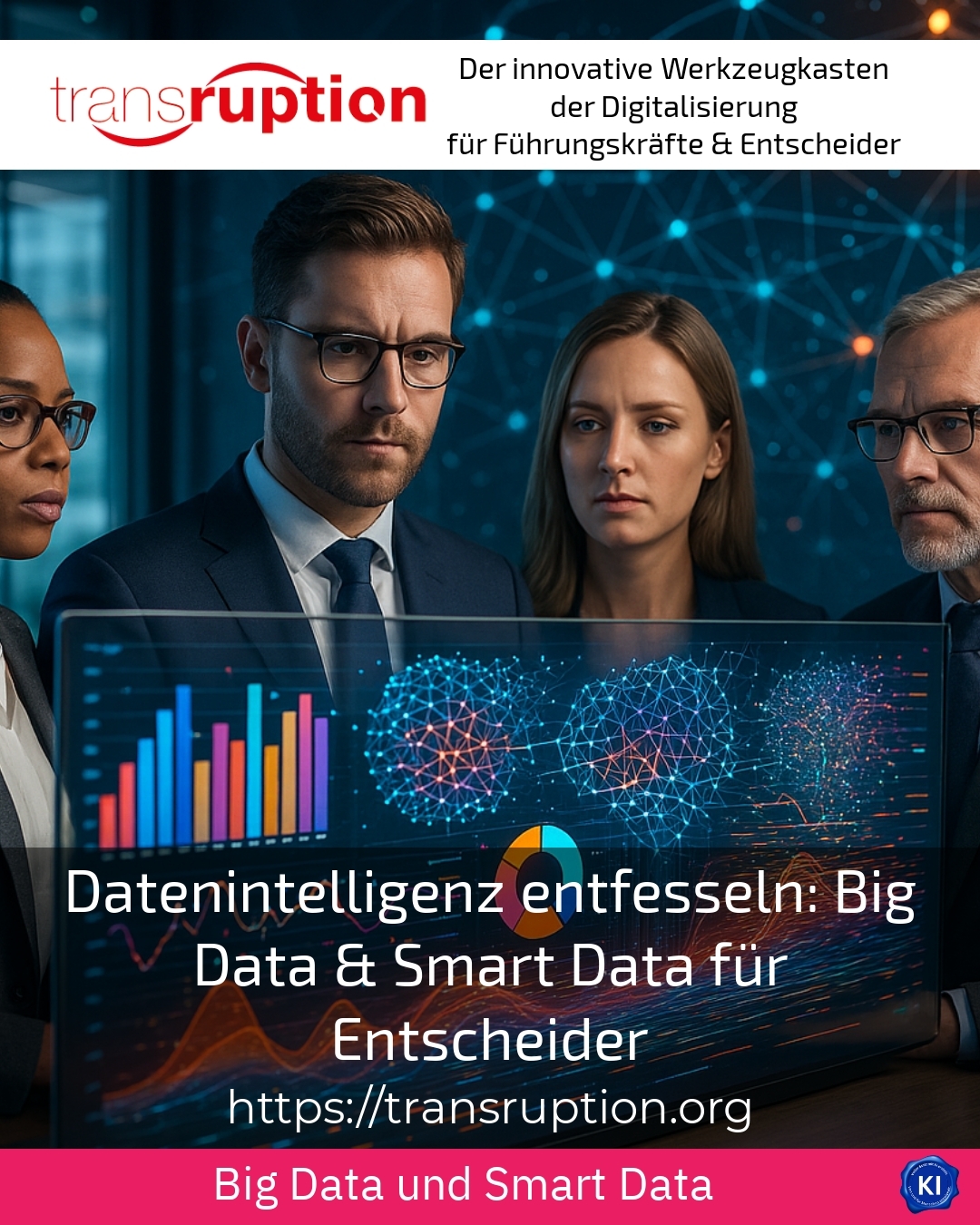
Unleashing data intelligence: Big Data & Smart Data for Decision Makers

4.8
(1141)

In the digital age, businesses are confronted with an enormous flood of data, often referred to as Big Data. However, true strength is only revealed through the use of data intelligence, a process that transforms raw data into actionable insights. Decision-makers who understand how to derive Smart Data from Big Data create sustainable competitive advantages and make informed decisions.

Data Intelligence: More Than Just Data Volumes

Big Data refers to the extremely large, fast, and diverse volumes of data generated by companies from a wide range of sources, from customer interactions and machine sensors to social media. However, the sheer volume of data alone does not guarantee any benefit. Data intelligence picks up exactly here, filtering, structuring, and processing this raw data using intelligent methods. The result is Smart Data – precise, usable information that supports decisions and optimises processes.

A trading company, for example, analyses millions of customer transactions. The challenge lies in discovering patterns within this mass that reveal trends in the purchasing behaviour of specific target groups. The information gained enables personalised marketing campaigns tailored precisely to these customer segments.

Smart Data is also used in the automotive industry. Connected vehicles continuously generate sensor data. Thanks to intelligent data analysis, only relevant values are selected for predictive maintenance. This allows maintenance to be planned early and breakdowns to be reduced.

In healthcare, doctors use large amounts of patient data, laboratory results, and data from wearables. Data intelligence supports the individual adaptation of therapies and the improvement of treatment outcomes.

Smart data as the key to optimising the use of big data

The difference between Big Data and Smart Data is not just the volume of data, but primarily its quality and relevance. While Big Data is considered raw material, Smart Data is finely refined information that has already been optimised for specific questions. This is achieved through the use of algorithms, machine learning, and artificial intelligence, which selectively filter data and place it in a meaningful context.

In logistics, data-intelligent solutions optimise supply chains. Using past transport data, they identify bottlenecks and suggest alternative routes. This can shorten delivery times and reduce costs.

In finance, too, data intelligence processes lead to better risk analyses. Large volumes of historical transaction data are examined to identify patterns that indicate payment defaults or attempted fraud. This allows banks to benefit from faster and more accurate decisions.

Another advantage of Smart Data is the real-time availability of important insights. For example, companies can react immediately to market changes based on current customer data and dynamically adjust their offerings.

Practical tips for integrating data intelligence in the company

1. **Focus on data quality:** Instead of collecting as much data as possible, companies should focus on high-quality and relevant data.

2. **Form interdisciplinary teams:** IT experts, analysts, and specialist departments must work closely together to use data intelligently.

3. **Utilise automation:** AI-based systems can help make data preparation and analysis more efficient.

4. **Taking data protection and security seriously:** When processing smart data, compliance and data protection regulations must be strictly adhered to.

5. **Design processes driven by data:** Companies should actively integrate data-driven insights into their decision-making processes and continuously adapt their strategies.

BEST PRACTICE at the customer (name hidden due to NDA contract) A medium-sized manufacturing company used data intelligence to analyse.

BEST PRACTICE at the customer (name hidden due to NDA contract) A telecommunications company filtered relevant churn prevention patterns from the flood of customer data. Using data-intelligent analyses, targeted offers were developed that sustainably strengthened customer loyalty and minimised churn.

BEST PRACTICE at the customer (name hidden due to NDA contract) In e-commerce, data-intelligent tracking was used to record customer preferences more precisely. This made it possible to customise the product range precisely and significantly increase the conversion rate. The result was a more efficient marketing strategy with higher customer satisfaction.

Data intelligence as a enabler for sustainable decisions

Data intelligence unlocks the potential of big data by enabling organisations to gain fast, meaningful insights from large and complex datasets. This allows decision-makers to optimise processes, identify trends, and react strategically. Intelligent algorithms support data preparation and create a solid foundation for data-driven business models.

A well-thought-out strategy for utilising data intelligence can accompany projects and provide impetus, making the journey through the data flood profitable. In this way, companies across a wide variety of sectors – from retail and industry to healthcare – benefit from higher efficiencies and innovative solutions.

My analysis

Data intelligence is an essential competence for companies that not only want to collect data but also use it intelligently. The key lies in processing big data using modern technologies and methods to create high-quality smart data. This enables informed decisions, better customer engagement and optimised processes. The focus on data quality and relevance is crucial for achieving effective results. Decision-makers particularly benefit when they specifically integrate data-intelligent approaches into their corporate strategy, thus supporting projects with reliable insights.

Further links from the text above:

What is Smart Data - B2B Smart Data

Big Data vs. Smart Data: Is more always better? – Netconomy

Data Intelligence: Big Data and Smart Data for Decision Makers – Sauldie

Big Data: Using large amounts of data – Lexware

Smart Data: Definition, Application and Difference to Big Data – O2 Business

For more information and if you have any questions, please contact Contact us or read more blog posts on the topic TRANSRUPTION here.

How useful was this post?

Click on a star to rate it!

Average rating 4.8 / 5. Vote count: 1141

No votes so far! Be the first to rate this post.

Spread the love

transruption.org

The digital toolbox for
the digital winners of today and tomorrow

Business excellence for decision-makers & managers by and with Sanjay Sauldie

transruption
transruption

transruption: The digital toolbox for
the digital winners of today and tomorrow

Start » Unleashing data intelligence: Big Data & Smart Data for Decision Makers
12 November 2025

Unleashing data intelligence: Big Data & Smart Data for Decision Makers

4.8
(1141)

In the digital age, businesses are confronted with an enormous flood of data, often referred to as Big Data. However, true strength is only revealed through the use of data intelligence, a process that transforms raw data into actionable insights. Decision-makers who understand how to derive Smart Data from Big Data create sustainable competitive advantages and make informed decisions.

Data Intelligence: More Than Just Data Volumes

Big Data refers to the extremely large, fast, and diverse volumes of data generated by companies from a wide range of sources, from customer interactions and machine sensors to social media. However, the sheer volume of data alone does not guarantee any benefit. Data intelligence picks up exactly here, filtering, structuring, and processing this raw data using intelligent methods. The result is Smart Data – precise, usable information that supports decisions and optimises processes.

A trading company, for example, analyses millions of customer transactions. The challenge lies in discovering patterns within this mass that reveal trends in the purchasing behaviour of specific target groups. The information gained enables personalised marketing campaigns tailored precisely to these customer segments.

Smart Data is also used in the automotive industry. Connected vehicles continuously generate sensor data. Thanks to intelligent data analysis, only relevant values are selected for predictive maintenance. This allows maintenance to be planned early and breakdowns to be reduced.

In healthcare, doctors use large amounts of patient data, laboratory results, and data from wearables. Data intelligence supports the individual adaptation of therapies and the improvement of treatment outcomes.

Smart data as the key to optimising the use of big data

The difference between Big Data and Smart Data is not just the volume of data, but primarily its quality and relevance. While Big Data is considered raw material, Smart Data is finely refined information that has already been optimised for specific questions. This is achieved through the use of algorithms, machine learning, and artificial intelligence, which selectively filter data and place it in a meaningful context.

In logistics, data-intelligent solutions optimise supply chains. Using past transport data, they identify bottlenecks and suggest alternative routes. This can shorten delivery times and reduce costs.

In finance, too, data intelligence processes lead to better risk analyses. Large volumes of historical transaction data are examined to identify patterns that indicate payment defaults or attempted fraud. This allows banks to benefit from faster and more accurate decisions.

Another advantage of Smart Data is the real-time availability of important insights. For example, companies can react immediately to market changes based on current customer data and dynamically adjust their offerings.

Practical tips for integrating data intelligence in the company

1. **Focus on data quality:** Instead of collecting as much data as possible, companies should focus on high-quality and relevant data.

2. **Form interdisciplinary teams:** IT experts, analysts, and specialist departments must work closely together to use data intelligently.

3. **Utilise automation:** AI-based systems can help make data preparation and analysis more efficient.

4. **Taking data protection and security seriously:** When processing smart data, compliance and data protection regulations must be strictly adhered to.

5. **Design processes driven by data:** Companies should actively integrate data-driven insights into their decision-making processes and continuously adapt their strategies.

BEST PRACTICE at the customer (name hidden due to NDA contract) A medium-sized manufacturing company used data intelligence to analyse.

BEST PRACTICE at the customer (name hidden due to NDA contract) A telecommunications company filtered relevant churn prevention patterns from the flood of customer data. Using data-intelligent analyses, targeted offers were developed that sustainably strengthened customer loyalty and minimised churn.

BEST PRACTICE at the customer (name hidden due to NDA contract) In e-commerce, data-intelligent tracking was used to record customer preferences more precisely. This made it possible to customise the product range precisely and significantly increase the conversion rate. The result was a more efficient marketing strategy with higher customer satisfaction.

Data intelligence as a enabler for sustainable decisions

Data intelligence unlocks the potential of big data by enabling organisations to gain fast, meaningful insights from large and complex datasets. This allows decision-makers to optimise processes, identify trends, and react strategically. Intelligent algorithms support data preparation and create a solid foundation for data-driven business models.

A well-thought-out strategy for utilising data intelligence can accompany projects and provide impetus, making the journey through the data flood profitable. In this way, companies across a wide variety of sectors – from retail and industry to healthcare – benefit from higher efficiencies and innovative solutions.

My analysis

Data intelligence is an essential competence for companies that not only want to collect data but also use it intelligently. The key lies in processing big data using modern technologies and methods to create high-quality smart data. This enables informed decisions, better customer engagement and optimised processes. The focus on data quality and relevance is crucial for achieving effective results. Decision-makers particularly benefit when they specifically integrate data-intelligent approaches into their corporate strategy, thus supporting projects with reliable insights.

Further links from the text above:

What is Smart Data - B2B Smart Data

Big Data vs. Smart Data: Is more always better? – Netconomy

Data Intelligence: Big Data and Smart Data for Decision Makers – Sauldie

Big Data: Using large amounts of data – Lexware

Smart Data: Definition, Application and Difference to Big Data – O2 Business

For more information and if you have any questions, please contact Contact us or read more blog posts on the topic TRANSRUPTION here.

How useful was this post?

Click on a star to rate it!

Average rating 4.8 / 5. Vote count: 1141

No votes so far! Be the first to rate this post.

Spread the love

Other content worth reading:

Unleashing data intelligence: Big Data & Smart Data for Decision Makers

written by:

Keywords:

#Big Data #Datenintelligenz #Data strategy #SmartData AI - Artificial Intelligence

Follow me on my channels:

Questions on the topic? Contact us now without obligation

Contact us

[wpforms id="331781" title="false"]

More articles worth reading

    Leave a comment