
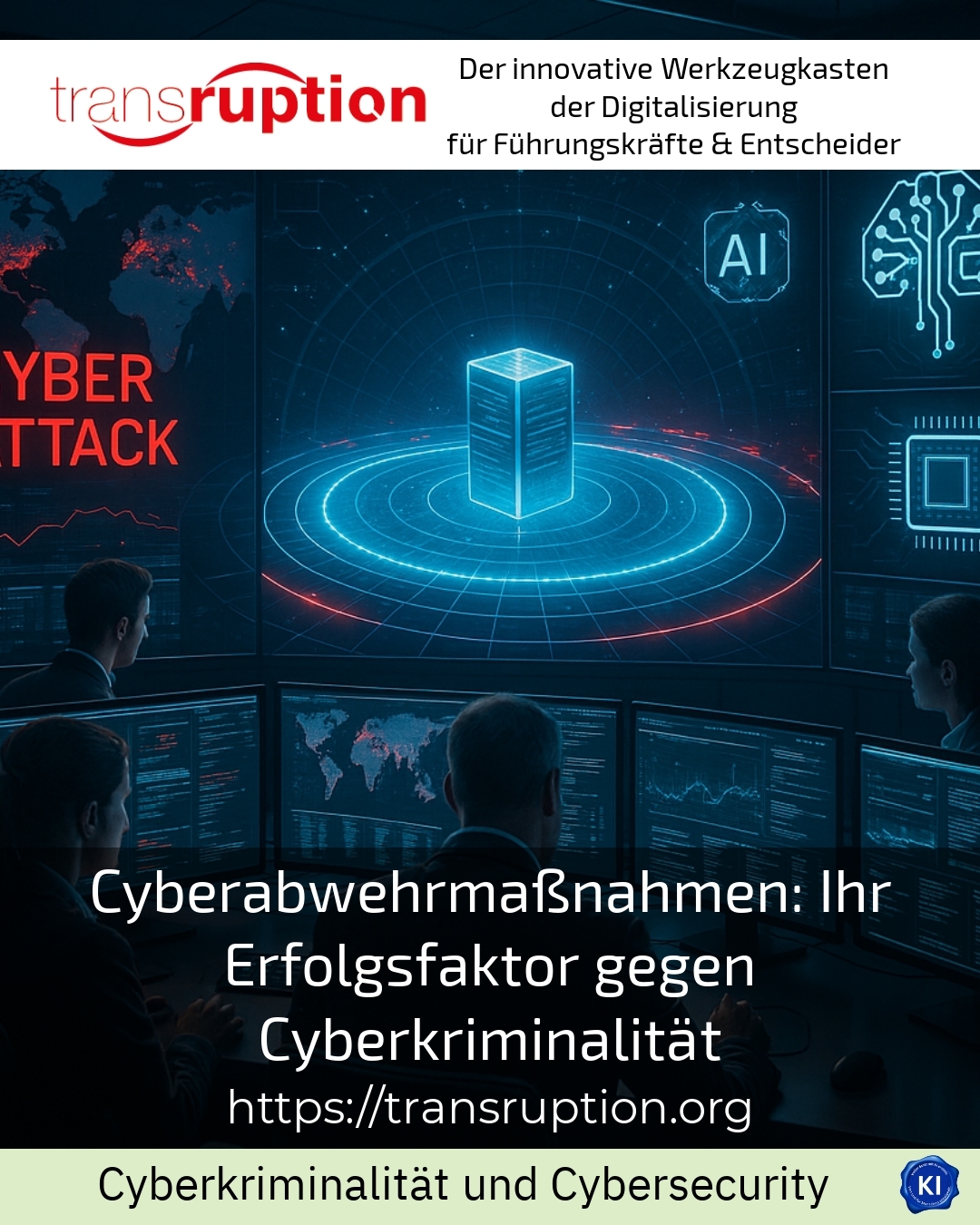
In today's digitally connected world, cyber defence measures are becoming increasingly important as an essential success factor against cybercrime. Companies and organisations face the challenge of protecting their IT infrastructure against ever more sophisticated attacks. Targeted cyber defence measures help to detect and repel digital threats early on and to increase information security in the long term. In this article, you will find practical insights and examples of how the use of such measures effectively supports the protection of your systems and data.
Cybersecurity Measures at a Glance: Fundamentals and Practical Examples
Cyber defence encompasses a variety of technical and organisational procedures that enhance the protection of networks, end devices, and applications. Classic protective mechanisms such as firewalls and antivirus software continue to be cornerstones. In addition, innovative solutions such as Endpoint Detection and Response (EDR) are now in use. For example, companies in the financial sector use EDR systems that detect anomalies in user behaviour and automatically block denied access attempts using artificial intelligence.
In the public sector, it can be seen how consistent server software updates and systematic patch management minimise security vulnerabilities. IT managers there often report successes in reducing attack surfaces through timely software updates.
Another example can be found in the automotive industry. Here, cyber defence measures are enhanced by network segmentation, so that sensitive areas such as the production of vehicle systems are separated from general IT traffic. This approach significantly hinders hackers from moving laterally within the network.
How modern technologies are reinforcing cyber defence measures
Many companies today rely on encryption technologies that protect both data transmissions and data at rest. Algorithms are used which prevent data from being read, even in the event of a successful attack. IT service providers, for example, integrate encryption into their cloud services to ensure data protection for customer data.
Multi-Factor Authentication (MFA) is also becoming increasingly important. For example, a medium-sized software developer requires their employees to use a second authentication layer in addition to their password, such as via an authenticator app. This cyber defence measure significantly reduces the risk from stolen credentials.
Deception technology, such as honeypots, is also used in isolated cases. An international logistics company uses this technique to lure attackers onto fake systems, thereby gaining valuable time for countermeasures.
Human factors as key in cyber defence
Technical measures alone are not enough. Raising awareness and training employees are among the most effective cyber defence measures. It is known that phishing attacks in particular often succeed through social engineering. Therefore, companies in the healthcare sector are investing in regular awareness training, which brings employees closer to realistic scenarios. This enables them to recognise fraudulent emails more safely and react accordingly.
Retail companies report that these training courses have demonstrably reduced the number of security incidents. At the same time, they promote a company-wide security culture, which increases the sense of responsibility for the protection of all systems.
BEST PRACTICE at the customer (name hidden due to NDA contract) An international financial services provider has optimised its incident response processes through accompanying cyber defence measures. The combination of technical monitoring, automatic detection of security incidents, and targeted employee training significantly contributes to rapid damage limitation and strengthens resilience against complex attacks.
Cybersecurity measures in practice: Concrete tips for implementation
For businesses, it is advisable to adopt a multi-layered strategy. Here are some practical recommendations:
- Segment networks to hinder the spread of attacks.
- Apply regular updates and patches to close known vulnerabilities.
- Implement multi-factor authentication consistently to better protect access.
- Continuously train employees through awareness programmes.
- Deployment of technologies for detecting unusual activities such as EDR or SIEM systems.
These measures can be found, for example, in church communities that have to protect their systems with limited IT resources. There, simple firewalls and training in the secure use of passwords provide comprehensive protection.
Even small craft businesses are increasingly integrating email filters against phishing and malware, and are reporting significant improvements in IT security.
BEST PRACTICE at the customer (name hidden due to NDA contract) A medium-sized engineering company has significantly reduced the number of successful cyber-attacks and considerably accelerated the detection and response to incidents by introducing a comprehensive cyber defence concept that includes technical solutions as well as regular employee training and emergency drills.
My analysis
Cyber defence measures are indispensable companions today when it comes to arming oneself against the growing threat of cybercrime. They support companies and organisations in making their digital infrastructure robust and resilient. It is clear that a combination of technology, people, and processes promises the greatest success. In practice, diverse examples from a wide range of industries show that cyber defence measures provide concrete impetus and often increase security. Transruption coaching can effectively support you in planning and implementing your cyber defence projects in order to develop tailor-made, sustainable solutions.
Further links from the text above:
Cyber defence – Wikipedia [1]
Cybersecurity: Definition, Threats, and Protective Measures – Myra Security GmbH [2]
What is Cybersecurity? Methods & Measures – NETGO [3]
Methods of Cybercrime – BSI [5]
Cyber Attacks: Methods and Protection – O2 Business [8]
TOP 12 Measures for Cyber Attacks – BSI [9]
For more information and if you have any questions, please contact
Contact us or read more blog posts on the topic
TRANSRUPTION here.










 Deutsch
  English (UK)