kiroi.org

KIROI - Artificial Intelligence Return on Invest
The AI strategy for decision-makers and managers

Business excellence for decision-makers & managers by and with Sanjay Sauldie

KIROI - Artificial Intelligence Return on Invest: The AI strategy for decision-makers and managers

KIROI - Artificial Intelligence Return on Invest: The AI strategy for decision-makers and managers

Start » Mastering cultural transformation: KIROI step 4 for leaders
22nd August 2024

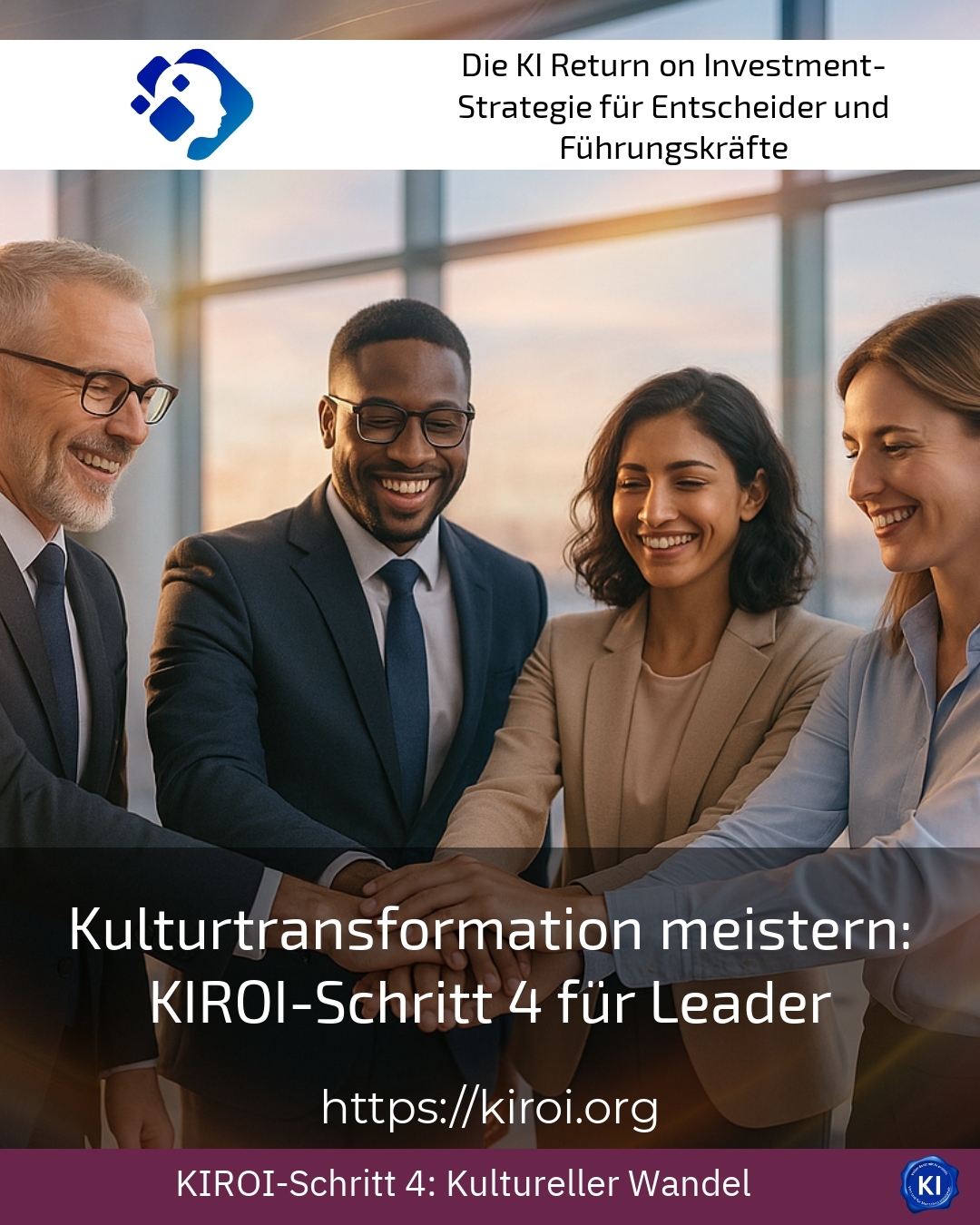
Mastering cultural transformation: KIROI step 4 for leaders

4.2
(927)

Successful cultural transformation is essential for companies today to remain competitive and innovative in the long term. Especially in times of complex change, leaders play a key role, as they act as multipliers, embodying new values and behaviours and embedding them throughout the company. The fourth step of the KIROI model demonstrates in a practical way how leaders can actively support and shape this change.

KIROI Step 4: Leaders as Key Drivers of Cultural Transformation

In the fourth step of the KIROI approach, leaders take responsibility for making the new corporate culture visible and tangible. They act as role models and create a „seedbed“ for transformation, inspiring and motivating other areas. This isn't just about words, but about consistent action and behavioural changes.

In practice, companies demonstrate that leaders must reflect on their personal attitudes and be open to new ideas. In a manufacturing company, through regular coaching and workshops, the management level was able not only to integrate the new cultural values but also to involve the entire team in agile working and collaborative decision-making. This created an atmosphere of trust that actively promotes innovation.

A service company reported that the visible role modelling of its leaders made the transition easier for employees. Through targeted team coaching, a shared understanding of appreciative interaction developed, which improved both customer relationships and internal processes. Today, leaders consistently make decisions with the new culture in mind, thereby fostering sustainable change.

In a medium-sized IT company, as part of its cultural transformation, a leadership development programme was established that, in addition to individual coaching, strengthened exchange within the leadership team. This programme supported leaders in recognising blind spots and developing a shared vision for the company culture. The result is a leadership collective that operates agilely, empathetically, and with a future-oriented approach.

Concrete measures for leaders in cultural change

To successfully support cultural transformation, leaders should implement the following steps:

  • Regular self-reflection: Critically question and adapt one's own thought and behaviour patterns.
  • Show openness: try new things, view mistakes as learning opportunities, and actively encourage change.
  • Embody a role model: Don't just communicate new values, but live them consistently in everyday life.
  • Conduct team coaching: Foster shared value development and constructive conflict resolution.
  • Strengthening communication: Transparent information about change and involving all employees.

A B2B company used these measures to establish a feedback culture. Leaders regularly encouraged dialogue, thus increasing acceptance of the change throughout the organisation. Employees felt more engaged and became active shapers of the change process.

Cultural transformation and the special role of leadership in change

Cultural transformation is not a one-off event, but an ongoing process. Leaders have the responsibility to sustainably embed the new culture. This is only possible if they consistently live and promote the new values in both their leadership behaviour and decision-making practices. This is often challenging because old habits and organisational structures must be overcome.

In cultural institutions, this change is often accompanied by co-creative processes where leaders, together with employees, address questions on topics such as workplace quality, talent retention, and innovation capacity. This fosters a future-oriented culture that reduces resistance and supports sustainable development.

Even in the healthcare sector, leaders are demonstrating how culture transformation succeeds. They initiated team workshops to promote values such as trust and appreciation. The shared guidelines help to build a resilient culture that strengthens the entire team and improves patient orientation.

BEST PRACTICE with one customer (name hidden due to NDA contract) Managers from an international mechanical engineering company intensified the cultural change through individual coaching and team processes. Within a few months, a shared attitude was established that promotes agility and a joy for innovation. The change was measurably reflected in employee satisfaction and product quality.

Tips for accompanying cultural transformation for leaders

For leaders, it is advisable to approach cultural transformation with a clear plan and openness to iterative adjustments. The following approaches have proven effective:

  • Initiate a systematic dialogue about values, expectations, and desired behaviour.
  • Understand cultural transformation as a learning process and promote continuous professional development.
  • Opt for transparent communication to reduce fears and resistance.
  • Foster networks within the company that act as multipliers for change.
  • Celebrate small wins to boost motivation and engagement.

These impulses support leaders in increasing employer attractiveness and innovative strength. This creates a corporate culture that proactively embraces change and becomes a competitive advantage.

My analysis

Cultural transformation is a profound and complex process, heavily dependent on the attitude and behaviour of leaders. The fourth step in the KIROI model offers leaders valuable guidance on how to effectively manage this change. Through coaching, active role-modelling, and continuous reflection, leaders can shape a modern, agile, and resilient culture. Numerous practical examples demonstrate that such cultural transformation supports business success, strengthens employee engagement, and increases competitiveness. Leaders who embrace this responsibility lay the foundation for sustainable change and future-proof organisations.

Further links from the text above:

Successful culture transformation for businesses

Mastering cultural transformation: KIROI step 4 for leaders

Culture transformation – 4 steps and 4 interconnections

Leaders as catalysts for co-creative transformation

Cultural change in companies: Your path to the future

Culture Change: 6 Effective Steps

Corporate Transformation: Culture, Processes & AI

Culture and Leadership Development

Conscious culture transformation

Cultural Transformation: Management's Responsibilities

Cultural Transformation – Definition, Approach, Example

For more information and if you have any questions, please contact Contact us or read more blog posts on the topic Artificial intelligence here.

How useful was this post?

Click on a star to rate it!

Average rating 4.2 / 5. Vote count: 927

No votes so far! Be the first to rate this post.

Spread the love

transruption.org

The digital toolbox for
the digital winners of today and tomorrow

Business excellence for decision-makers & managers by and with Sanjay Sauldie

transruption
transruption

transruption: The digital toolbox for
the digital winners of today and tomorrow

Start » Mastering cultural transformation: KIROI step 4 for leaders
22nd August 2024

Mastering cultural transformation: KIROI step 4 for leaders

4.2
(927)

Successful cultural transformation is essential for companies today to remain competitive and innovative in the long term. Especially in times of complex change, leaders play a key role, as they act as multipliers, embodying new values and behaviours and embedding them throughout the company. The fourth step of the KIROI model demonstrates in a practical way how leaders can actively support and shape this change.

KIROI Step 4: Leaders as Key Drivers of Cultural Transformation

In the fourth step of the KIROI approach, leaders take responsibility for making the new corporate culture visible and tangible. They act as role models and create a „seedbed“ for transformation, inspiring and motivating other areas. This isn't just about words, but about consistent action and behavioural changes.

In practice, companies demonstrate that leaders must reflect on their personal attitudes and be open to new ideas. In a manufacturing company, through regular coaching and workshops, the management level was able not only to integrate the new cultural values but also to involve the entire team in agile working and collaborative decision-making. This created an atmosphere of trust that actively promotes innovation.

A service company reported that the visible role modelling of its leaders made the transition easier for employees. Through targeted team coaching, a shared understanding of appreciative interaction developed, which improved both customer relationships and internal processes. Today, leaders consistently make decisions with the new culture in mind, thereby fostering sustainable change.

In a medium-sized IT company, as part of its cultural transformation, a leadership development programme was established that, in addition to individual coaching, strengthened exchange within the leadership team. This programme supported leaders in recognising blind spots and developing a shared vision for the company culture. The result is a leadership collective that operates agilely, empathetically, and with a future-oriented approach.

Concrete measures for leaders in cultural change

To successfully support cultural transformation, leaders should implement the following steps:

  • Regular self-reflection: Critically question and adapt one's own thought and behaviour patterns.
  • Show openness: try new things, view mistakes as learning opportunities, and actively encourage change.
  • Embody a role model: Don't just communicate new values, but live them consistently in everyday life.
  • Conduct team coaching: Foster shared value development and constructive conflict resolution.
  • Strengthening communication: Transparent information about change and involving all employees.

A B2B company used these measures to establish a feedback culture. Leaders regularly encouraged dialogue, thus increasing acceptance of the change throughout the organisation. Employees felt more engaged and became active shapers of the change process.

Cultural transformation and the special role of leadership in change

Cultural transformation is not a one-off event, but an ongoing process. Leaders have the responsibility to sustainably embed the new culture. This is only possible if they consistently live and promote the new values in both their leadership behaviour and decision-making practices. This is often challenging because old habits and organisational structures must be overcome.

In cultural institutions, this change is often accompanied by co-creative processes where leaders, together with employees, address questions on topics such as workplace quality, talent retention, and innovation capacity. This fosters a future-oriented culture that reduces resistance and supports sustainable development.

Even in the healthcare sector, leaders are demonstrating how culture transformation succeeds. They initiated team workshops to promote values such as trust and appreciation. The shared guidelines help to build a resilient culture that strengthens the entire team and improves patient orientation.

BEST PRACTICE with one customer (name hidden due to NDA contract) Managers from an international mechanical engineering company intensified the cultural change through individual coaching and team processes. Within a few months, a shared attitude was established that promotes agility and a joy for innovation. The change was measurably reflected in employee satisfaction and product quality.

Tips for accompanying cultural transformation for leaders

For leaders, it is advisable to approach cultural transformation with a clear plan and openness to iterative adjustments. The following approaches have proven effective:

  • Initiate a systematic dialogue about values, expectations, and desired behaviour.
  • Understand cultural transformation as a learning process and promote continuous professional development.
  • Opt for transparent communication to reduce fears and resistance.
  • Foster networks within the company that act as multipliers for change.
  • Celebrate small wins to boost motivation and engagement.

These impulses support leaders in increasing employer attractiveness and innovative strength. This creates a corporate culture that proactively embraces change and becomes a competitive advantage.

My analysis

Cultural transformation is a profound and complex process, heavily dependent on the attitude and behaviour of leaders. The fourth step in the KIROI model offers leaders valuable guidance on how to effectively manage this change. Through coaching, active role-modelling, and continuous reflection, leaders can shape a modern, agile, and resilient culture. Numerous practical examples demonstrate that such cultural transformation supports business success, strengthens employee engagement, and increases competitiveness. Leaders who embrace this responsibility lay the foundation for sustainable change and future-proof organisations.

Further links from the text above:

Successful culture transformation for businesses

Mastering cultural transformation: KIROI step 4 for leaders

Culture transformation – 4 steps and 4 interconnections

Leaders as catalysts for co-creative transformation

Cultural change in companies: Your path to the future

Culture Change: 6 Effective Steps

Corporate Transformation: Culture, Processes & AI

Culture and Leadership Development

Conscious culture transformation

Cultural Transformation: Management's Responsibilities

Cultural Transformation – Definition, Approach, Example

For more information and if you have any questions, please contact Contact us or read more blog posts on the topic Artificial intelligence here.

How useful was this post?

Click on a star to rate it!

Average rating 4.2 / 5. Vote count: 927

No votes so far! Be the first to rate this post.

Spread the love

Other content worth reading:

Mastering cultural transformation: KIROI step 4 for leaders

written by:

Keywords:

#compliance #Ethikrichtlinien 1TP5ManagersBalance #KIROI Model #Kulturtransformation #Sustainability #Unternehmenskultur #Verantwortungsketten #process of change

Follow me on my channels:

Questions on the topic? Contact us now without obligation

Contact us

[wpforms id="331781" title="false"]

More articles worth reading

    Leave a comment