
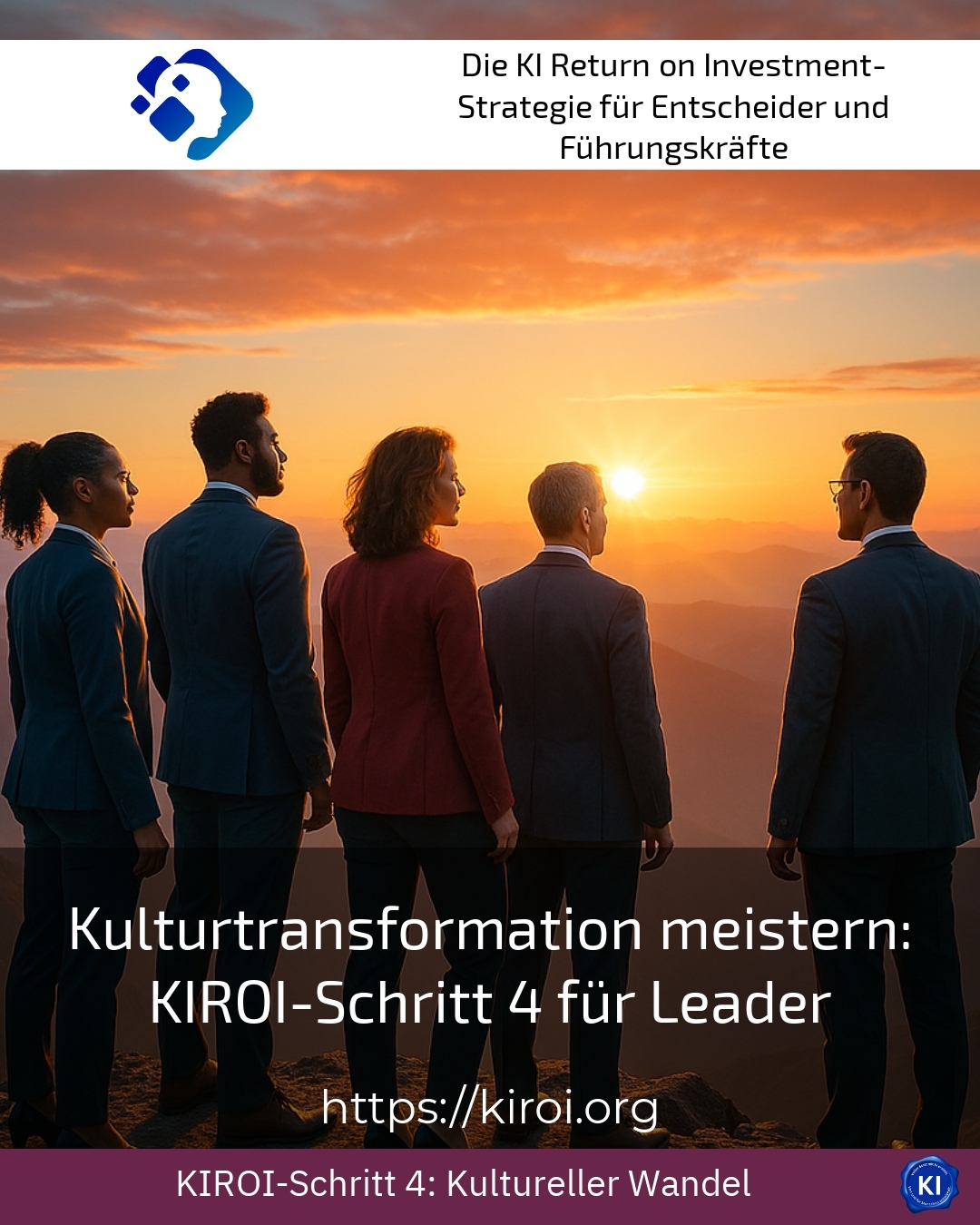
Cultural transformation presents a significant challenge for many companies. Leaders play a key role, particularly in complex change processes. The focus here is on the fourth KIROI step, which emphasizes the implementation and embedding of the new culture. Leaders specifically support cultural transformation by making values visible and actively embodying behaviours.
Cultural Transformation: The Role of Leaders in KIROI Step 4
In the fourth step of the KIROI model, leaders take responsibility for making the cultural transformation tangible in everyday life. This involves not just communication, but consistent action and the conscious integration of new values and principles into decision-making processes.
For example, managers use workshops in which they reflect together with their teams on how values impact daily interactions. In the automotive industry, for instance, department heads have introduced short, regular team meetings to dynamically support cultural change. These rituals strengthen awareness of change and promote employee engagement.
Another example concerns a medium-sized service company, where targeted coaching helped managers to better fulfil their role as role models. They reported a sustainably improved working atmosphere and increased personal responsibility within the team.
The significance of trust, transparency, and accountability in cultural transformation
In practice, leaders often find that building trust and transparency are cornerstones of successful cultural transformation. Leaders guide change processes by promoting open communication and empowering employees to take on more responsibility.
For example, IT companies report that regular appreciation rounds, following agile principles, improve collaboration. Likewise, pharmaceutical companies rely on transparent decision-making processes, which strengthen the credibility of leadership and facilitate teamwork.
Such measures support a cultural shift, as they help to ensure that change is perceived as a collective project and that everyone can find their place.
Practical Tips for Leaders in Mastering Cultural Transformation
To successfully support cultural transformation, it is worth considering the following impulses:
- Define clear values and link them to the company strategy. This is how financial industry leaders establish common guidelines that can be easily understood in everyday life.
- Communicating visions regularly and authentically, as is done in international trading companies, to strengthen awareness of cultural objectives.
- Iterative, agile approaches allow for adjustments during the process. Many technology startups use this approach to respond flexibly to challenges.
- Strengthening emotional intelligence competencies. HR departments in manufacturing companies are therefore increasingly focusing on training that promotes self-reflective skills.
BEST PRACTICE with one customer (name hidden due to NDA contract) The mechanical engineering client implemented KIROI Step 4 through targeted leadership development. In workshops, understanding of cultural values was sharpened and concrete behaviours were derived. Through regular feedback rounds, implementation was continuously supported, making the cultural change visible and tangible throughout the entire company.
Challenges and Solutions in Real-World Transformation Projects
The implementation of cultural transformation is often hindered by old ways of thinking and resistance. For example, healthcare leaders report difficulties in dissolving hierarchical thinking and establishing new, participatory ways of working.
This shows that continuous coaching and the creation of safe spaces for dialogue are helpful. Digital tools that create transparency and promote collaboration are also beneficial.
External consultants are also brought into trading companies to provide new impetus and support internal development initiatives.
My analysis
The fourth step in the KIROI model is central to making culture transformation dynamic and effective. Leaders act as important multipliers and role models in this process. They must not only communicate but also actively embody their attitude and align it with the culture goals.
Practical methods such as workshops, regular team rituals, and coaching effectively support this process. The main challenges lie in overcoming old habits and fostering trust and transparency.
A successful cultural transformation strengthens a company's adaptability and promotes a collaborative working environment. Leaders who guide this process make a crucial contribution to the sustainable development of their organisations.
Further links from the text above:
Cultural Transformation – KIROI Step 4 for Leaders [2]
Culture transformation – 4 steps and 4 interconnections [1]
Successful culture transformation for businesses [3]
For more information and if you have any questions, please contact Contact us or read more blog posts on the topic Artificial intelligence here.













 Deutsch
  English (UK)