
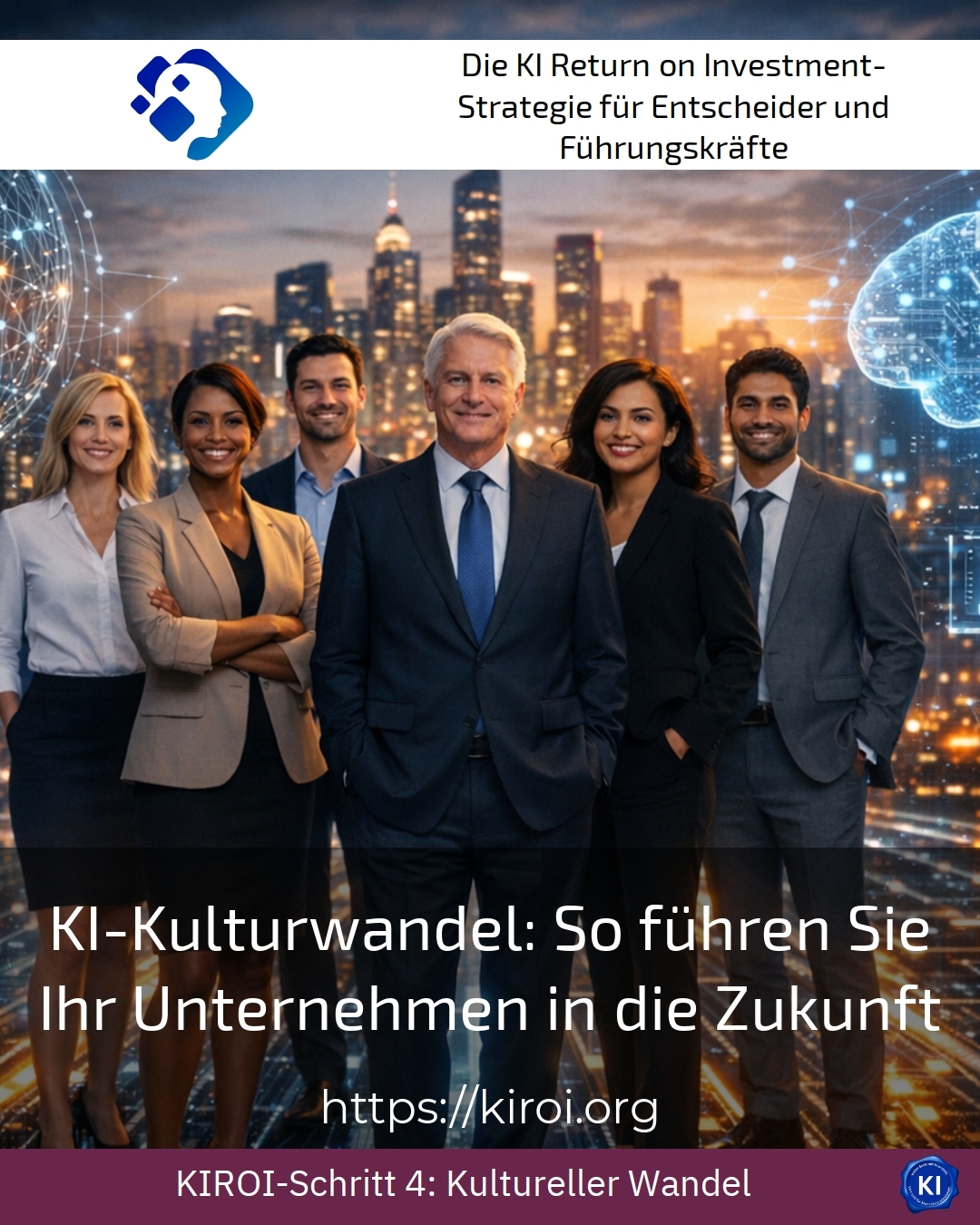
Have you ever wondered why some companies seem to glide effortlessly into the digital era while others fail despite enormous investments? The crucial difference lies not in the technology itself, but in the way organizations approach a fundamental transformation. AI cultural change Implement and align your entire corporate structure to the demands of a smart future. The introduction of algorithmic systems not only changes processes and workflows, but also touches upon the fundamental values, beliefs, and behaviors that form the core of any organization. Many leaders underestimate the human component and focus exclusively on technical implementations, which often leads to frustration, resistance, and ultimately the failure of ambitious transformation projects. In this article, you will learn what steps are necessary to successfully guide your company through this transformation, while involving both employees and the leadership level.
Why the AI cultural shift means more than just technology
Integrating intelligent systems into existing corporate structures presents organizations with challenges that go far beyond mere technical implementation and deeply impact the social fabric. Employees often fear the loss of their jobs or feel overwhelmed by new technologies, while leaders are under pressure to deliver quick results while simultaneously keeping the team together. These tensions are particularly evident in industries with traditional hierarchies and established work practices, where change is perceived as a threat.
For example, a manufacturing company in the mechanical engineering sector implemented an intelligent maintenance system that was intended to predict failures, but experienced technicians on site reacted with skepticism and rejection to the new technology. In another case, a medium-sized logistics service provider implemented automated route planning, but the drivers ignored the system’s suggestions because they did not see their years of experience as valuable. A third example shows a financial institution that deployed chatbots for customer service, but the service advisors felt degraded and customer satisfaction initially dropped dramatically. These cases illustrate that technical excellence alone is not enough to bring about sustainable changes.
Best practice with a AIROI customer
A traditional family business in the manufacturing industry with over three hundred employees faced the challenge of optimizing its production processes using intelligent systems without losing the valuable expertise of its long-standing professionals. The transruptions coaching accompanied the company over a period of eighteen months, initially conducting a comprehensive analysis of the existing corporate culture and the fears of the workforce. Together, we developed a communication strategy that clearly highlighted the benefits of the new technology while emphasizing the role of human expertise as an indispensable complement. The experienced machine operators were appointed as so-called „technology mentors“ who actively contributed to fine-tuning the algorithms and brought their practical experience into the system. This approach not only led to significantly higher acceptance, but also to better results, because the system was continuously improved through the tacit knowledge of the employees. Clients often report that this participatory approach was crucial for the sustainable success of the transformation.
The role of leadership in the AI culture change
Leaders play a central role in successfully shaping transformation processes because they must both set the strategic direction and serve as role models for the desired behaviors. However, many managers underestimate the time and emotional investment associated with genuine cultural change and expect quick results when patience and perseverance are required. The ability to withstand uncertainty while still providing direction is the most important leadership skill in such times.
For example, a manager of a medium-sized retail company began using intelligent analysis tools himself and openly shared his learning experiences with the team, which significantly reduced the barrier for all involved. In a technology company, the management level established regular „Failure Fridays“ where failed experiments with algorithmic systems were openly discussed to foster a culture of learning [1]. A retail company established an internal innovation lab where employees from different departments collaborated with management to explore new application possibilities and overcame hierarchical boundaries.
Trust as the foundation of change
Without a solid foundation of trust between the leadership and the workforce, any transformation becomes a labor of love that consumes more energy than it liberates. Employees must be able to trust that the introduction of new technologies is not primarily intended to reduce headcount but to bring real improvements for all involved. This trust is not built solely through words, but through consistent action over extended periods of time.
From the outset, an insurance company communicated transparently that the automation of routine tasks would not lead to layoffs but would create space for more demanding advisory tasks. A private bank invested massively in training programs in parallel with the introduction of intelligent analysis systems to open up new career perspectives for its employees. An energy provider established regular dialogue formats in which concerns and fears of the workforce were openly addressed and taken seriously, leading to a significantly higher acceptance of the changes [2].
Practical steps for sustainable change
The concrete implementation of cultural change requires a systematic approach that takes into account both the emotional and rational aspects of change. It has been shown that small, visible successes at the beginning of a transformation process are enormously important for generating momentum and convincing skeptics. The temptation to fight on too many fronts at the same time should be absolutely avoided because it fragmentates resources and creates confusion.
One pharmaceutical company deliberately started its transformation process in the research department, where the affinity for data-driven methods was already high, and used the successes achieved there as a reference for other areas. An automotive supplier initially identified the biggest pain points in its production and specifically deployed intelligent systems where the benefits for all involved were immediately tangible. A telecommunications provider formed so-called „change champions“ who acted as multipliers within their respective teams and drove the change from within [3].
Best practice with a AIROI customer
An international consulting firm approached us with the problem that the introduction of intelligent research and analysis tools encountered significant resistance from experienced consultants who saw their expertise being devalued. As part of the transruptive coaching process, we developed a step-by-step approach that took the existing competencies of the consultants as a starting point and positioned the new technologies as amplifiers of these skills. Particularly important was the realization that the consultants did not need to be trained in using the tools; rather, they needed to develop a new understanding of their own role. We conducted intensive workshops in which the participants experienced how the combination of human experience and algorithmic support led to better results than any component alone. After six months, many participants reported that their work felt significantly more fulfilling because they could focus on the truly challenging aspects. Customer satisfaction increased measurably, and the company was able to strengthen its market position despite intense competition.
Communication as the key to success in AI cultural transformation
The way changes are communicated determines decisively whether they are perceived as an opportunity or a threat. This involves more than just the content of the communication; it also involves timing, tonality, and choosing the right channels for different target groups within the organization. Transparent and consistent communication supports the building of trust and provides guidance during periods of uncertainty.
A media company created an internal podcast that regularly reported on the progress and challenges of introducing intelligent systems, thereby providing low-threshold access to relevant information. A healthcare provider organized monthly town hall meetings where management personally answered employees’ questions about digital transformation. An industrial conglomerate developed an internal platform where successful case studies could be shared and discussed, significantly improving knowledge exchange between different locations.
Understanding and constructively using resistance
Resistance to change is not a sign of weakness or backwardness, but a natural human response to uncertainty and perceived threats. Wise leaders recognize that this resistance often contains valuable information that can be used to successfully shape change. Instead of ignoring or fighting critics, it is worth taking their perspectives seriously and integrating them into the transformation process.
One construction company found that the most skeptical of new planning tools were often the most experienced project managers, whose objections turned out to be well-founded criticism of the system’s real weaknesses upon closer examination. One logistics company set up a formal feedback system through which employees could report problems with new technologies, and systematically used these feedback inputs to improve the implementation. One retail company deliberately invited well-known critics of the transformation into steering committees, where they could constructively present their concerns and thus become co-creators with the opponent [4].
My AIROI Analysis
The successful transformation of companies through the integration of intelligent systems requires far more than technical expertise and financial investments; the decisive success factor lies in the ability to accompany people through change and to create a culture that understands change as an opportunity. My experience from numerous consulting projects shows that organizations that place the human factor at the center are significantly more successful than those that focus exclusively on technical excellence. AI cultural change It is achieved when leaders act authentically, communicate transparently, and create spaces where employees can articulate their fears and process them constructively.
It seems particularly important to me the realization that resistance to change should not be combated but understood and utilized, because it often contains valuable insights into real problems and unresolved questions. The companies I have experienced as particularly successful in this context are characterized by patience, perseverance, and the willingness to learn from mistakes and adapt the course as needed. Transformation is not a project with a defined end point, but a continuous process that requires continuous attention and care. Those who follow this path with the right attitude and the appropriate support will find that the integration of intelligent systems not only increases competitiveness but can also promote employee satisfaction and engagement. The future belongs to organizations that do not view technology and humanity as opposites, but as complementary forces that can achieve more together than either alone.
Further links from the text above:
[1] Harvard Business Review – Change Management
[2] McKinsey – People and Organisational Performance
[3] Gartner – Human Resources Insights
[4] Forbes – Leadership and Strategy
For more information and if you have any questions, please contact Contact us or read more blog posts on the topic Artificial intelligence here.






 Deutsch
 English (UK)