
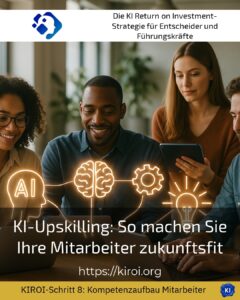
Digital transformation is changing businesses at a breathtaking pace. Those who don't act today will lose their competitive edge tomorrow. This raises a key question: how do you prepare your workforce for the new demands? The AI skills boost: How to equip your employees now is developing into a strategic question of survival for organisations of all sizes. This is because technological tools only reach their full potential when people understand and can use them. Intelligent systems are already permeating almost every area of business today. They automate processes, analyse data and support decisions. Nevertheless, many teams lack basic skills in dealing with these technologies. Closing this gap requires well-thought-out strategies and consistent action.
Why an AI skills boost for employees is becoming essential
Companies invest significant sums in modern technologies. However, the hoped-for added value often fails to materialise. The reason rarely lies in the technology itself. Instead, projects fail due to a lack of acceptance and understanding within the team. Employees feel overwhelmed or develop fears of change. These emotional barriers block progress more sustainably than any technical problem [1].
Studies show that qualified teams work significantly more productively. They recognise optimisation potential faster and use tools more precisely. This leads to innovative solutions that previously seemed unthinkable. Systematic competence development acts as a catalyst for the entire organisation. It not only promotes technical knowledge but also strengthens trust in new working methods.
In the manufacturing sector, skilled professionals are already using predictive maintenance systems. These analyse machine data and forecast failures. Trained technicians interpret the results and plan maintenance proactively. In the healthcare sector, algorithms support diagnoses and therapy decisions. Medical staff require sound knowledge to critically assess these recommendations. In the financial sector, intelligent systems detect fraud attempts in real-time. Clerks must understand why specific transactions are flagged.
The AI Skills Boost: Equipping Your Workforce Now – Strategic Approaches
Building skills requires a holistic approach. Individual training sessions are not enough. Instead, a carefully considered development programme that combines various learning formats is needed. Online courses impart theoretical fundamentals flexibly and independently of location. Practical workshops enable application in realistic scenarios. Mentoring programmes promote knowledge transfer between experienced and new staff.
Learning through practical application is particularly effective. When employees try out new methods directly in their daily work, the knowledge becomes more deeply ingrained. They immediately experience the benefits the technology offers. These positive experiences motivate further learning and reduce reservations. Managers play a crucial role in this as role models and encouragers.
In retail, companies are focusing on personalised customer engagement through data analysis. Sales teams are learning to interpret purchase histories and make relevant recommendations. In logistics, algorithms are optimising routes and inventory levels. Dispatchers need the understanding to evaluate and adapt suggestions. In customer service, chatbots are automating responses to simple queries. Employees are handling more complex cases, requiring them to have enhanced skills.
Best practice with a KIROI customer
A medium-sized mechanical engineering company with around five hundred employees faced a particular challenge. Management had invested in a modern analytics platform that evaluated production data in real time and generated optimisation suggestions. However, after its introduction, hardly anyone used the new system productively. The reports remained unread, and the recommendations were ignored. As part of a transruptive coaching project, we first analysed the causes of this blockage. It became apparent that the workforce simply didn't understand the expenditure. The technical documentation was formulated too abstractly and lacked practical relevance. Together, we developed a three-stage training programme that took different learning levels into account. Production employees received compact foundation modules tailored to their specific tasks. Team leaders participated in in-depth workshops on data interpretation and decision-making. Managers learned how to strategically use the insights gained. After just six weeks, active use of the platform increased by seventy percent. The teams identified savings potentials that secured the return on investment for the entire technology within a quarter. Clients often report similar experiences when training and technology implementation go hand in hand.
Learning culture as the foundation for AI competence advancement
Sustainable skills development is only successful in a supportive environment. Organisations need a culture that values and encourages continuous learning. Mistakes must be seen as opportunities to learn, not as failures. Curiosity and a willingness to experiment deserve recognition and space. Without this fundamental attitude, even the best training programmes will have no effect [2].
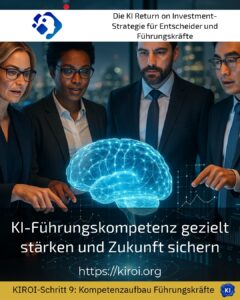
Leaders significantly shape the learning culture through their own behaviour. If superiors show interest in new technologies themselves, teams follow suit. Regular exchange formats promote knowledge flow within the organisation. Lunch-and-learn sessions or internal expert talks create low-threshold learning opportunities. This fosters a shared understanding that improves collaboration.
In the insurance industry, automated claims processing is revolutionising processes. Claims handlers must learn to recognise exceptions and make manual interventions. In human resources, intelligent systems support the pre-selection of applications. Recruiters need the knowledge to critically question algorithmic recommendations and avoid discrimination. In legal consulting, tools analyse contracts and identify risks. Lawyers must understand how these analyses are generated.
Practical Implementation: Step-by-Step to Success
Introducing a qualification programme begins with an honest assessment. What skills are already present? Where are the biggest gaps? This analysis forms the basis for perfectly tailored measures. Off-the-shelf standard solutions often miss their mark. Every organisation has specific needs that require individual answers.
Following the analysis comes prioritisation. Not all skill development needs can be met simultaneously. Resources are limited, and so is the capacity for change. Therefore, it is advisable to start with pilot groups. These groups will gather initial experience and provide valuable feedback. On this basis, programmes can be optimised before they are rolled out to the entire organisation.
In construction, digital twins support project planning and monitoring. Architects and engineers are learning to create and use these models. In agriculture, precision technologies optimise resource use in the field. Farmers need training to interpret sensor data and adjust machinery accordingly. In tourism, algorithms personalise travel recommendations for customers. Travel consultants need to understand how to meaningfully integrate these suggestions into their advice.
Best practice with a KIROI customer
An energy sector service company wanted to fundamentally modernise its customer service. The introduction of an intelligent assistant system initially failed due to resistance from experienced employees. Many feared being replaced and refused to cooperate with the new technology. As part of our support, we initially organised open discussion rounds to address fears and concerns. This honest communication built trust and opened doors for change. We then developed a qualification concept that actively involved the employees. Experienced staff were trained as internal experts who passed on their knowledge to colleagues. This multiplier strategy significantly boosted self-confidence and identification with the project. The assistant system subsequently took over routine inquiries, while the team handled more complex issues. Customer satisfaction measurably increased because waiting times decreased and the quality of advice improved. At the same time, employees found their work more meaningful because repetitive tasks were eliminated. Clients often report that this combination of emotional support and professional qualification makes the decisive difference.
Mastering challenges and overcoming resistance
Change projects regularly encounter resistance. People often react to the unknown with scepticism or rejection. These reactions are human and understandable. However, ignoring or suppressing them only exacerbates the problems. Instead, spaces are needed for dialogue and honest engagement [3].
Transparent communication forms the foundation of successful change. Employees want to know why certain measures are necessary. They want to understand how the changes will affect their personal situation. Leaders should proactively answer these questions, rather than waiting. Openness signals appreciation and encourages a willingness to cooperate.
In the media industry, systems are already automating simple news reports. Journalists are focusing on investigative research and complex analyses. In education, adaptive learning platforms are personalising teaching. Educators need the skills to use these tools effectively for pedagogical purposes. In the pharmaceutical industry, algorithms are accelerating the development of new active ingredients. Researchers need to understand how to best utilise this support.
Transruptions Coaching as Support for Transformation Projects
Complex change processes benefit from professional guidance. External perspectives help to identify blind spots and discover new paths. Transruption coaching clearly positions itself as support for precisely these kinds of projects. It offers impetus for strategic alignment and accompanies operational implementation. The methodology combines technical expertise with systemic process design.
Clients often come to us with specific questions. They are facing the introduction of new technologies and wonder how they can bring their team along. Others notice that existing training measures are not delivering the desired results. Some are experiencing significant resistance from the workforce and are looking for solutions. In all these situations, transruption coaching offers guidance and practical assistance.
In the public sector, authorities are increasingly digitalising their administrative processes. Case workers are learning to handle new specialist procedures and automated decision-making aids. In transport, intelligent systems are optimising traffic flows and schedules. Dispatchers need the understanding to recognise deviations and intervene. In the creative industries, generative tools are supporting the design process. Designers must learn to use these tools creatively and responsibly.
My KIROI Analysis
The preceding considerations clearly show that technological investments are futile without accompanying skills development. Organisations that systematically qualify their workforce demonstrably achieve better results. They use their tools more effectively and develop innovative applications. The AI skills boost: How to equip your employees now is thus proving to be a central strategic task of our time.
Crucial for success is a holistic approach that considers various dimensions. Professional qualification forms the basis, but it is not sufficient on its own. Emotional support during change processes is just as important as a supportive learning culture. Leaders bear a special responsibility as role models and encouragers. Without their active commitment, even the best programmes remain ineffective.
The KIROI methodology offers a proven framework for systematic competency building. It combines analytical assessments with pragmatic implementation strategies. Pilot projects enable quick learning successes and motivate continuation. Multiplier concepts ensure sustainable embedding within the organisation. Regular reflection loops secure continuous improvement.
Those who invest in the training of their teams today secure tomorrow's competitiveness. Technology is developing at a rapid pace and demands constant adaptation. Only learning organisations can keep up with this tempo. They transform challenges into opportunities and actively shape their future. This capacity for transformation distinguishes long-term successful companies from those that fall by the wayside.
Further links from the text above:
[1] McKinsey: Cultural factors in digital transformation
[2] Harvard Business Review: Organisational Learning
[3] World Economic Forum: Future of Work
For more information and if you have any questions, please contact Contact us or read more blog posts on the topic Artificial intelligence here.







 Deutsch
  English (UK)