
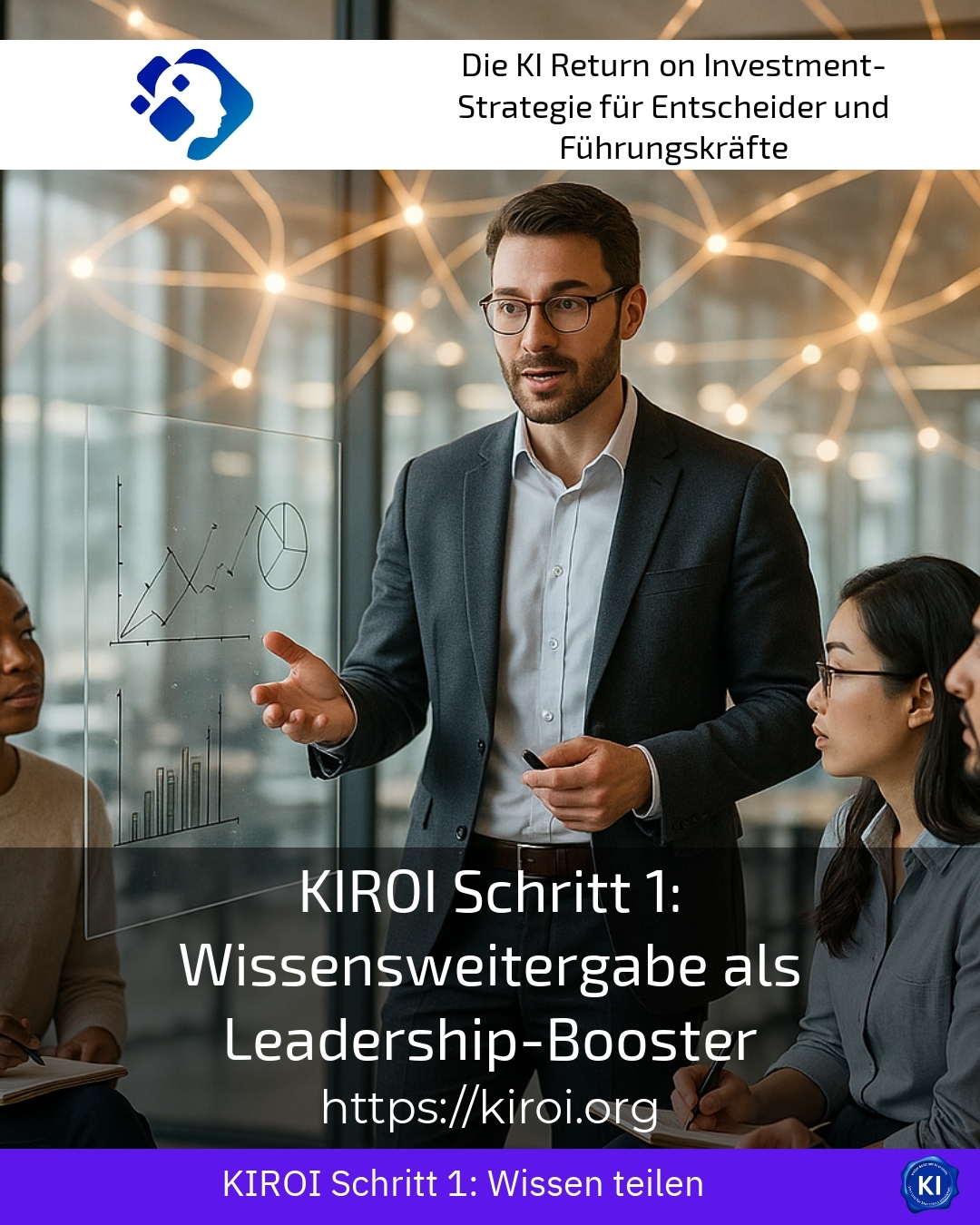
Knowledge sharing is a key topic that modern leaders can use as a booster for their leadership skills. Especially in a dynamic work environment, the targeted transfer of experience, skills, and information ensures the sustainable development of teams and organisations. The ability to share knowledge effectively transforms leadership into an active process that not only empowers employees but also enhances innovation and competitiveness.
Knowledge transfer as a driver for successful leadership
Managers are increasingly facing the challenge of keeping their teams up-to-date in times of skills shortages and constant change. Efficient knowledge transfer supports them in mastering this challenge. For example, managers can promote the use of mentoring to specifically pass on individual know-how to junior talent. At the same time, the introduction of regular knowledge-sharing meetings helps to communicate project-relevant knowledge across teams.
Best practice examples from various industries show how knowledge sharing proves its worth with the Leadership Booster: In the IT industry, agile teams establish knowledge rounds after each sprint to share successes and challenges. In manufacturing, digital knowledge platforms support employees in rapid problem-solving through access to accumulated expert knowledge. And in healthcare, nursing teams benefit from regular training sessions that not only update professional knowledge but also strengthen team cohesion.
BEST PRACTICE with one customer (name hidden due to NDA contract) An engineering executive supported her transition into a new leadership role through systematic knowledge transfer. She initiated workshops where experienced colleagues shared their experiential knowledge. These insights helped her avoid typical mistakes more quickly and rapidly gain the team's trust.
How knowledge sharing can be implemented in practice
The implementation of knowledge transfer should be carried out consistently and in a structured manner. One tried-and-tested method is, for example, the introduction of digital knowledge databases, on which proven knowledge remains available at all times. This allows managers to ensure that their teams have quick access to important information. In addition, it makes sense to promote personal exchange formats that convey implicit knowledge, i.e. experiences and „soft“ know-how.
Another method is so-called „Leaving Expert Debriefing,“ where experienced employees systematically pass on their knowledge before leaving. This creates a knowledge bridge and protects against losses. This practice is particularly helpful during project phases to ensure continuity and to react more quickly to unforeseen challenges.
BEST PRACTICE with one customer (name hidden due to NDA contract) A medium-sized IT company established a mentoring programme, where experienced project leaders shared their knowledge with new employees. This significantly reduced onboarding time and markedly improved project quality.
Practical tips for promoting knowledge sharing in the company
Leaders can offer the following impulses to promote knowledge sharing:
- Regularly create spaces for exchange – whether digital or face-to-face, for example, through weekly team meetings or knowledge cafés.
- Making experiences visible and documenting them, for example through short video tutorials or blog posts within the company.
- Actively show appreciation for knowledge sharing by celebrating successes achieved through knowledge exchange.
These measures not only support the flow of information but also strengthen motivation and a sense of community within the team. At the same time, a transparent communication culture helps to break down barriers and reduce obstacles in knowledge sharing.
BEST PRACTICE with one customer (name hidden due to NDA contract) An open feedback culture was introduced at a consulting firm, encouraging employees to share experiences. This led to a vibrant knowledge community and faster adaptation to changing customer demands.
Knowledge sharing as a continuous process and leadership booster
Knowledge sharing is not a one-off event, but a continuous process. Managers who actively guide this process strengthen their role as enablers and support the entire company in developing a learning organisation. This enables challenges such as skills shortages, increasing innovation requirements and rapid market changes to be overcome more effectively.
The consistent implementation of knowledge transfer brings with it a variety of benefits: it promotes productivity, accelerates decision-making processes, and increases employee satisfaction. Risk mitigation also plays an important role, as critical knowledge is not lost when employees leave the company. Thus, knowledge transfer is considered an essential element of effective leadership.
My analysis
The integration of knowledge transfer as a management tool opens up diverse opportunities for companies. It not only facilitates the retention of expertise but also promotes innovation and agility. Managers who strategically guide the knowledge transfer process thus strengthen their leadership skills and support sustainable success. Concrete examples show that even small measures can have an impact – regardless of whether it's in technology-driven industries, manufacturing, or the service sector.
Disseminating knowledge strategically also means building trust and nurturing talent. This transforms knowledge sharing into the engine for a company culture that actively shapes both stability and change.
Further links from the text above:
5 tips for breaking down barriers in knowledge transfer
Knowledge transfer: Definition - Sage
Knowledge transfer | Definition, methods & examples
Knowledge Management in Business
Securing valuable knowledge
Knowledge Transfer in Businesses – A Guide
Knowledge transfer - methods, examples, definition
Knowledge Transfer Methods: Strategies for Knowledge Retention
Knowledge Transfer: How to Secure Expertise in Your Company
For more information and if you have any questions, please contact Contact us or read more blog posts on the topic Artificial intelligence here.









 Deutsch
  English (UK)