kiroi.org

KIROI - Artificial Intelligence Return on Invest
The AI strategy for decision-makers and managers

Business excellence for decision-makers & managers by and with Sanjay Sauldie

KIROI - Artificial Intelligence Return on Invest: The AI strategy for decision-makers and managers

KIROI - Artificial Intelligence Return on Invest: The AI strategy for decision-makers and managers

Start » Mastering idea management: KIROI step 6 for your department
17 May 2025

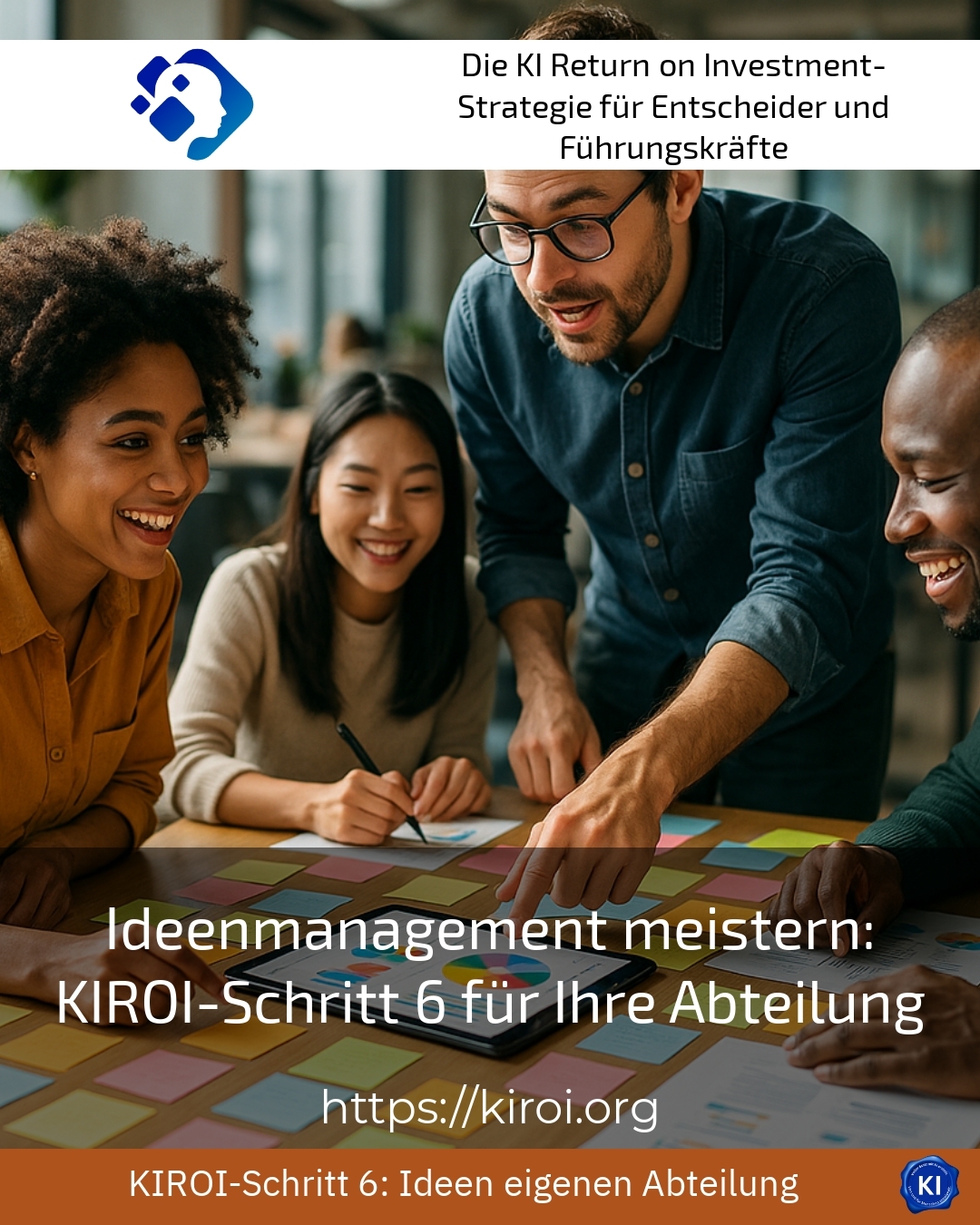
Mastering idea management: KIROI step 6 for your department

4.8
(713)

In today's dynamic business world, idea management is a decisive factor for the success of companies. It is about collecting, evaluating and implementing creative impulses in order to promote innovation and increase efficiency. The KIROI approach in particular offers structured methods for prioritising idea management and achieving sustainable improvements. In this article, we will focus on the sixth step of the KIROI approach, which focusses on departmental innovation.

Idea management as a driver for departmental innovation

The sixth step of the KIROI approach focuses on the concrete development of ideas within departments. This enables employees to actively contribute their experiences and challenges and develop practical solutions. An example from production shows how targeted workshops have reduced material waste and stabilised product quality at the same time. In the HR department, intelligent duty rosters were developed that reduced stress and significantly increased motivation[1][3].

Practical implementation of idea management

The success of ideas management is based on a combination of creative impulses and structured support. Teams contribute different perspectives in moderated idea sessions and workshops. The collected suggestions are jointly evaluated and prioritised. Based on this, the teams define concrete steps for action and ensure responsible project management. For example, a logistics provider achieved savings in time and costs by analysing transport routes [1][5].

In the IT department of a medium-sized company, an automated ticket system was introduced, which reduced repetitive requests and enabled the team to focus on strategic IT projects. In field service, a team developed ideas for optimised visit intervals, leading to shorter travel times and increased customer satisfaction.

Idea management in practice

Another example from the industry shows how idea management in a medium-sized manufacturing company led to improved collaboration between production and quality management. Through targeted idea sessions, bottlenecks were recognised and the reject rate was significantly reduced. This strengthened collegial communication and led to measurable efficiency gains[1][5].

BEST PRACTICE with one customer (name hidden due to NDA contract) In another case, the use of idea management in the marketing department led to the development of an innovative campaign that had a lasting impact on customers and promoted long-term customer loyalty. This campaign was supported by structured workshops and digital tools that managed the entire process from idea generation to implementation[1].

Support through transruption coaching

Transruption coaching plays a central role in supporting idea management projects. It helps to recognise blockages and promote new perspectives in order to develop concrete implementation steps and ensure that impulses are not lost. This not only creates more motivation, but also a lively corporate culture in which ideas become part of everyday life[4].

Ideas management as a driving force for innovation

Today, idea management is much more than simply collecting suggestions. It is a continuous support process that promotes creativity, recognises obstacles and supports teams with targeted impulses. The KIROI approach in particular offers structured methods to not only collect ideas, but also to make them effective throughout the organisation[2][4].

In industry, for example, moderated workshops in mechanical engineering shorten development loops and accelerate innovation. In software development, increased team collaboration leads to faster customisation and better product features[2][4].

My analysis

To summarise, idea management is a decisive factor for the success of companies. Through structured approaches such as KIROI Step 6, departments can strengthen their innovative power and achieve sustainable improvements. The active involvement of employees and the structured implementation of ideas are crucial here. Idea management supports companies in mastering challenges and asserting themselves in dynamic markets.

Further links from the text above:

For more information, please visit the following links:

Idea Management: KIROI Step 6

Idea management: KIROI Step 7

Rethinking Idea Management: KIROI Step 7

For more information and if you have any questions, please contact Contact us or read more blog posts on the topic Artificial intelligence here.

How useful was this post?

Click on a star to rate it!

Average rating 4.8 / 5. Vote count: 713

No votes so far! Be the first to rate this post.

Spread the love

transruption.org

The digital toolbox for
the digital winners of today and tomorrow

Business excellence for decision-makers & managers by and with Sanjay Sauldie

transruption
transruption

transruption: The digital toolbox for
the digital winners of today and tomorrow

Start » Mastering idea management: KIROI step 6 for your department
17 May 2025

Mastering idea management: KIROI step 6 for your department

4.8
(713)

In today's dynamic business world, idea management is a decisive factor for the success of companies. It is about collecting, evaluating and implementing creative impulses in order to promote innovation and increase efficiency. The KIROI approach in particular offers structured methods for prioritising idea management and achieving sustainable improvements. In this article, we will focus on the sixth step of the KIROI approach, which focusses on departmental innovation.

Idea management as a driver for departmental innovation

The sixth step of the KIROI approach focuses on the concrete development of ideas within departments. This enables employees to actively contribute their experiences and challenges and develop practical solutions. An example from production shows how targeted workshops have reduced material waste and stabilised product quality at the same time. In the HR department, intelligent duty rosters were developed that reduced stress and significantly increased motivation[1][3].

Practical implementation of idea management

The success of ideas management is based on a combination of creative impulses and structured support. Teams contribute different perspectives in moderated idea sessions and workshops. The collected suggestions are jointly evaluated and prioritised. Based on this, the teams define concrete steps for action and ensure responsible project management. For example, a logistics provider achieved savings in time and costs by analysing transport routes [1][5].

In the IT department of a medium-sized company, an automated ticket system was introduced, which reduced repetitive requests and enabled the team to focus on strategic IT projects. In field service, a team developed ideas for optimised visit intervals, leading to shorter travel times and increased customer satisfaction.

Idea management in practice

Another example from the industry shows how idea management in a medium-sized manufacturing company led to improved collaboration between production and quality management. Through targeted idea sessions, bottlenecks were recognised and the reject rate was significantly reduced. This strengthened collegial communication and led to measurable efficiency gains[1][5].

BEST PRACTICE with one customer (name hidden due to NDA contract) In another case, the use of idea management in the marketing department led to the development of an innovative campaign that had a lasting impact on customers and promoted long-term customer loyalty. This campaign was supported by structured workshops and digital tools that managed the entire process from idea generation to implementation[1].

Support through transruption coaching

Transruption coaching plays a central role in supporting idea management projects. It helps to recognise blockages and promote new perspectives in order to develop concrete implementation steps and ensure that impulses are not lost. This not only creates more motivation, but also a lively corporate culture in which ideas become part of everyday life[4].

Ideas management as a driving force for innovation

Today, idea management is much more than simply collecting suggestions. It is a continuous support process that promotes creativity, recognises obstacles and supports teams with targeted impulses. The KIROI approach in particular offers structured methods to not only collect ideas, but also to make them effective throughout the organisation[2][4].

In industry, for example, moderated workshops in mechanical engineering shorten development loops and accelerate innovation. In software development, increased team collaboration leads to faster customisation and better product features[2][4].

My analysis

To summarise, idea management is a decisive factor for the success of companies. Through structured approaches such as KIROI Step 6, departments can strengthen their innovative power and achieve sustainable improvements. The active involvement of employees and the structured implementation of ideas are crucial here. Idea management supports companies in mastering challenges and asserting themselves in dynamic markets.

Further links from the text above:

For more information, please visit the following links:

Idea Management: KIROI Step 6

Idea management: KIROI Step 7

Rethinking Idea Management: KIROI Step 7

For more information and if you have any questions, please contact Contact us or read more blog posts on the topic Artificial intelligence here.

How useful was this post?

Click on a star to rate it!

Average rating 4.8 / 5. Vote count: 713

No votes so far! Be the first to rate this post.

Spread the love

Other content worth reading:

Mastering idea management: KIROI step 6 for your department

written by:

Keywords:

#Abteilungsinnovation #compliance #Ethikrichtlinien #Ideenmanagement #InnovationDurchAchtsamkeit #yellow #Sustainability #Unternehmenskultur #Verantwortungsketten

Follow me on my channels:

Questions on the topic? Contact us now without obligation

Contact us

[wpforms id="331781" title="false"]

More articles worth reading

    Leave a comment