kiroi.org

KIROI - Artificial Intelligence Return on Invest
The AI strategy for decision-makers and managers

Business excellence for decision-makers & managers by and with Sanjay Sauldie

KIROI - Artificial Intelligence Return on Invest: The AI strategy for decision-makers and managers

KIROI - Artificial Intelligence Return on Invest: The AI strategy for decision-makers and managers

Start » KIROI Step 9: Rethinking Leadership Development!
23 October 2025

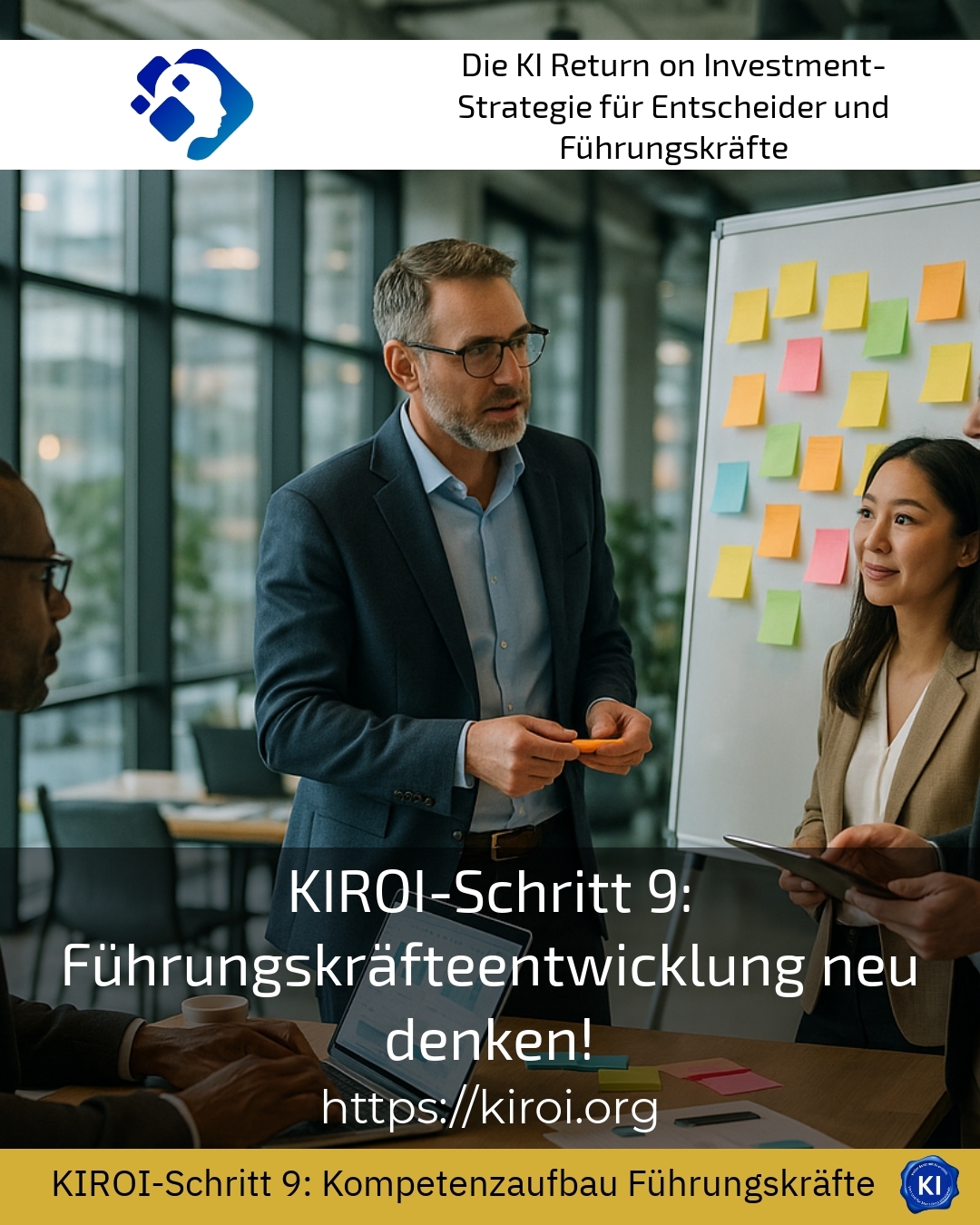
KIROI Step 9: Rethinking Leadership Development!

4.1
(424)

In a time of constant change, leadership development is gaining new, central importance. Traditional training is no longer sufficient to meet the challenges of a digitalised and globalised world of work. With the approach of „Rethinking Leadership Development!“, the question arises: How can sustainable impulses be created for leaders that go beyond mere knowledge transfer? Today, companies face the task of designing development concepts that focus on individuality, practical relevance and continuous learning processes. Here, we look behind the scenes of successful methods and show what a modern development programme can look like.

Leadership development as a strategic success factor

Those who view leadership development as merely a „nice-to-have“ fail to grasp its central role in business success. At its core, it's about systematically identifying, nurturing, and retaining talent – thereby securing the company's future viability. An example from the automotive industry illustrates how leading manufacturers are specifically focusing on hybrid learning models, combining in-person events with digital platforms[1]. This equips leaders to actively manage change and drive innovation. Furthermore, 360-degree feedback, as used by automotive supplier Daimler, helps to make strengths and development areas visible from various perspectives[2].

However, leadership development does not have to be limited to large corporations. Medium-sized companies also benefit if they specifically identify junior staff, promote talent and prepare them for new tasks with targeted programmes. Deutsche Bank, for example, relies on long-term succession planning to ensure leadership continuity[2]. Such approaches show: those who invest early create stable structures for corporate success.

For development to be effective, programmes must be tailored to the specific needs of the organisation and industry. Siemens, for example, uses blended learning approaches where face-to-face and online formats complement each other [1]. The combination of traditional seminars, e-learning and practical projects ensures a sustainable learning effect and promotes acceptance among participants.

Alongside tried-and-tested approaches, innovative formats such as Action Learning are gaining increasing importance. In this approach, leaders solve real, company-specific challenges in small teams – thus, development takes place not in an ivory tower, but directly at the heart of the company. Lufthansa has had good experiences with Action Learning because participants can immediately apply their skills in their daily work[2].

Concrete building blocks for a modern development programme

Those rethinking leadership development opt for a mix of different methods. Sustainable development is only successful when different learning preferences and requirements are taken into account[10]. A good development plan is created through dialogue between HR and specialist departments, is aligned with the company's strategic goals, and sets milestones for its implementation[5].

Individual Development Plans as the core

The first step towards successful leadership development is an analysis of the current situation. Who should be promoted? Which competencies will be in demand in the future? What changes are imminent? Individual development plans are derived from these questions, defining goals, timelines, and specific measures for each participant.

A practical example: An internationally operating technology group has, together with us, designed a development programme for middle management executives. The goal was to strengthen change management skills and improve networking across locations.

BEST PRACTICE with one customer (name hidden due to NDA contract) Over a period of several months, participants were specifically prepared for new leadership roles. The mix of individual coaching, group work, and practical projects led to the managers intensively engaging with their strengths and areas for development. In addition, regular reflection sessions were established, where participants could openly share their experiences and challenges. The feedback from the managers was consistently positive: they felt better equipped to actively shape change and reported a noticeable increase in their teamworking skills. Loyalty to the company demonstrably increased because the investment in personal development was perceived as a sign of appreciation.

Innovative learning formats combine theory and practice

The mere transfer of knowledge in classic seminars is no longer sufficient today [14]. Instead, blended learning programmes, which combine face-to-face formats, digital modules and practical projects, are gaining in importance [10]. This allows managers to learn flexibly and test new knowledge directly in their everyday work. Another practical example from the mechanical engineering sector shows how job rotation can provide new perspectives and promote cross-company thinking [12].

Coaching and mentoring complement such programmes effectively: experienced managers support junior talent, provide feedback and assist with critical decisions. At an automotive manufacturer, a structured mentoring programme has also been shown to significantly increase management retention and sustainably promote the transfer of experienced knowledge [12].

Another example of innovative leadership development comes from the logistics sector: a leadership programme has been established here in which participants work on real process optimisation projects in small teams. The results were directly implemented in daily operations and led to measurable improvements. At the same time, the managers grew through the tasks assigned and developed new problem-solving skills.

Measurability and further development: How do the programmes work?

Performance measurement is a central component of modern leadership development. Only those who regularly evaluate can make targeted adjustments and ensure the further development of programmes[9]. The methods are diverse: in addition to feedback surveys of participants and their teams, quantitative key figures such as fluctuation rates, promotions or the number of successfully filled key positions are also suitable.

An example from the chemical industry shows how continuous support and regular target review can secure the success of measures. A digital learning and reflection tool was introduced here, documenting development steps and promoting exchange between managers. Participants appreciated the transparency and the opportunity to actively shape their own progress.

Transruptions Coaching as a Catalyst

In our work as systemic consultants, we provide targeted support to companies on projects related to leadership development. Our focus is on discovering individual potential, initiating development processes, and effecting sustainable changes in leadership behaviour. The most common issues that clients bring to us are enhancing leadership competence in change situations, promoting diversity and inclusion, and developing a future-proof leadership culture.

A specific example from the healthcare sector: a large clinic faced the task of modernising its management structures in nursing management and increasing the proportion of female managers. Together, we developed a programme that specifically addresses the needs of the target group and offers scope for personal development.

BEST PRACTICE with one customer (name hidden due to NDA contract) Over a period of several months, both individual and group coaching sessions were conducted, supplemented by practical leadership tasks and regular reflection rounds. The participants benefited from the exchange of experiences, developed greater self-confidence in their daily leadership activities, and were specifically prepared for future leadership roles. The results were visible: the number of female managers increased significantly, the programme was well-received, and the workforce valued the investment in personal development. The clinic has permanently established the programme and has since reported an improved leadership culture and increased employee retention.

My analysis

Leadership development is no longer a static process, but a dynamic companion on the path to a future-proof organisation. The examples show that successful companies rely on tailored, practical and continuous development programmes that combine theory and practice. The combination of individual support, blended learning, mentoring and a targeted feedback culture creates sustainable effects – and equips leaders for tomorrow's challenges.

It is important that development is not viewed in isolation, but rather understood as an integral part of corporate strategy. Only in this way can leadership development unfold its full potential and contribute to long-term business success. Those who invest in innovative concepts today will secure the best minds tomorrow – and create a culture in which leaders can grow and take responsibility.

Further links from the text above:

KIROI Step 9: Rethinking Leadership Development – SAULDIE [1]
Leadership Development: Key Methods and Examples – KAKOII [2]
Leadership Development: The HR Guide – Personio [5]
Best Practices for Leadership Development – DDI [10]
Leadership Development: Comprehensive Guide – Haufe Academy [12]

For more information and if you have any questions, please contact Contact us or read more blog posts on the topic Artificial intelligence return on investment here.
How useful was this post?

Click on a star to rate it!

Average rating 4.1 / 5. Vote count: 424

No votes so far! Be the first to rate this post.

Spread the love

transruption.org

The digital toolbox for
the digital winners of today and tomorrow

Business excellence for decision-makers & managers by and with Sanjay Sauldie

transruption
transruption

transruption: The digital toolbox for
the digital winners of today and tomorrow

Start » KIROI Step 9: Rethinking Leadership Development!
23 October 2025

KIROI Step 9: Rethinking Leadership Development!

4.1
(424)

In a time of constant change, leadership development is gaining new, central importance. Traditional training is no longer sufficient to meet the challenges of a digitalised and globalised world of work. With the approach of „Rethinking Leadership Development!“, the question arises: How can sustainable impulses be created for leaders that go beyond mere knowledge transfer? Today, companies face the task of designing development concepts that focus on individuality, practical relevance and continuous learning processes. Here, we look behind the scenes of successful methods and show what a modern development programme can look like.

Leadership development as a strategic success factor

Those who view leadership development as merely a „nice-to-have“ fail to grasp its central role in business success. At its core, it's about systematically identifying, nurturing, and retaining talent – thereby securing the company's future viability. An example from the automotive industry illustrates how leading manufacturers are specifically focusing on hybrid learning models, combining in-person events with digital platforms[1]. This equips leaders to actively manage change and drive innovation. Furthermore, 360-degree feedback, as used by automotive supplier Daimler, helps to make strengths and development areas visible from various perspectives[2].

However, leadership development does not have to be limited to large corporations. Medium-sized companies also benefit if they specifically identify junior staff, promote talent and prepare them for new tasks with targeted programmes. Deutsche Bank, for example, relies on long-term succession planning to ensure leadership continuity[2]. Such approaches show: those who invest early create stable structures for corporate success.

For development to be effective, programmes must be tailored to the specific needs of the organisation and industry. Siemens, for example, uses blended learning approaches where face-to-face and online formats complement each other [1]. The combination of traditional seminars, e-learning and practical projects ensures a sustainable learning effect and promotes acceptance among participants.

Alongside tried-and-tested approaches, innovative formats such as Action Learning are gaining increasing importance. In this approach, leaders solve real, company-specific challenges in small teams – thus, development takes place not in an ivory tower, but directly at the heart of the company. Lufthansa has had good experiences with Action Learning because participants can immediately apply their skills in their daily work[2].

Concrete building blocks for a modern development programme

Those rethinking leadership development opt for a mix of different methods. Sustainable development is only successful when different learning preferences and requirements are taken into account[10]. A good development plan is created through dialogue between HR and specialist departments, is aligned with the company's strategic goals, and sets milestones for its implementation[5].

Individual Development Plans as the core

The first step towards successful leadership development is an analysis of the current situation. Who should be promoted? Which competencies will be in demand in the future? What changes are imminent? Individual development plans are derived from these questions, defining goals, timelines, and specific measures for each participant.

A practical example: An internationally operating technology group has, together with us, designed a development programme for middle management executives. The goal was to strengthen change management skills and improve networking across locations.

BEST PRACTICE with one customer (name hidden due to NDA contract) Over a period of several months, participants were specifically prepared for new leadership roles. The mix of individual coaching, group work, and practical projects led to the managers intensively engaging with their strengths and areas for development. In addition, regular reflection sessions were established, where participants could openly share their experiences and challenges. The feedback from the managers was consistently positive: they felt better equipped to actively shape change and reported a noticeable increase in their teamworking skills. Loyalty to the company demonstrably increased because the investment in personal development was perceived as a sign of appreciation.

Innovative learning formats combine theory and practice

The mere transfer of knowledge in classic seminars is no longer sufficient today [14]. Instead, blended learning programmes, which combine face-to-face formats, digital modules and practical projects, are gaining in importance [10]. This allows managers to learn flexibly and test new knowledge directly in their everyday work. Another practical example from the mechanical engineering sector shows how job rotation can provide new perspectives and promote cross-company thinking [12].

Coaching and mentoring complement such programmes effectively: experienced managers support junior talent, provide feedback and assist with critical decisions. At an automotive manufacturer, a structured mentoring programme has also been shown to significantly increase management retention and sustainably promote the transfer of experienced knowledge [12].

Another example of innovative leadership development comes from the logistics sector: a leadership programme has been established here in which participants work on real process optimisation projects in small teams. The results were directly implemented in daily operations and led to measurable improvements. At the same time, the managers grew through the tasks assigned and developed new problem-solving skills.

Measurability and further development: How do the programmes work?

Performance measurement is a central component of modern leadership development. Only those who regularly evaluate can make targeted adjustments and ensure the further development of programmes[9]. The methods are diverse: in addition to feedback surveys of participants and their teams, quantitative key figures such as fluctuation rates, promotions or the number of successfully filled key positions are also suitable.

An example from the chemical industry shows how continuous support and regular target review can secure the success of measures. A digital learning and reflection tool was introduced here, documenting development steps and promoting exchange between managers. Participants appreciated the transparency and the opportunity to actively shape their own progress.

Transruptions Coaching as a Catalyst

In our work as systemic consultants, we provide targeted support to companies on projects related to leadership development. Our focus is on discovering individual potential, initiating development processes, and effecting sustainable changes in leadership behaviour. The most common issues that clients bring to us are enhancing leadership competence in change situations, promoting diversity and inclusion, and developing a future-proof leadership culture.

A specific example from the healthcare sector: a large clinic faced the task of modernising its management structures in nursing management and increasing the proportion of female managers. Together, we developed a programme that specifically addresses the needs of the target group and offers scope for personal development.

BEST PRACTICE with one customer (name hidden due to NDA contract) Over a period of several months, both individual and group coaching sessions were conducted, supplemented by practical leadership tasks and regular reflection rounds. The participants benefited from the exchange of experiences, developed greater self-confidence in their daily leadership activities, and were specifically prepared for future leadership roles. The results were visible: the number of female managers increased significantly, the programme was well-received, and the workforce valued the investment in personal development. The clinic has permanently established the programme and has since reported an improved leadership culture and increased employee retention.

My analysis

Leadership development is no longer a static process, but a dynamic companion on the path to a future-proof organisation. The examples show that successful companies rely on tailored, practical and continuous development programmes that combine theory and practice. The combination of individual support, blended learning, mentoring and a targeted feedback culture creates sustainable effects – and equips leaders for tomorrow's challenges.

It is important that development is not viewed in isolation, but rather understood as an integral part of corporate strategy. Only in this way can leadership development unfold its full potential and contribute to long-term business success. Those who invest in innovative concepts today will secure the best minds tomorrow – and create a culture in which leaders can grow and take responsibility.

Further links from the text above:

KIROI Step 9: Rethinking Leadership Development – SAULDIE [1]
Leadership Development: Key Methods and Examples – KAKOII [2]
Leadership Development: The HR Guide – Personio [5]
Best Practices for Leadership Development – DDI [10]
Leadership Development: Comprehensive Guide – Haufe Academy [12]

For more information and if you have any questions, please contact Contact us or read more blog posts on the topic Artificial intelligence return on investment here.
How useful was this post?

Click on a star to rate it!

Average rating 4.1 / 5. Vote count: 424

No votes so far! Be the first to rate this post.

Spread the love

Other content worth reading:

KIROI Step 9: Rethinking Leadership Development!

written by:

Keywords:

#BlendedLearning #ChangeManagement #compliance #Ethikrichtlinien 1TP5Management development #Leadership2025 #Sustainability #Personalentwicklung #Unternehmenskultur #Verantwortungsketten

Follow me on my channels:

Questions on the topic? Contact us now without obligation

Contact us

[wpforms id="331781" title="false"]

More articles worth reading

    Leave a comment