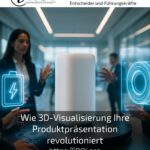
3D visualisation is revolutionising the way companies present their products. Using cutting-edge technology, it's possible to depict products photorealistically and with great detail – often before they've even been manufactured. This innovative method supports offering potential customers an in-depth and compelling experience.
3D visualisation as the key to impressive product presentations
3D visualisation allows for diverse perspectives and interactions with the product. For example, a furniture manufacturer can virtually show customers different colour and fabric variations of a sofa without physically producing each version. In the automotive industry, vehicles are staged in detail in digital environments, making purchasing decisions easier. The electronics industry also uses 3D animations to present complex devices in an understandable and appealing way.
Furthermore, adjustments to the product model are possible with little effort. This allows a manufacturer of sports equipment to quickly present different designs for helmets or shoes and react to customer wishes. This increases flexibility and saves resources in product development and marketing.
BEST PRACTICE with one customer (name hidden due to NDA contract) A manufacturer of high-quality outdoor gear used 3D visualisation to accurately represent new tent models in advance. Fabric materials and packed dimensions were presented in a realistically animated camping environment, giving potential customers a better feel for the product and helping to significantly increase pre-orders.
Practical advantages of 3D visualisation in application
Businesses benefit from 3D visualisation in a variety of ways: they save time and costs because physical prototypes are used less or not at all. A manufacturer of household appliances can therefore virtually test early design phases and identify errors early on. Furthermore, the technology makes it possible to create product videos or interactive 3D configurators that engage potential buyers more.
In the fashion industry, designers use 3D models to visualise outfits and accessories in various combinations, thereby accelerating creative processes. In the realm of packaging development, varying designs can be digitally examined from all angles, which improves communication with customers and reduces production errors.
BEST PRACTICE with one customer (name hidden due to NDA contract) A manufacturer of specialist packaging used 3D visualisation to showcase packaging variants for a new premium product. Customers were able to interactively switch between material qualities and colours and view the desired design in 360 degrees. The result was significantly higher customer satisfaction and a faster decision-making process.
Interactive experiences and emotional customer loyalty
The ability to rotate, zoom in on, or view products in different scenarios digitally noticeably increases customer engagement. Development teams can rely on virtual trade fairs and presentations with interactive 3D models to convey products convincingly – even without a physical presence on site. This allows companies to build trust and support purchasing decisions through realistic experiences.
For example, the automotive industry often uses 3D visualisation in combination with augmented reality for new product launches, allowing interested parties to virtually experience vehicles in their own garage. Similarly, luxury watch manufacturers benefit from detailed animations that showcase the finest mechanics – an aspect that evokes emotion and demonstrates expertise.
BEST PRACTICE with one customer (name hidden due to NDA contract) A high-tech company produced a product video using 3D visualisation, which illustrated the functionality of an intelligent control system. The animation showed not only external features but also internal processes, conveying technical understanding to potential buyers and increasing interest.
How iROI Coaching supports you with 3D visualisation
iROI-Coaching supports companies with targeted advice during the implementation of 3D visualisation projects. We guide you from the initial concept to the final product presentation and provide insights on how to best utilise the technology for your marketing and sales. Clients often report that our support during complex digital processes gives them confidence and simultaneously opens up creative space.
Whether planning interactive online shops, designing virtual trade fair appearances, or creating product films: iROI-Coaching helps you to integrate these innovative tools sensibly and to derive the greatest possible benefit from them.
My analysis
3D visualisation opens up new avenues for companies to present products impressively and flexibly. It improves communication, lowers costs through fewer physical prototypes, and enables impressive, interactive experiences for customers. With the support of iROI coaching, projects related to 3D visualisation can be effectively guided and leveraged for market success.
This makes product presentations not only more modern but also more efficient and customer-oriented. Companies that embrace this technological development gain a clear competitive advantage in digital product communication.
Further links from the text above:
3D Product Visualisation – Examples, Costs & Benefits
30 Great 3D Product Showcase & Visualisation Videos
Warum 3D-Visualisierung ein Muss für Produkte ist
3D Visualisations - 8 Strong Industry Examples
Interactive 3D Visualisation: Benefits and Technologies
For more information and if you have any questions, please contact Contact us or read more blog posts on the topic internet Return on Investment - Marketing here.






 Deutsch
  English (UK)