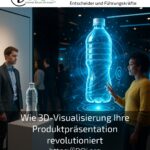
3D visualisation is changing the way companies present their products. With this technology, products can be displayed realistically and in detail even at the development stage. Many industries use 3D visualisation to impress customers and accelerate processes. The benefits are diverse, ranging from cost savings to increased customer satisfaction.
Advantages of 3D visualisation for businesses
3D visualisation allows products to be showcased flexibly and appealingly. Compared to traditional methods like photos or sketches, it offers more possibilities. Companies can easily adjust colours, materials, and shapes. Changes are implemented quickly without needing to build new prototypes. This saves time and money.
In the furniture industry, various designs and fabrics can be presented digitally. Customers can immediately see how a sofa looks in their home. In the automotive sector, vehicles with different specifications and colours can be visualised. Technical devices are shown with different material options. 3D visualisation makes all of this possible.
The fashion industry also benefits from 3D visualisation. Clothing items are digitally visualised before they are produced. This allows fabrics and cut styles to be optimised. This reduces faulty production and supports sustainable manufacturing.
Practical Applications of 3D Visualisation
3D visualisation in the automotive sector
In the automotive sector, vehicles are presented using 3D visualisation. Customers can try out various configurations. They can see how the car looks in different colours and with different specifications. This increases customer satisfaction and speeds up the purchasing process.
3D visualisation in the packaging industry
In the packaging industry, packaging is presented using 3D visualisation. Customers can view the packaging online in a 360-degree perspective. They can see how colours and shapes affect the impact. This builds trust in the purchasing decision process.
3D Visualisation in the Electrical Industry
In the electrical industry, high-tech devices are presented using 3D visualisation. Customers can see how the device behaves in different environments. The animations showcase the product's features and benefits. This increases interest and purchasing intent.
Cost-effectiveness and time-saving
3D visualisation saves costs and time. Instead of building expensive physical prototypes, products can be tested and optimised virtually. This shortens the time to market and reduces the cost of photoshoots.
In mechanical engineering, complex devices are simulated using 3D visualisation. Minor problems are fixed in the model before the device is built. This saves time and money.
In the fashion industry too, garments are visualised digitally. This allows fabrics and cut shapes to be optimised before they go into production. This reduces misproduction and supports sustainable manufacturing.
Interactive 3D Visualisation
Interactive 3D visualisations create an exploratory experience. Customers can view, rotate, and zoom in on products from all angles. This promotes a deeper understanding and a stronger emotional connection.
3D configurators shorten the sales funnel. Customers can configure and customise products in real time. This speeds up and simplifies the purchasing process.
Virtual product bundles open up cross-selling opportunities. Suitable additional products are suggested to customers. This increases revenue.
Examples from practice
In the furniture industry, different designs and fabrics are presented digitally. Customers can immediately see how a sofa looks in their home. In the automotive sector, vehicles with different specifications and colours can be visualised. Technical devices are shown with various material options.
In the packaging industry, packaging is presented using 3D visualisation. Customers can view the packaging online in a 360-degree perspective. They can see how colours and shapes affect the impact. This builds trust in the purchasing decision process.
In the electrical industry, high-tech devices are presented using 3D visualisation. Customers can see how the device behaves in different environments. The animations showcase the product's features and benefits. This increases interest and purchasing intent.
My analysis
3D visualisation is revolutionising product presentation. It offers companies a wide range of opportunities to showcase products efficiently, flexibly and appealingly. The advantages are clear: cost-effectiveness, time savings and increased customer satisfaction. 3D visualisation is an indispensable tool for modern companies.
Further links from the text above:
3D Product Visualisation – Examples, Costs & Benefits
30 Great 3D Product Showcase & Visualisation Videos
How 3D visualisation revolutionises your product presentation
3D Visualisations - 8 Strong Industry Examples
Why 3D visualisation is a must for product presentations
Examples of 3D Visualisation | Virtual Factory
Interactive 3D Visualisation: Benefits and Technologies
Top 20 examples of product presentation videos in 2D or 3D
3D Product Visualisation – 4 Benefits for Product Presentation
3D environment for photorealistic product presentation
How 3D Visualisations Revolutionise Product Presentation
3D Industrial Visualisation: Innovations in Technical Product Presentation
The most important advantages of 3D visualisation for businesses
Photorealistic 3D visualisations for your projects
Advantages in marketing with 3D visualisation
Get 3D Product Visualisations Created | Expert Tips
How 3D visualisation simplifies product presentation
For more information and if you have any questions, please contact Contact us or read more blog posts on the topic internet Return on Investment - Marketing here.






 Deutsch
  English (UK)