

Digital commerce is growing continuously, but one problem remains stubbornly persistent: cart abandonment. For many entrepreneurs, reminders about abandoned shopping carts have become an indispensable part of e-commerce. Around 70 percent of all shopping carts are never checked out. This means enormous untapped sales potential. However, this potential can be significantly better exploited with targeted strategies for abandoned cart reminders. This blog post will guide you through the most important methods and show practical ways to win back lost customers.
Why abandoned cart reminders are so important
Cart abandonment is a key phenomenon in online retail. A customer places products in their shopping cart, but then leaves the website without completing the transaction. This happens for a wide variety of reasons. Some users use the shopping cart as a wish list. Others get distracted or find better offers elsewhere. The good news: many of these customers can be won back with an intelligent cart abandonment reminder.
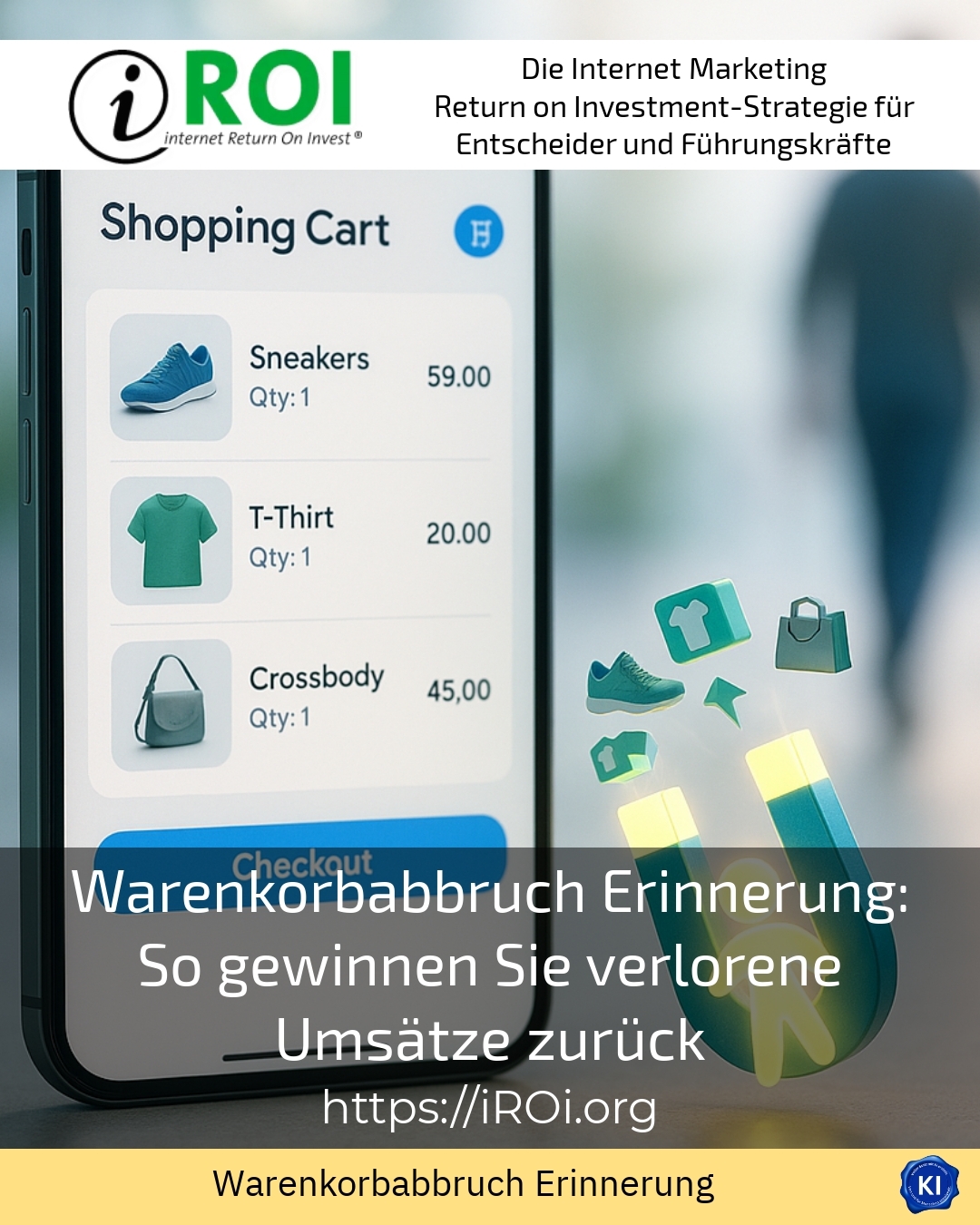
The rate of abandoned shopping baskets averages between 70 and 77 percent. This is not a mistake, but rather the norm. This is particularly relevant for fashion online shops. A customer selects several trainers and t-shirts, then spontaneously decides against the purchase. A friendly reminder often brings them back. This shows: abandoned shopping cart reminders work if they are designed correctly.
Understanding revenue potential
Many entrepreneurs underestimate the financial potential held within abandoned shopping carts. Approximately 11 percent of all customers who receive a reminder complete their purchase. While this may seem modest at first, it represents a significant increase when extrapolated. With an average order value of 50 Euros and 10,000 monthly cart abandonments, this quickly translates to tens of thousands of Euros in additional revenue.
The scenarios are diverse. Furniture retailers report that customers add sofas and lamps to their shopping baskets but do not proceed initially. A personalised reminder with additional product suggestions often leads to a purchase. In the electronics sector, consumer tests and exclusive information are combined with abandoned basket reminders. This conveys security and reduces purchase doubts.
Strategies for Cart Abandonment Reminders: Practical Approaches
Cart abandonment reminders work best when timed and channelled correctly. A proven approach is sending an email between one and 24 hours after abandonment. This timing is crucial because the purchasing decision is still fresh. The reminder should be informative, not intrusive.
Email as the main channel
Email is the most reliable channel for abandoned cart reminders. A well-designed email includes meaningful product images, clear pricing, and a strong call to action. The text should be short and concise. Sentences under 20 words are ideal for increased readability.
An online sports retailer ran a project for abandoned cart reminders. The personalised email contained the exact products from the abandoned cart. Additionally, there was a limited-time discount of five percent. The result: the conversion rate increased by eight percent. This small incentive was often the deciding factor.
BEST PRACTICE with one customer (name hidden due to NDA contract) When implementing a multi-stage abandoned cart reminder strategy, it was found that the first email, sent after two hours, had the highest open rate. It contained a simple offer: product, price, an image, and a prominent button to complete the purchase. The second reminder arrived after 24 hours with an additional seven percent discount. This tiered approach resulted in 14 percent of abandoned carts ultimately leading to a purchase, while only three percent unsubscribed.
Utilise the multichannel principle
Modern shopping cart abandonment reminders utilise multiple channels simultaneously. After an initial email, a web push notification often follows. This is more direct and instantly grabs attention in real-time. SMS reminders supplement the portfolio, particularly for high-value products.
In food e-commerce, timely communication is particularly useful. Many items are perishable, and orders happen spontaneously. A quick reminder of forgotten shopping carts with fresh products is a welcome boost. Customers appreciate the help because it simplifies their purchasing decision. A bookseller uses abandoned cart reminders to make it easier for readers to access their desired titles. This promotes customer loyalty and noticeably increases conversion rates.
Reasons for shopping cart abandonment: Where do things really go wrong?
Shopping cart abandonment has various causes. Understanding why customers abandon their carts is a prerequisite for successful cart abandonment reminders. Some reasons can be resolved with reminders, others cannot.
Technical and financial hurdles
High shipping costs are a common reason for cart abandonment. A customer has selected €40 worth of products, but then sees €15 for shipping. This is off-putting. Some online shops offer free shipping from a certain amount. This motivates them to complete the purchase, without the need for cart abandonment reminders.
Inappropriate payment methods are another factor. Not every customer wants to pay by credit card. Some countries prefer bank transfer. If these options are missing, many customers abandon their purchases. Even the best abandoned cart reminder won't help if payment isn't possible. Technical problems within the shop itself are a third reason. A faulty checkout process, slow loading times on mobile devices, or security warnings lead to abandoned purchases.
Psychological reasons for cart abandonment
Many customers use the shopping basket as a wishlist. They gather products for a better time. Some compare prices on other websites and then buy elsewhere. Others simply get distracted or run out of time. In these cases, shopping basket abandonment reminders often work wonders. A short reminder brings back the desire to buy.
Uncertainty is an important psychological factor. A customer has concerns about product quality or delivery time. In the electronics sector, these doubts are particularly high. Here, shopping cart abandonment reminders should not merely contain a link. Additional information such as customer reviews, warranty information, or delivery time details are valuable. They build trust and encourage purchases.
Legal Requirements and Customer Acceptance
Shopping cart abandonment reminders must be data-protection compliant. Sending reminder emails is generally permissible if it is considered part of the existing contractual relationship. Transparency is key here. Customers must know why they are receiving this email.
A simple unsubscribe option is mandatory. It is illegal to bombard customers with reminders without an opt-out option. This would be considered spam and destroy trust. However, a well-designed abandoned cart reminder is usually perceived as helpful. Customers appreciate being reminded of their forgotten products.
Transparency and tonality
The address in abandoned cart reminders should be supportive rather than preachy. Phrases like „You've forgotten something“ have a negative effect. Better: „We're holding your items for you.“ This conveys helpfulness instead of blame.
Clients often report that reminders are perceived as helpful if they make the decision easier. Personalised greetings with the customer's name have a warmer effect. A mohel mail order company for special products reports that personalised shopping basket abandonment reminders have increased its conversion rate by twenty percent. The combination of appreciation and practical benefit makes all the difference.
Best Practices for Effective Reminders
Timing and frequency of cart abandonment reminders
The optimal timing for the first abandoned cart reminder is between one and three hours after abandonment. Within this timeframe, the reminder is still fresh. A second reminder follows between twelve and 24 hours later. A third is sent two to three days after that. After this, the series should end to avoid being annoying.
In the fashion sector, a shorter timescale is better. Trends change quickly. For clothing, many customers want to be reminded of their chosen items quickly. In the furniture sector, more time is acceptable. A sofa is not bought on impulse, and customers plan for longer.
Personalisation and relevance
Cart abandonment reminders are more effective when highly personalised. The reminder should show the exact products from the abandoned cart. The customer's name increases the impact. Additional recommendations for complementary products are useful. A customer who forgot a racing bike could also be reminded of helmets and jerseys.
Dynamic content makes cart abandonment reminders more personal. A customer in Munich will receive different shipping options than one in Berlin. Price adjustments based on region or country language are possible. This shows that the shop has invested attention.
Incentives and calls to action
Limited discounts often work well for abandoned cart reminders. A voucher for five to ten percent off gives a reason to buy quickly. However, it shouldn't go too far. Discounts that are too high devalue the products andtrain customers to wait for promotions.
The call to action must be clear. A large „Buy now“ button works better than hidden text. Mobile optimisation is crucial, as many customers read their emails on their phones. A button should be easy to hit with a thumb.
Industry-specific examples of cart abandonment reminders
E-commerce in the fashion and sports sectors
Online fashion retailers benefit greatly from abandoned cart reminders. A customer has selected several items but wants to reconsider the complete outfit. A reminder with styling suggestions is helpful. A sports goods mail-order company showed that reminders with images of the selected products have double the click-through rate of text-only reminders.
For example: a yoga accessories shop sends cart abandonment reminders with tips for correct meditation. This creates added value beyond the product. Customers see the shop not just as a seller, but as a consultant. This builds loyalty.
Food and consumer goods
In the food e-commerce sector, abandoned cart reminders are time-critical. Freshness is a selling point. A forgotten shopping cart containing vegetables or meat should be reminded quickly. After three days, the goods could expire. In this context, reminders within two hours work particularly well.
Health food shops use abandoned cart reminders to alert customers about limited-stock products. A cabbage is available this week, but not next. This information motivates a quick purchase.
Electronics and high-value products
For expensive products, consumer tests and guarantee information play a central role in abandoned cart reminders. A customer






 Deutsch
  English (UK)