

The term Remote Leadership belongs in the categories of Digital Leadership, HR Work and Teams, and Digital Transformation. Remote Leadership means that managers lead their team not on-site in the office, but from a distance – for example, via the internet. This type of leadership is becoming increasingly important because many companies are allowing their employees to work from home or from different locations.
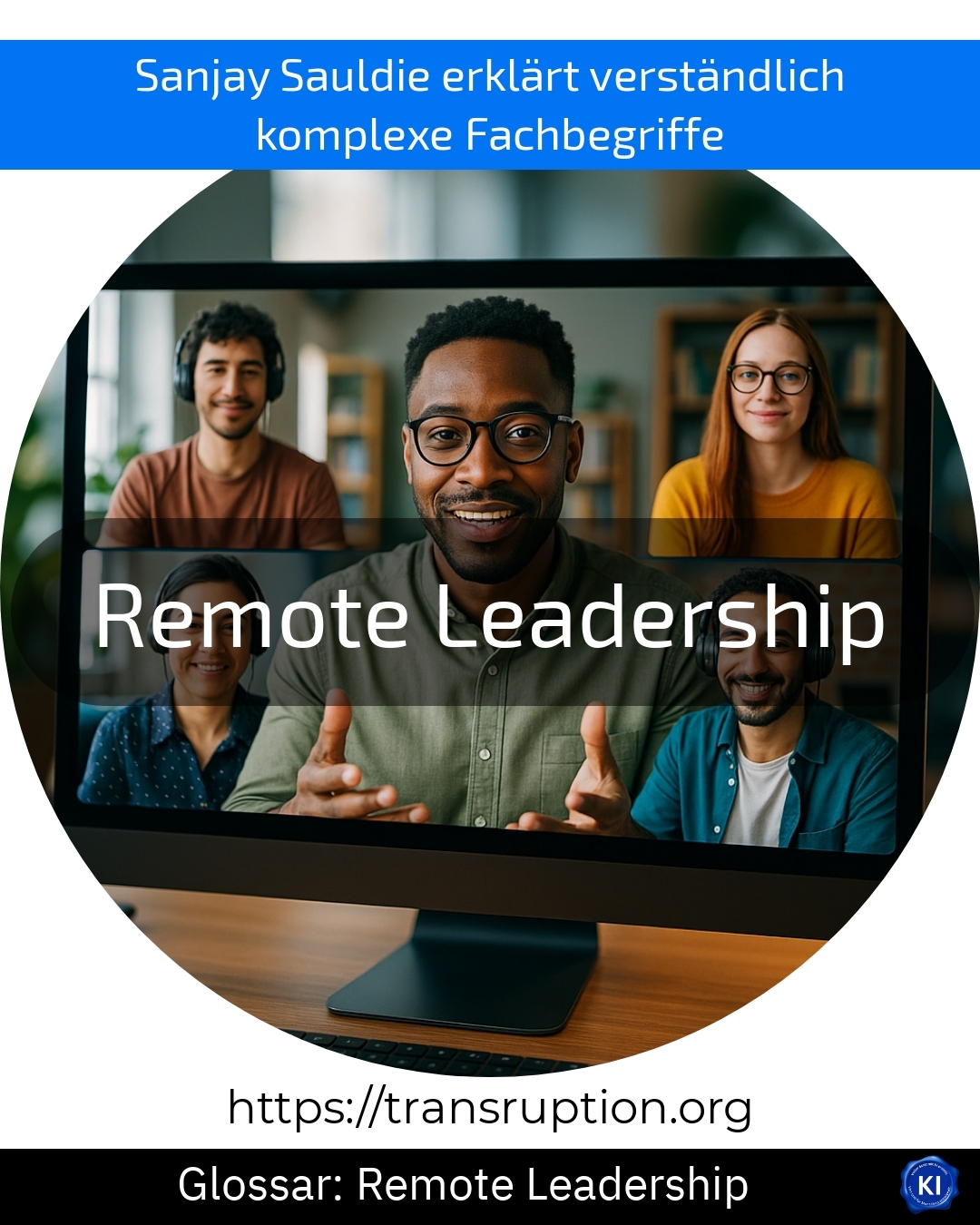
Instead of face-to-face meetings, Remote Leadership primarily uses digital tools such as video conferencing, chat programs, or project management software. The leader ensures that all team members are kept informed even at a distance, can communicate with each other, and are aware of their tasks. Clear communication and trust are particularly important here.
For example, a team leader in Berlin manages her marketing team, whose members work remotely from Munich, Hamburg, and Cologne. She holds weekly video meetings, assigns tasks via email, and remains reachable at all times via chat. This is how collaboration and motivation succeed, even when everyone rarely meets in person.
Remote leadership helps companies to remain flexible and utilise talent across the globe. In times of digital transformation, this ability has become indispensable for many businesses.






 Deutsch
  English (UK)