

Managing digital burdens in day-to-day leadership
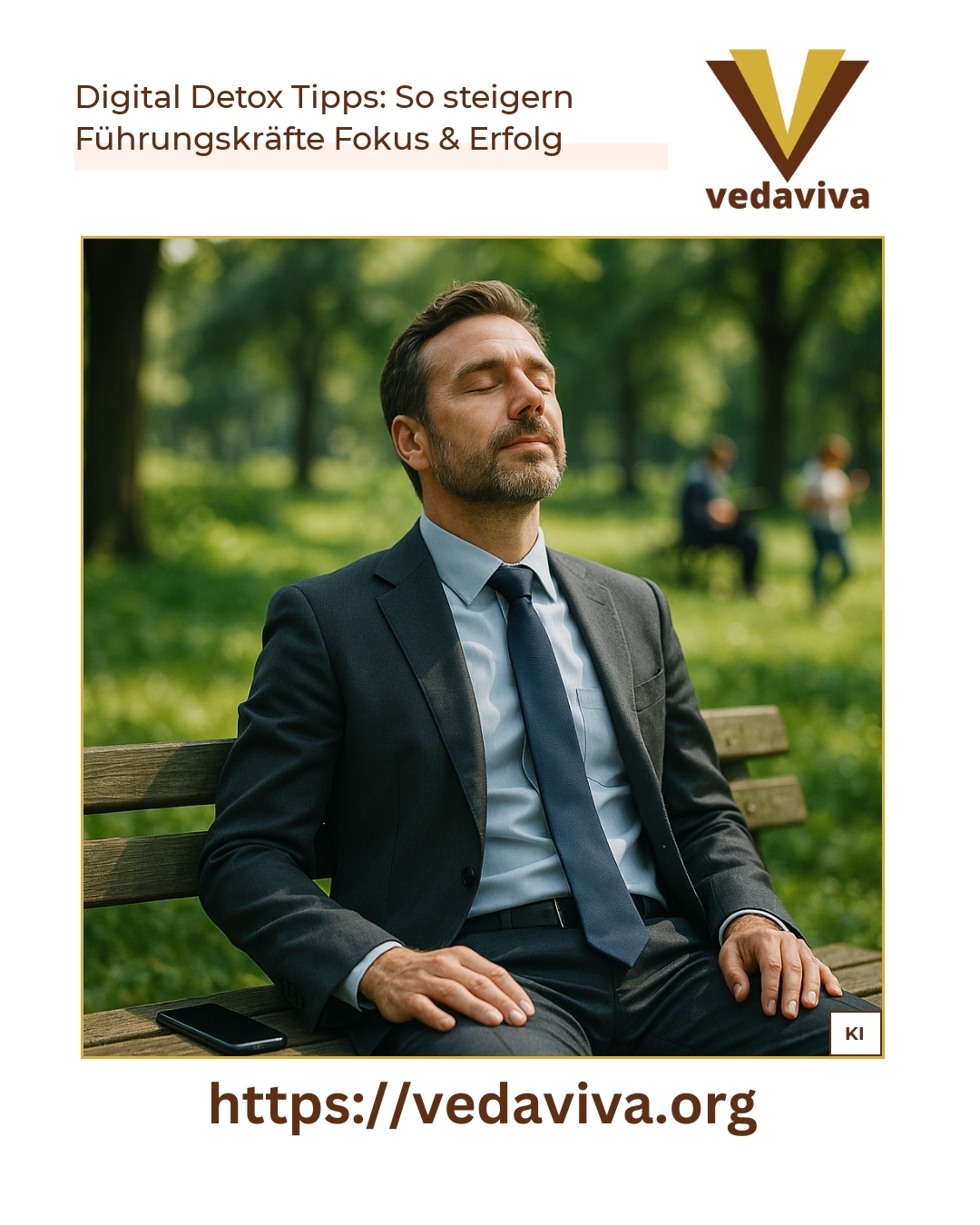
In today's working world, leaders are subjected to a flood of digital stimuli daily. Constant notifications and permanent availability can severely limit focus and lead to inner restlessness. Yet, these are precisely the qualities crucial for a successful leader: clear concentration, decisive decision-making, and authentic presence. Integrating digital detox tips can help by incorporating mindful breaks from the digital world, thereby sustainably increasing focus.
Consciously engaging with digital media has a positive impact on performance by reducing stress and promoting mental clarity. Through digital detox tips, leaders create more scope for strategic thinking while simultaneously strengthening their resilience against the ever-increasing flood of information.
Effective Strategies for More Focus Through Digital Detox Tips
A central aspect of digital detox tips is the consistent disabling of unnecessary push notifications on smartphones and computers. These constant interruptions significantly hinder concentration. By turning off these alerts, there are fewer distractions, allowing leaders to better direct their attention to important tasks.
Additionally, scheduling dedicated offline times is beneficial. Even 30 minutes daily, during which no digital devices are used, creates space for undisturbed work or personal reflection. These conscious periods stabilise mental energy and prevent the feeling of being constantly digitally overstimulated.
Furthermore, so-called digital fasting days are recommended, during which private screen time is consciously avoided. These days are an opportunity to clear your head and promote restful regeneration, which is often neglected in the hectic daily grind of leadership.
The integration of analogue activities, such as jotting down ideas by hand or taking walks without a smartphone, also brings important balancing effects. Such activities not only offer a break from the screen but often stimulate creative thoughts and support personal mindfulness.
Practical examples for digital detox tips in everyday leadership
BEST PRACTICE at company XYZ (name changed due to NDA contract) A managing director consistently reduced push notifications and adhered to strictly defined offline periods. He reported noticeably higher concentration and less stress. At the same time, meetings were conducted more effectively and overall team communication improved.
BEST PRACTICE at ABC (name changed due to NDA contract) A manager introduced fixed „device-free meetings“ within the team, where smartphones are consciously put aside. This led to more intense discussions, increased presence from all participants, and a rise in creative ideas.
Best Practice at company QRS (name changed due to NDA agreement) Regular Digital Detox Days have been established. On these days, managers and teams deliberately refrained from electronic communication and instead focused on analogue workshops and creative processes. This approach led to new impetus and a noticeable increase in team satisfaction.
Digital detox tips support self-leadership and work-life balance
By consciously controlling their digital use, leaders further develop their self-management skills. Digital detox tips help improve the balance between professional and private use by setting clear boundaries. This prevents digital exhaustion and promotes mental presence in everyday life.
Applying these tips is not about complete abstinence, but rather about mindful engagement with digital media and focusing on what is essential. This fosters a healthy relationship with the digital world, which promotes both performance and personal satisfaction.
Regularly practised digital detox also offers space for creativity and enables better prioritisation of tasks. This strengthens decision-making ability, which is particularly advantageous in a dynamic leadership environment.
Further practical examples
BEST PRACTICE at LMN (name changed due to NDA contract) A manager combined digital detox periods with smartphone-free lunch breaks. This allowed them to gain perspective on their daily work and subsequently improve their concentration significantly.
BEST PRACTICE at DEF (name changed due to NDA contract) In a project team, to-do lists were deliberately created analogously using pen and paper. This resulted in fewer distractions, and team members reported increased focus when working through tasks.
Best Practice at Company UVW (name changed due to NDA) A managing director introduced a weekly half-hour „digital-free“ break, during which all communication paused. This ritual fostered his self-awareness and helped him to view strategic issues more clearly.
My analysis
Digital detox tips are valuable support for executives in maintaining focus in a working day characterised by digital overload. The combination of targeted digital relief, conscious offline periods and analogue activities contributes to increasing mental clarity and productivity. At the same time, this mindful approach has a positive impact on job satisfaction and work-life balance.
In practice, diverse and creative ways to implement digital detox emerge, which can be individually adapted to the needs of managers and teams. The goal is a conscious approach to digital media, which supports rather than burdens in the long term.
Further links from the text above:
[1] Digital Detox Tips: How Leaders Can Boost Their Performance
[2] Digital Detox Retreat: How Leaders Gain New Clarity
[4] Digital detox tips: How managers increase their success
[7] Digital Detox: How to take breaks in a connected working world
Legal notice: Coaching does not replace therapy. It serves personal development. I do not diagnose or promise a cure. My offer is for personal development and is not a substitute for medical, psychotherapeutic or curative treatment. Please consult a medically qualified specialist if you have any health complaints. The experiences described here are based on individual feedback from my clients. They are not a guarantee of success and do not replace medical or therapeutic counselling. For more information and if you have any questions, please contact Contact us on the topic or read further blog posts on the Topic here.






 Deutsch
  English (UK)