

Decentralised technology has, in recent years, emerged as a central innovation fundamentally changing the way we store and manage data. This technology enables information to be stored in a transparent, immutable, and secure manner, making it ideal for applications that require trust and traceability. An example of this is the use of blockchain in various industries, such as finance or the supply chain, to ensure the integrity of transactions and facilitate their processing.
A central aspect of decentralised technology is the ability to store data on multiple computers, making manipulation virtually impossible. This decentralisation makes it possible to operate without central authorities, significantly improving the efficiency and transparency of processes [1][3].
The Functioning of Decentralised Technology
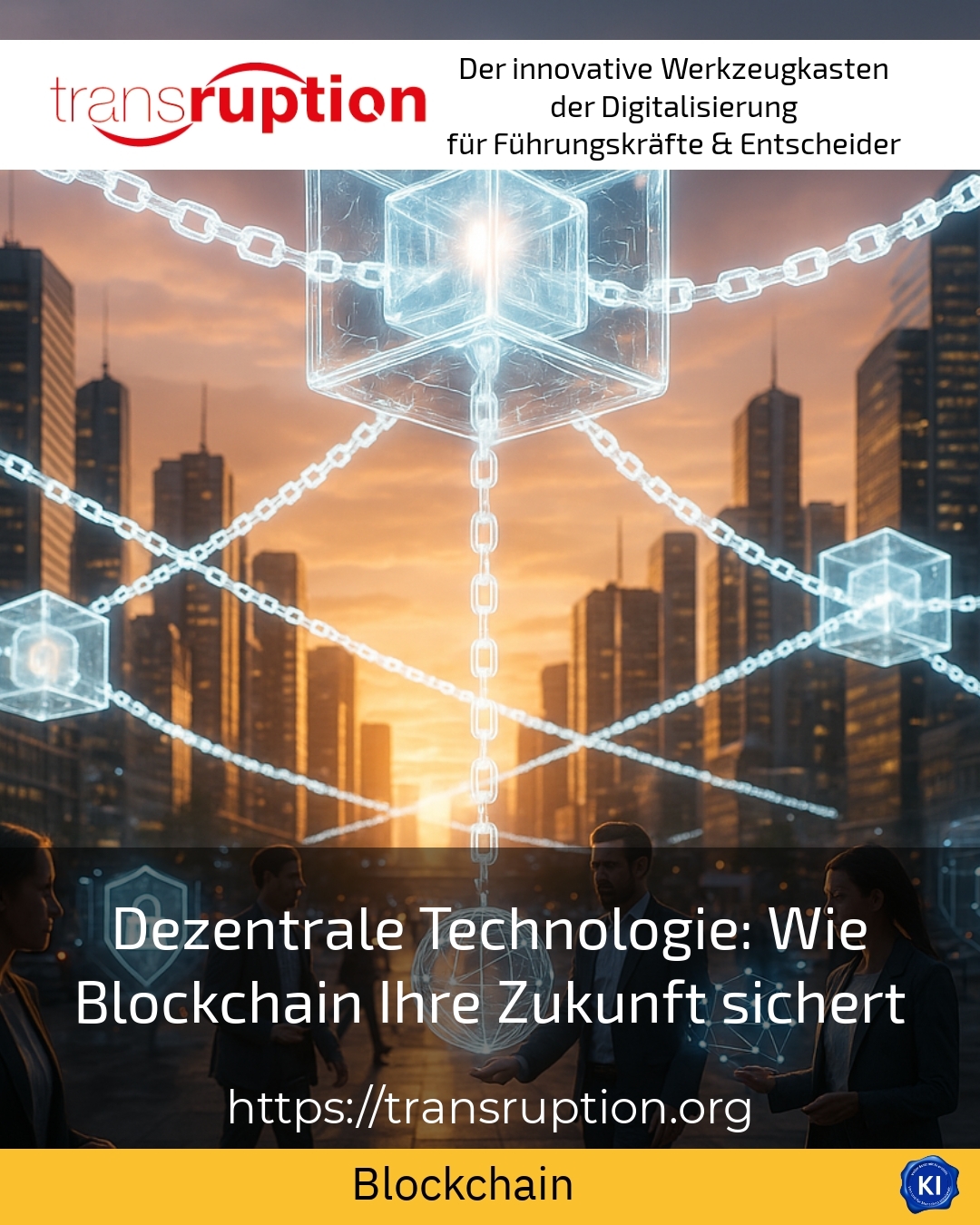
Decentralised technology is based on the concept of distributed databases, which are stored across a variety of computers. Each transaction is stored in blocks, which are linked together to form a secure and transparent chain. This structure guarantees data integrity and is therefore ideal for applications such as finance or supply chain management [3][7].
Transparency and security
A significant advantage of decentralised technology is the transparency of the stored data. All transactions are visible to network participants, which builds trust and makes fraud more difficult. Furthermore, the technology is tamper-proof, as the data is stored immutably in chronological order [3][5].
Application areas of decentralised technology
Decentralised technology finds application in a variety of industries. One example is finance, where it is used to improve payment processes and develop decentralised financial technologies. This enables transactions to be processed without central intermediaries, which promotes efficiency and cost savings [2][6].
Supply chain management
Another example is supply chain management. Companies like IBM and Walmart are using blockchain to track the origin and journey of products. This leads to increased transparency and can help minimise problems such as product counterfeiting [2][4].
Best practice in supply chain managementA major food manufacturer is using blockchain to reliably prove the origin of its products and to react quickly to potential recalls. By using blockchain, the company has reduced the complexity of its supply chain and improved the efficiency of its recall processes.
Decentralised technology in healthcare
In healthcare, decentralised technology is used for the secure storage of patient data. Platforms like Medicalchain enable the secure exchange of health data between doctors and hospitals, which improves patient care [4].
Decentralised technology and smart contracts
Another important aspect of decentralised technology is smart contracts. These self-executing contracts run on blockchain platforms and automatically execute transactions when certain conditions are met. This reduces the need for intermediaries and increases efficiency in areas such as real estate or finance [9].
Best Practice in FinanceA German fintech company is using smart contracts to manage loans. By automating payment processes, the company has been able to reduce administrative costs and significantly improve transparency for its customers.
Decentralised technology as future security
Decentralised technology offers numerous advantages, making it a central driving force for innovation. It enables processes to be streamlined, accountability to be improved, and efficiency to be increased. By utilising decentralised technology, companies can not only reduce their costs but also strengthen their competitiveness in the market. Therefore, decentralised technology will play a crucial role in shaping the digital future.
My analysis
In summary, decentralised technology holds enormous potential to fundamentally transform the way we manage data and design transaction-based processes. It offers transparency, security, and efficiency, making it a key technology for the future. Companies should leverage the possibilities of decentralised technology to optimise their processes and strengthen their market position.
Further links from the text above:
Gabler Wirtschaftslexikon: Blockchain
Computer Weekly: Blockchain for Business
For more information and if you have any questions, please contact Contact us or read more blog posts on the topic TRANSRUPTION here.






 Deutsch
  English (UK)