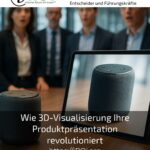
3D visualisation is changing the way products are presented. It enables a realistic display that goes far beyond traditional photographs. With 3D visualisation, products can be shown from all angles, functions can be experienced interactively, and variants can be quickly exchanged. Many companies are using this technology to present their offerings even more convincingly and to directly enthuse customers. Especially with complex or technical products, 3D visualisation helps to convey details clearly and understandably.
Flexibility and variety
With 3D visualisation, companies can quickly create different product variations. This allows colours, materials or features to be displayed digitally without building physical models. For example, a furniture manufacturer shows different fabrics and colours of a sofa. A technology company presents different versions of a device. In the automotive sector too, vehicles with individual configurations can be experienced virtually.
This flexibility saves time and resources. Changes can be implemented quickly, without costly new production runs. Customers can get directly involved in the design process and coordinate their requirements digitally. This boosts customer satisfaction and speeds up decision-making processes.
Practical examples from practice
An LED lighting manufacturer uses 3D visualisation to showcase different light colours and designs. The animations illustrate the functions and app control. Another example is a manufacturer of medical devices who explains complex technologies through precise 3D animations. Customers immediately understand the benefits and can make better decisions.
3D visualisation is also used for architectural products such as windows or doors. Energy efficiency and design features are clearly displayed here. Customers can see how the product looks in their surroundings and what benefits it offers.
Cost-effectiveness and time-saving
3D visualisation saves costs and accelerates product development. Instead of building expensive prototypes, products are tested and optimised digitally. Changes can be implemented quickly without time-consuming re-productions. This shortens time-to-market and reduces overall costs.
Even with product photos, elaborate shoots are eliminated. 3D visualisation delivers reproducible results of consistent quality. This is a great advantage, especially with large product series or frequent updates.
Examples of cost savings
An industrial technology company uses 3D visualisation to present various machine configurations. Development costs were significantly reduced as physical prototypes were eliminated. Customers were able to configure and customise products directly in a digital format.
Another example is a manufacturer of electronic products. Here, new devices are already presented digitally during the concept phase. This enables early communication with customers and investors. Logistical challenges such as transport or the assembly of real prototypes are completely eliminated.
Improved communication and customer loyalty
3D visualisation brings products to life and makes them understandable. Customers can view, configure, or even interactively experience digital models from various perspectives. This promotes understanding and appeal of the products.
3D visualisation is a significant advantage, particularly for products that require detailed explanations. Customers can see how the product works and the benefits it offers. This builds trust and credibility.
Interactive experiences and augmented reality
Some companies offer interactive 3D models on their websites. Customers can explore products from different angles and test features in real time. Others integrate augmented reality, allowing customers to see products in their real-world environment.
One example is an outdoor rug manufacturer. Here, 3D environments of minimalist outdoor spaces are created. Customers can see how the rug looks in their own environment and what benefits it offers.
Another example is a medical device manufacturer. Here, complex technologies are explained through precise 3D animations. Customers immediately understand the benefits and can make better decisions.
My analysis
3D visualisation is revolutionising the way products are presented. It combines flexibility, efficiency, and an emotional appeal that significantly enhances the customer experience. Companies from a wide range of industries report increased customer interaction and shorter development times. The ability to show products in detail and realistically before production, in particular, offers competitive advantages.
Further links from the text above:
How 3D visualisation revolutionises your product presentation
30 Great 3D Product Showcase & Visualisation Videos
Why 3D visualisation is a must for product presentations
3D Product Visualisation – Benefits, Use Cases & Examples
3D Product Visualisation – Examples, Costs & Benefits
For more information and if you have any questions, please contact Contact us or read more blog posts on the topic internet Return on Investment - Marketing here.






 Deutsch
  English (UK)